Most women trying to lose weight either avoid fruit entirely or eat it freely, and both approaches can stall progress. The real answer depends on your total calorie needs and activity level, not a universal rule.
The standard guidance for how many servings of fruit to eat daily is 1.5 to 2 cups for adult women, which equals roughly 2 to 3 servings. For weight loss specifically, most evidence suggests staying at the lower end of that range—about 2 servings daily—while keeping the rest of your diet in a calorie deficit. This amount provides fiber and nutrients without adding excessive natural sugars that can slow fat loss.
Most generic advice tells you to “eat unlimited fruit” or “avoid fruit because of sugar.” Both are wrong for most women. Fruit is nutrient-dense and filling, but it still contains calories that count toward your daily total. The confusion usually comes from not knowing how portion sizes translate into actual servings.
This guide breaks down what a serving actually looks like, how fruit affects weight loss hormones, and how to fit fruit into your daily calorie target without guessing. You’ll also learn which fruits give you the most volume for the fewest calories.
Key Points at a Glance
| Point | What It Means | Why It Matters |
|---|---|---|
| Standard serving | 1 cup of fruit or one medium whole fruit | Makes portion control simple without weighing everything |
| Weight loss target | About 2 servings per day for most women | Balances nutrients with calorie control |
| Best choices | Berries, apples, citrus, melon | Higher fiber and water content for more fullness |
| Timing | Spread fruit across meals or snacks | Helps stabilize blood sugar and hunger |
| Calorie reality | Fruit averages 60–100 calories per serving | Counts toward your daily intake—track it |
How Many Servings of Fruit Per Day Actually Supports Weight Loss?
Research consistently shows that fruit intake is linked to lower body weight and reduced risk of obesity-related conditions. A review of studies published in the journal Nutrients found that higher fruit consumption correlates with better weight management, likely because fruit displaces higher-calorie snacks and provides fiber that increases fullness.
For women in a calorie deficit, 2 servings of fruit daily hits the sweet spot. That gives you about 150 to 200 calories of fruit, leaving plenty of room for protein, vegetables, and healthy fats. Some women tolerate 3 servings well if their total calorie target is higher, but 2 servings is the safest starting point for steady fat loss.
What Counts as One Serving of Fruit?
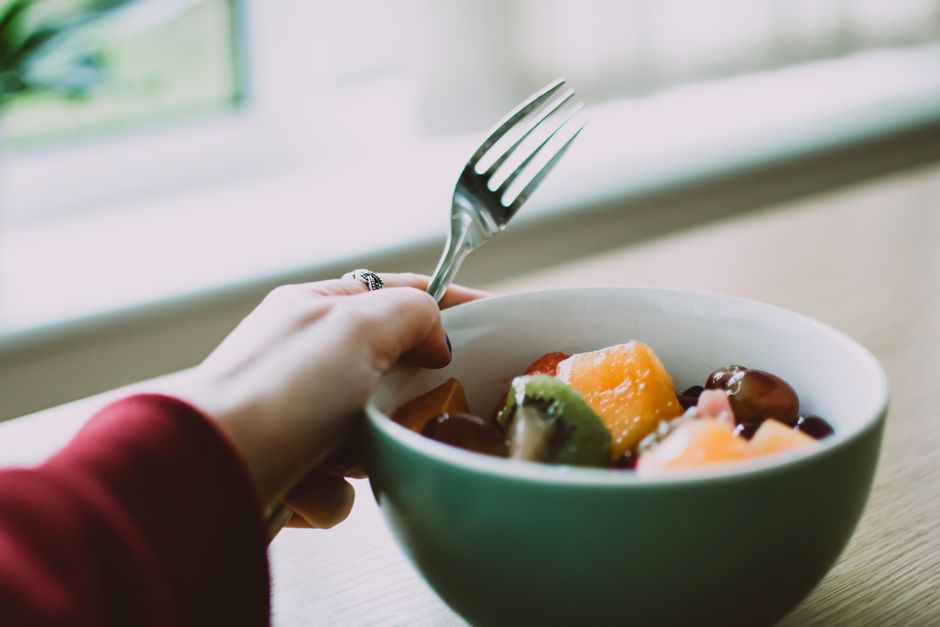
Portion confusion causes most fruit-related weight loss failures. A serving is not “as much as you want” — it’s a specific measurement. For whole fruit, one serving equals one medium piece, like an apple, orange, or banana. For cut fruit, one serving is one cup. For dried fruit, one serving is only a quarter cup because the water is removed, concentrating the calories.
Here’s what that looks like in practice: one medium apple, one cup of strawberries, one small banana, half a grapefruit, or a quarter cup of raisins. Each of these delivers roughly 60 to 100 calories depending on the fruit. Berries and melon give you more volume per calorie, while bananas and grapes are more calorie-dense per serving.
If you’re measuring by hand, a serving of cut fruit is about the size of your fist. A serving of dried fruit is about the size of a golf ball. These visual cues help when you’re away from home and can’t weigh your food.
Which Fruits Are Best for Weight Loss?
All fruit can fit into a weight loss plan, but some are more helpful than others. Berries—strawberries, blueberries, raspberries, and blackberries—are the standout choice because they’re high in fiber and water while being relatively low in sugar. A full cup of strawberries has about 50 calories and 3 grams of fiber.
Apples and pears are also excellent because their fiber content slows digestion and keeps you full. Citrus fruits like oranges and grapefruit offer similar benefits with high vitamin C content. Melon and watermelon provide large volume for very few calories, making them useful for satisfying sweet cravings without breaking your calorie budget.
Fruits to be more careful with include bananas, grapes, mangoes, and dried fruits. These are higher in sugar and calories per serving. That doesn’t make them off-limits—it just means portion control matters more. A small banana is fine; three bananas in a smoothie is not.
How Does Fruit Fit Into Your Daily Calorie Target?
Your daily calorie target for weight loss depends on your age, height, weight, and activity level. Most women lose weight eating between 1,400 and 1,800 calories per day, but this varies. To know your exact number, use a TDEE calculator to find your maintenance calories, then subtract 300 to 500 calories for a sustainable deficit.
Once you have your target, fruit should occupy about 10 to 15 percent of your daily calories. On a 1,500-calorie plan, that’s 150 to 225 calories from fruit—which translates to roughly 2 servings. This leaves enough room for the protein and vegetables that are more critical for preserving muscle and managing hunger during weight loss.
Track your fruit intake for at least one week to see where you actually land. Most women are surprised to find they’re eating 3 to 4 servings without realizing it, especially if they drink fruit juice or add fruit to smoothies. Liquid fruit calories don’t provide the same fullness as whole fruit, so it’s best to avoid juice entirely during weight loss.
Frequently Asked Questions
Related Articles
Can I eat too much fruit while trying to lose weight?
Yes, because fruit contains calories and sugar that count toward your daily intake. Eating more than 3 servings daily can stall weight loss, especially if you’re not tracking other calories.
Is fruit sugar the same as added sugar?
No, fruit sugar comes packaged with fiber, water, and nutrients that slow absorption and support fullness. Added sugar provides empty calories with no nutritional benefit, so fruit is a better choice despite containing natural sugar.
What fruit is lowest in calories for weight loss?
Strawberries and watermelon are among the lowest-calorie fruits, with about 50 calories per cup. Berries overall offer the best volume-to-calorie ratio, making them ideal for satisfying sweet cravings.
Should I eat fruit before or after a workout?
Either works, but fruit before a workout provides quick energy, while fruit after helps replenish glycogen stores. A banana before exercise or berries with protein after are both solid choices.
Does eating fruit at night cause weight gain?
No, eating fruit at night doesn’t cause weight gain by itself—total daily calories matter more than timing. If fruit at night helps you avoid late-night junk food, it’s a good habit to keep.
Can I replace vegetables with fruit for weight loss?
No, vegetables are lower in calories and higher in certain nutrients than fruit, so they shouldn’t be swapped. Aim for 2 servings of fruit and 3 or more servings of vegetables daily for best results.
Fruit is a valuable part of a weight loss plan when you treat it as a measured portion of your daily calories rather than a free food. Two servings daily, focused on berries, apples, and citrus, gives you the nutrients and fullness you need without derailing your deficit. Use a calorie tracker or a TDEE calculator to confirm your target, and adjust your fruit intake based on your weekly progress.

The TDEECAL Team writes about nutrition, metabolism, and fat loss the way we built our calculator, with real numbers and no hype. We dig into the research so you don’t have to guess.