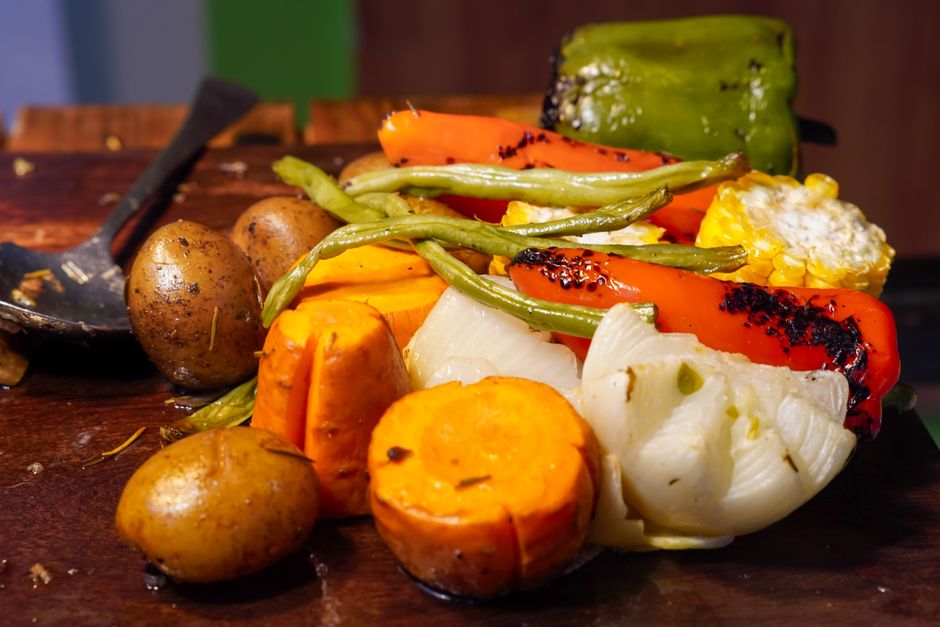
Most people assume roasting vegetables is healthy because vegetables themselves are healthy. But the cooking method changes the calorie count, and that matters more than most people realize.
Yes, are roasted veggies good for weight loss — when prepared with minimal oil and eaten in sensible portions. Roasting concentrates natural sweetness and keeps fiber intact, which helps you feel full. The key is how much oil you use and what you serve them with.
This article separates what actually works from what gets repeated without evidence. You will learn which roasting mistakes add hidden calories, how portion size changes the math, and why the oil you choose matters more than the vegetable. No hype, no miracle claims — just the practical details that make roasting work for weight loss.
Key Points at a Glance
| Point | What It Means | Why It Matters |
|---|---|---|
| Oil is the calorie driver | One tablespoon of oil adds roughly 120 calories | A “healthy” roast can easily become a 400-calorie side dish |
| Fiber stays intact | Roasting does not break down fiber like boiling does | Fiber slows digestion and keeps you full longer |
| Portions still count | Roasted veggies shrink, so visual portions look smaller than raw | People often eat more than they realize after roasting |
| Method beats vegetable choice | Any vegetable works if oil is controlled | Focus on technique, not exotic ingredients |
How Does Roasting Change the Calorie Count?
Raw vegetables are very low in calories. A cup of raw broccoli has about 30 calories. The same cup roasted with one tablespoon of olive oil jumps to roughly 150 calories. That is a five-fold increase, and it comes entirely from the oil.
Many recipes call for two or even three tablespoons of oil per sheet pan. Spread across four servings, that adds 60 to 90 calories per serving before you count the vegetables themselves. I always measure oil with a spoon rather than pouring straight from the bottle — it is the single easiest way to keep roasted veggies in weight-loss territory.
The vegetables themselves stay low in calories. Roasting removes water, which concentrates flavor but does not add calories. A cup of roasted zucchini has about the same calories as a cup of raw zucchini — roughly 20 to 25 — before oil is added.
Are Roasted Veggies Good for Weight Loss Compared to Other Cooking Methods?
Roasting compares well to other methods when oil is controlled. Steaming and boiling add zero calories, but they also dilute flavor, which leads many people to add butter or cheese at the table. That trade-off often ends up costing more calories than a modest amount of roasting oil.
Frying is the clear loser. Deep-fried vegetables absorb significant oil, and even pan-frying with generous oil can double or triple the calorie content. Roasting sits between steaming and frying — it delivers flavor without the heavy oil absorption.
One advantage of roasting is that it makes vegetables taste sweeter. The natural sugars caramelize at high heat, which means you need less added seasoning or sauce. In my kitchen, a pinch of salt and black pepper on roasted carrots replaces the honey-glaze recipes that add unnecessary sugar.
Practical tip: Use a spray bottle with olive oil instead of pouring. Two or three sprays coat a full sheet pan for about 20 calories total — a fraction of what pouring adds.
What Portion Size Actually Works for Weight Loss?
Most weight-loss guidance suggests filling half your plate with vegetables. For roasted vegetables, that translates to roughly one to one and a half cups per meal. That portion, prepared with one teaspoon of oil per serving, lands around 80 to 120 calories.
The tricky part is that roasting shrinks vegetables significantly. A full raw head of cauliflower becomes about two cups after roasting. People often eat the entire sheet pan without realizing it equals four or more servings.
Weigh or measure vegetables before roasting, not after. That gives you an accurate baseline for tracking. Once you know what one cup of raw vegetables looks like on your sheet pan, you can skip the measuring cup and eyeball it.
Which Vegetables Are Best for Roasting on a Weight-Loss Diet?
All vegetables work, but some hold up better to roasting without needing much oil. Broccoli, cauliflower, zucchini, bell peppers, and green beans all roast well with a light coating. Root vegetables like carrots, potatoes, and sweet potatoes are higher in natural sugar and calories, so they need smaller portions.
Potatoes deserve special attention. A medium roasted potato with skin has about 160 calories before oil. That is not a problem if you account for it, but it is easy to treat roasted potatoes like a free food because they are vegetables. They are not — they are a starchy carbohydrate.
Non-starchy vegetables should be the bulk of your roasted vegetable intake. They provide volume and fiber for very few calories. Starchy vegetables can be included, but treat them as the carbohydrate portion of your meal, not as a free side dish.
What Are the Common Mistakes That Sabotage Roasted Vegetables?
The biggest mistake is using too much oil. Recipes often call for a quarter cup or more, which adds hundreds of calories to a single sheet pan. Measure your oil, and cut recipe amounts in half if needed.
The second mistake is adding high-calorie toppings after roasting. Cheese, creamy sauces, and honey glazes can add 100 to 300 calories per serving. If you need flavor, use herbs, spices, lemon juice, or a light vinegar — these add almost no calories.
The third mistake is serving roasted vegetables alongside other calorie-dense foods without adjusting portions. Roasted veggies do not cancel out a large serving of pasta or meat. They are a side dish, not a magic food that makes everything else calorie-free.
Related Articles
Frequently Asked Questions
Do roasted vegetables lose their nutrients?
Roasting causes some loss of water-soluble vitamins like vitamin C, but it preserves fat-soluble vitamins and fiber well. The nutrient loss is comparable to other cooking methods and does not undermine the weight-loss benefits.
Is it better to eat vegetables raw or roasted for weight loss?
Both work, and the best choice is whichever you will actually eat consistently. Roasting can make vegetables more appealing, which increases your overall vegetable intake.
How much oil should I use for roasted vegetables?
One teaspoon per serving is enough for most vegetables. That adds about 40 calories per serving, which keeps roasted veggies firmly in weight-loss territory.
Can I eat roasted vegetables every day?
Yes, daily consumption is fine as long as you vary the types of vegetables and control oil portions. Variety ensures you get a range of nutrients rather than relying on one or two vegetables.
Are roasted potatoes good for weight loss?
Roasted potatoes can fit into a weight-loss diet, but they are higher in calories than non-starchy vegetables. Keep portions to about half a cup and count them as your carbohydrate serving.
Do roasted vegetables cause bloating?
Some people experience bloating from the fiber in vegetables, especially if they increase intake suddenly. This usually settles as your digestive system adjusts over one to two weeks.
Roasted vegetables are a solid tool for weight loss when you control the oil and watch portions. They deliver fiber, volume, and flavor without the calorie load of most prepared side dishes. Measure your oil, fill half your plate, and let the natural sweetness of roasted vegetables do the work.
For personalized calorie targets and macro breakdowns, use the TDEE Calculator to see exactly how roasted vegetables fit into your daily needs.

The TDEECAL Team writes about nutrition, metabolism, and fat loss the way we built our calculator, with real numbers and no hype. We dig into the research so you don’t have to guess.