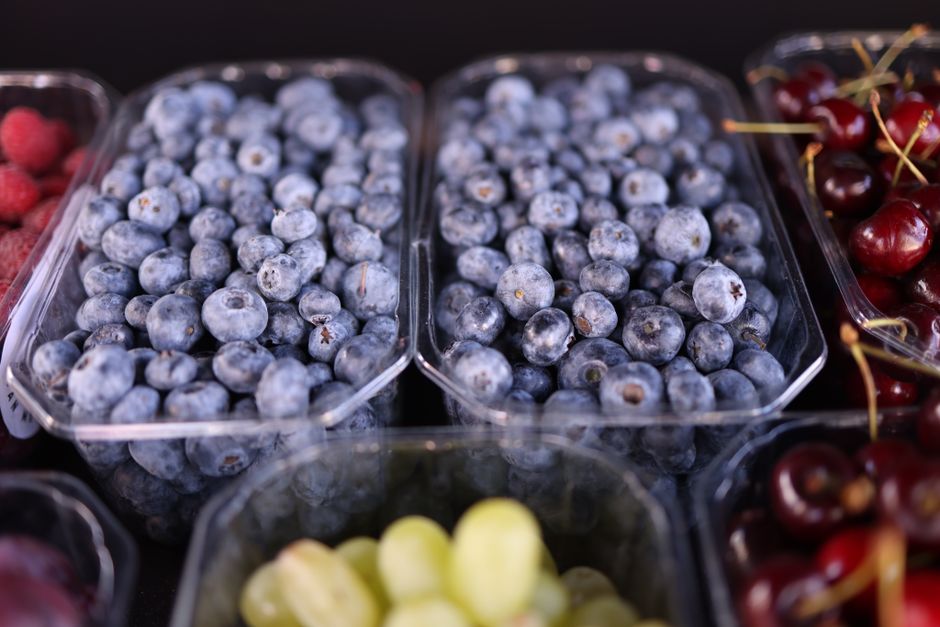
Fruit is one of the few food groups that gets blamed for weight gain and praised for health in the same breath — and that contradiction is exactly why so many women stall out.
Yes, fruit is good for weight loss. The question “is fruit good for weight” has a clear answer in the research: whole fruit supports weight management because its fiber and water content increase fullness, and most fruits are low in calories per serving. Studies consistently link higher fruit intake with lower body weight, not higher. The exception is large amounts of juice or dried fruit, which concentrate sugar and calories.
Most generic advice on this topic is either too vague (“eat more produce”) or too extreme (“cut fruit to burn fat”). Neither helps you make a decision at the grocery store.
This article covers what the evidence actually shows, which fruits work hardest in your favor, where portions matter, and how fruit fits into a calorie target based on your TDEE. You can estimate yours with our TDEE Calculator before reading further.
Key Points at a Glance
| Point | What It Means | Why It Matters |
|---|---|---|
| Whole fruit supports weight loss | Fiber and water slow digestion and increase fullness | You eat less overall without counting every bite |
| Fruit juice behaves differently | Juice removes fiber and concentrates sugar | Liquid calories rarely register as fullness |
| Calories still count | Fruit has calories — roughly 60 to 100 per serving for most types | Portion awareness keeps you inside your target |
| Berries are the most calorie-efficient | About 50 calories per cup with high fiber | Large volume for small calorie cost |
Is Fruit Good for Weight Loss, and What Does the Research Show?
Higher fruit intake is consistently associated with lower body weight and less weight gain over time. Research published in the American Journal of Clinical Nutrition and similar journals has found this pattern across large populations. The mechanism is straightforward: fiber and water add volume, which triggers fullness signals before you overeat.
One practical note from my own kitchen — I keep a bowl of washed berries on the counter at eye level. If fruit is visible and ready, it gets eaten. If it’s in a drawer, it wilts. That single habit change did more for my snacking than any meal plan.
Which Fruits Give You the Most Volume for the Fewest Calories?
Berries lead the pack. One cup of strawberries is roughly 50 calories; raspberries and blackberries land in a similar range with 6 to 8 grams of fiber. Watermelon and cantaloupe are also high-volume, high-water choices that fill you up cheaply.
Bananas, grapes, and mangoes are perfectly good foods — they just carry more calories per bite. A medium banana is about 105 calories. That’s fine inside a balanced day, but eating four or five servings of dense fruit daily can quietly add 300 to 400 calories.
- Lowest calorie per cup: strawberries, watermelon, cantaloupe, blackberries
- Moderate: apples, oranges, peaches, pineapple
- Higher calorie: bananas, grapes, mangoes, cherries
- Use sparingly: dried fruit (about 100 calories per quarter cup) and juice
Does Fruit Juice or Dried Fruit Hurt Weight Loss?
Yes, when consumed in large amounts. Juice strips out the fiber that makes whole fruit filling, so the calories arrive fast and don’t satisfy hunger. A cup of orange juice is roughly 110 calories and takes about 30 seconds to drink. Eating two oranges takes far longer and leaves you fuller.
Dried fruit is a different trap. It’s nutritious but calorie-dense — a quarter cup of raisins or dates runs about 100 to 120 calories, and it’s easy to eat several servings without noticing. Some studies suggest dried fruit can still support weight management when portions are controlled, but the evidence is mixed and portion size is the deciding factor.
How Does Fruit Fit Into Your Daily Calorie Target?
Most women aiming to lose weight land somewhere between 1,400 and 1,800 calories daily, though this varies with height, activity, and age. Within that range, two to three servings of whole fruit daily is a reasonable, evidence-aligned target. Note that 1,200 calories is generally treated as a clinical minimum for women and requires medical supervision to go below.
Pair fruit with protein or fat to blunt hunger further. An apple alone is fine; an apple with a tablespoon of peanut butter holds you much longer. And check your own numbers — your TDEE determines how much room you actually have.
Related Articles
Frequently Asked Questions
Is fruit good for weight loss?
Yes, whole fruit supports weight loss because its fiber and water content increase fullness and most fruits are low in calories per serving. Studies consistently link higher fruit intake with lower body weight.
Can eating fruit make you gain weight?
Only if you consistently eat large amounts of calorie-dense fruit, dried fruit, or juice beyond your daily calorie needs. Whole fruit eaten in normal portions is not linked to weight gain in the research.
Which fruit is best for weight loss?
Berries, watermelon, and cantaloupe offer the most volume and fiber for the fewest calories. Strawberries provide roughly 50 calories and 3 grams of fiber per cup.
Should I avoid bananas if I’m trying to lose weight?
No, bananas are fine in moderation at about 105 calories for a medium fruit. They’re filling and nutritious — just count them within your daily calorie target like any other food.
How many servings of fruit should I eat daily to lose weight?
Two to three servings of whole fruit per day fits well within most weight-loss calorie targets for adult women. Individual needs vary with height, activity level, and total calorie intake.
Is fruit juice as good as whole fruit for weight loss?
No, juice lacks the fiber that makes whole fruit filling and delivers calories quickly without the same satiety. Whole fruit is the better choice for weight management.

The TDEECAL Team writes about nutrition, metabolism, and fat loss the way we built our calculator, with real numbers and no hype. We dig into the research so you don’t have to guess.