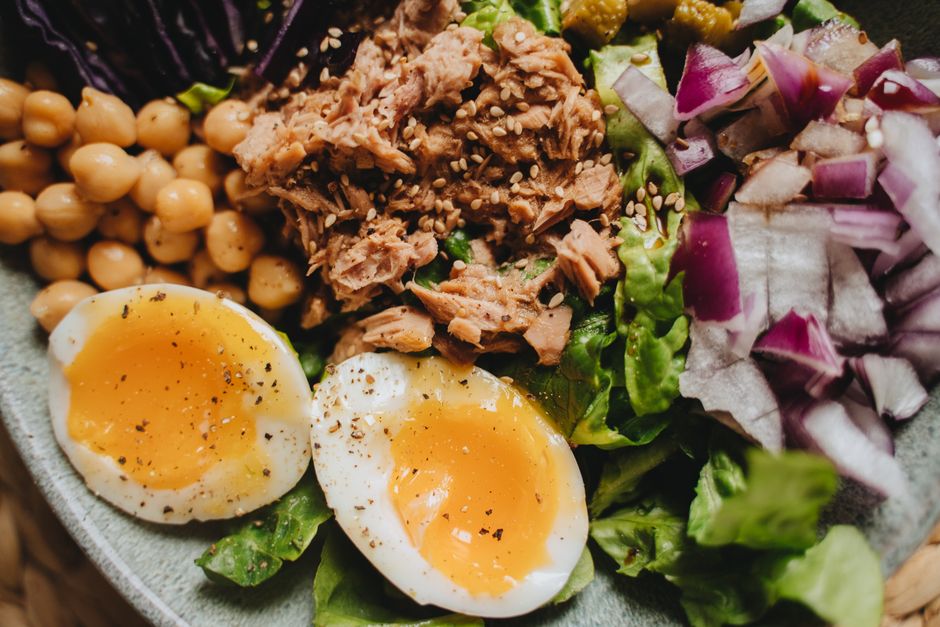
Two cans of tuna and a carton of eggs cost less than a single takeout lunch — and together they cover most of what a weight-loss diet actually needs. The question is whether that combo holds up when you look at the evidence.
Is tuna and eggs good for weight loss? Yes — both foods are high in protein and relatively low in calories, which supports satiety and helps preserve muscle during a calorie deficit. A 3-ounce serving of canned tuna in water has roughly 100 calories and 22 grams of protein. One large egg has about 72 calories and 6 grams of protein. Neither food causes weight loss on its own; results depend on your total daily calorie intake.
Most diet advice about tuna and eggs swings between two extremes. One side calls them a fat-loss shortcut. The other warns about mercury or cholesterol and tells you to limit them. Both miss the middle ground where the actual evidence sits.
This article covers what the research shows, how these two foods fit into a calorie deficit, and the practical limits worth knowing. It also covers the mistakes that quietly stall progress — like dressing a “healthy” tuna salad into a 700-calorie meal. You can check your own daily calorie needs with the TDEE calculator before planning meals around either food.
Key Points at a Glance
| Point | What It Means | Why It Matters |
|---|---|---|
| Protein density | Tuna and eggs deliver high protein per calorie | Protein is the most satiating macronutrient and helps protect lean muscle in a deficit |
| Calorie cost | Roughly 100 calories per 3 oz tuna; about 72 per large egg | Leaves room for vegetables, fats, and carbohydrates in a balanced day |
| Mercury limits | Light tuna is lower in mercury than albacore | Frequency matters more than any single serving |
| Preparation trap | Mayo, oil, and butter can double the calories | The food is not the problem — the add-ins often are |
| Not a shortcut | No food burns fat or overrides a calorie surplus | Weight loss still depends on total energy balance |
Why Is Tuna and Eggs Good for Weight Loss?
Protein is the lever. Research consistently shows that higher-protein diets increase satiety and help preserve lean mass during weight loss, and both tuna and eggs are efficient protein sources. A 2020 review in the Journal of Obesity and Metabolic Syndrome found that higher protein intake supports fat loss while sparing muscle — a detail that matters more after age 35, when muscle loss accelerates.
Eggs have an additional advantage: they are one of the few foods with a strong satiety record in controlled studies. Research published in the International Journal of Obesity found that men who ate eggs for breakfast reported greater fullness and ate less at their next meal compared with a bagel breakfast of equal calories. Tuna behaves similarly — a lean protein with almost no carbohydrate and very little fat.
How Many Calories Are in Tuna and Eggs?
According to USDA data, a 3-ounce serving of canned light tuna packed in water contains roughly 100 calories and 22 grams of protein. The same amount of albacore runs closer to 110 to 130 calories depending on the brand. Eggs are similarly lean: one large egg is about 72 calories with 6 grams of protein and 5 grams of fat.
The number that matters is what you add. Two tablespoons of regular mayonnaise adds roughly 180 to 190 calories. A tablespoon of butter for scrambling adds about 100. Those additions are not forbidden — but they change the math fast, and they are the most common reason a “clean” tuna-egg meal stalls weight loss.
How Often Can You Eat Tuna While Trying to Lose Weight?
Mercury is the real constraint, not calories. The FDA and EPA advise that adults eat 2 to 3 servings per week of lower-mercury fish, including light canned tuna. Albacore and yellowfin are higher in mercury and should be limited to about one serving per week for most adults. Pregnant and breastfeeding women should follow stricter guidance from their clinician.
Eggs do not carry a mercury concern, but dietary cholesterol is worth a brief note. For most healthy adults, dietary cholesterol has a modest effect on blood cholesterol, and current guidance does not set a strict daily egg limit. People with diabetes or existing cardiovascular disease should discuss egg frequency with their doctor rather than assume a number.
What Are the Common Mistakes With Tuna and Egg Diets?
The first mistake is treating either food as a fat-burning agent. No study has confirmed that tuna or eggs increase metabolism beyond their protein cost of digestion, which is small. The second is eating the same two foods daily and calling it a diet — that pattern tends to collapse within weeks and often leads to nutrient gaps.
The third is skipping fiber. Tuna and eggs contain none, and fiber is one of the strongest predictors of fullness and adherence in weight-loss research. Pair them with vegetables, beans, or whole grains. And track your actual intake against your maintenance calories — a deficit of roughly 300 to 500 calories per day is the general range associated with steady, sustainable loss for most adults, though individual needs vary.
Related Articles
Frequently Asked Questions
Is eating tuna and eggs every day safe?
Eggs daily are generally fine for most healthy adults, but tuna should be limited to 2 to 3 servings per week of lower-mercury varieties. Rotating the two keeps mercury exposure low while maintaining protein intake.
Can tuna and eggs help you lose belly fat?
No food targets belly fat specifically. Tuna and eggs support weight loss by delivering protein that keeps you full within a calorie deficit, and overall fat loss is what reduces abdominal fat over time.
Is tuna or eggs better for weight loss?
Both are strong choices with similar calorie-to-protein ratios. Tuna is leaner and slightly higher in protein per serving, while eggs provide additional nutrients like choline and vitamin D.
How many calories should a tuna and egg meal be?
There is no fixed number, though most weight-loss meal plans place lunch or dinner in the 350 to 500 calorie range. Your target depends on your total daily calorie needs, which you can estimate with a TDEE calculator.
Does canned tuna in oil have more calories than tuna in water?
Yes. Tuna packed in oil typically contains roughly 50 to 80 more calories per 3-ounce serving than tuna packed in water. Draining the oil reduces some but not all of that difference.
Are eggs bad for cholesterol if I eat them often?
For most healthy adults, dietary cholesterol from eggs has a modest effect on blood cholesterol. People with diabetes or cardiovascular disease should ask their doctor about appropriate frequency.

The TDEECAL Team writes about nutrition, metabolism, and fat loss the way we built our calculator, with real numbers and no hype. We dig into the research so you don’t have to guess.