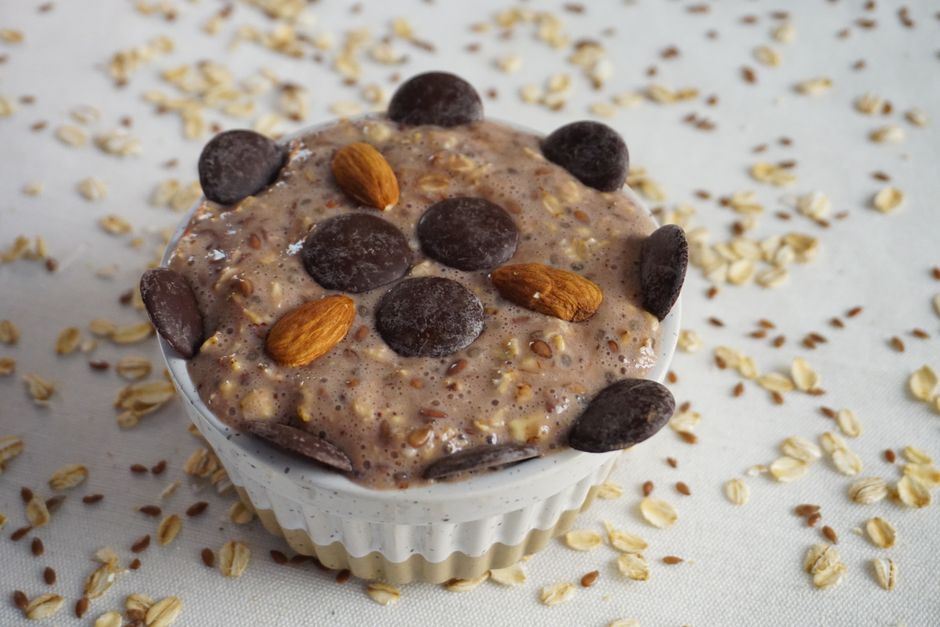
Overnight oats have become the default “healthy breakfast” for a lot of women trying to lose weight — and that’s exactly why they deserve a closer look. A jar of oats soaked in milk can support a calorie deficit, or quietly work against one, depending on what goes in the jar.
Is oats overnight good for weight loss? Yes, with conditions. Overnight oats can support weight loss because oats are high in soluble fiber, which slows digestion and helps you feel full longer. But weight loss depends on total daily calories, not the oats themselves. Many overnight oat recipes load in honey, nut butter, and fruit, pushing a single jar past 500 calories.
Most search results either praise overnight oats as a superfood or warn you off them entirely. Neither is useful. The honest answer sits in the middle, and it comes down to portion size, protein, and added sugar.
This article breaks down the actual calorie math, what the fiber research shows, and how to build a jar that works with your goals instead of against them. You’ll also find out who should probably skip overnight oats altogether.
Key Points at a Glance
| Point | What It Means | Why It Matters |
|---|---|---|
| Calories still decide weight loss | Overnight oats have no special fat-burning property | A 500-calorie jar can undo a deficit, no matter how healthy the ingredients look |
| Fiber supports satiety | Half a cup of dry oats provides about 4 grams of fiber | Fiber slows digestion and can reduce snacking later in the day |
| Protein is usually too low | Plain oats and milk offer roughly 10 to 14 grams of protein | Adding protein helps preserve muscle and improves fullness |
| Toppings drive the calorie count | Honey, nut butter, and granola add up fast | These are the most common reason overnight oats stall weight loss |
Is Oats Overnight Good for Weight Loss?
The short answer is yes — if the jar fits your calorie budget and carries enough protein to keep you full. Research consistently shows that higher fiber intake is linked to better appetite control and lower body weight over time. Oats are one of the better fiber sources you can eat at breakfast.
But oats are not a weight loss food in isolation. A half cup of dry rolled oats is roughly 150 calories on its own. Add a cup of whole milk, a tablespoon of honey, and a spoon of peanut butter and you’re near 450 to 500 calories. That can still work — but it needs to be counted.
How Many Calories Are in Overnight Oats?
A basic jar made with half a cup of dry oats and one cup of unsweetened almond milk lands around 180 to 200 calories. Swap in whole milk and you’re closer to 280. These figures vary by brand and preparation, so check your specific labels.
The toppings are where things get away from people. A tablespoon of honey adds about 60 calories. A tablespoon of peanut butter adds roughly 95. A quarter cup of granola can add 120 or more. None of these are bad foods — they just need to fit your daily total.
If you want a real number for your body, use the TDEE Calculator to estimate your maintenance calories first. Then decide what a reasonable breakfast budget looks like for you.
What Should You Add to Overnight Oats to Support Weight Loss?
Protein is the missing piece in most overnight oat recipes. A jar with just oats and milk delivers around 10 to 14 grams. Bumping that to 25 or 30 grams makes a noticeable difference in how long you stay full.
Greek yogurt, cottage cheese, or a scoop of plain protein powder all work. Nonfat Greek yogurt adds about 20 grams of protein per cup for roughly 130 calories. That’s one of the better trade-offs you can make in a breakfast jar.
For fiber, add chia seeds or ground flaxseed — a tablespoon of chia adds about 5 grams of fiber and 60 calories. Cinnamon adds flavor with almost no calories. I always add a pinch extra here — it makes a noticeable difference in how sweet the jar tastes without any sugar.
Who Should Skip Overnight Oats?
Overnight oats aren’t a fit for everyone. If you have celiac disease, standard oats are often cross-contaminated with wheat during processing — you need certified gluten-free oats. Some people with irritable bowel syndrome also react to the fiber load in a large bowl of oats.
And if you genuinely don’t like cold, soaked oats, forcing them down isn’t a weight loss strategy. A breakfast you dread is a breakfast you’ll abandon by week two. Cooked oatmeal, eggs, or Greek yogurt with fruit can all serve the same purpose.
Related Articles
Frequently Asked Questions
Is oats overnight good for weight loss?
Overnight oats can support weight loss when the total calories fit your daily budget and the jar includes enough protein to keep you full. They offer no special fat-burning effect beyond their fiber content.
How many calories are in a jar of overnight oats?
A basic jar with half a cup of dry oats and unsweetened almond milk is roughly 180 to 200 calories. Recipes with whole milk, honey, and nut butter commonly reach 450 to 500 calories.
Are overnight oats healthier than cooked oatmeal?
Nutritionally they are close to identical, since both use the same oats and liquid. The main difference is texture and temperature, not calorie or fiber content.
Can I eat overnight oats every day and still lose weight?
Yes, as long as your total daily calorie intake stays below what you burn. Eating the same breakfast daily does not slow weight loss on its own.
Do overnight oats need protein powder to work for weight loss?
No, but adding protein helps. Greek yogurt, cottage cheese, or a scoop of plain protein powder raises satiety and supports muscle retention during a deficit.
Are overnight oats gluten-free?
Plain oats are naturally gluten-free, but most are processed on shared equipment with wheat. If you have celiac disease, choose oats labeled certified gluten-free.

The TDEECAL Team writes about nutrition, metabolism, and fat loss the way we built our calculator, with real numbers and no hype. We dig into the research so you don’t have to guess.