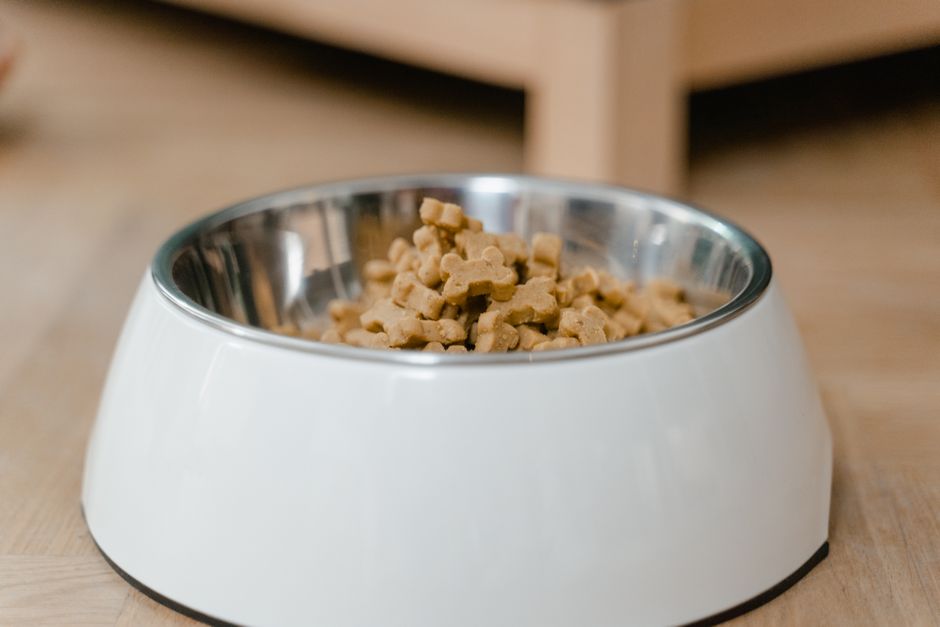
You might be surprised to learn that over 50% of dogs in the US are overweight or obese. This isn’t just about looks — it directly impacts their joints, energy, and lifespan. The truth is, the best dog food for weight loss is one with controlled calories, high-quality protein, and moderate fat, but the specific brand matters less than the calorie density and portion control you use at home.
Most commercial weight management dog foods are designed to be lower in fat and higher in fiber. This helps your dog feel full while eating fewer calories. But the real key is knowing how many calories your dog actually needs versus how much you are feeding.
This article cuts through the marketing noise. We will cover what to look for on a label, how to calculate portion sizes, and common mistakes that keep weight on your dog even when you think you are doing everything right.
Key Points at a Glance
| Point | What It Means | Why It Matters |
|---|---|---|
| Calorie density | Look for foods under 350 kcal per cup | Prevents overfeeding even with standard portions |
| Protein first | Minimum 30% protein on a dry matter basis | Preserves muscle while losing fat |
| Fiber content | Aim for 8–12% fiber on a dry matter basis | Increases satiety without extra calories |
| Portion control | Use a kitchen scale, not a measuring cup | Measuring cups can be off by 25% or more |
| Treats count | Treats should make up no more than 10% of daily calories | Even healthy treats add up fast |
What Makes a Dog Food Good for Weight Loss?
The most important factor is calorie density, not the brand name. A weight loss dog food should have fewer calories per cup than a standard maintenance food. Most weight management formulas fall between 250 and 350 kcal per cup. Anything above that is likely too calorie-dense for real weight loss.
Protein is the next critical factor. Dogs lose muscle when they lose weight, just like humans. A food with at least 30% protein on a dry matter basis helps preserve lean body mass. This keeps their metabolism higher during the process.
I always check the guaranteed analysis on the bag and convert it to dry matter. It is the only honest way to compare foods. Wet food has so much water that the protein percentage looks lower than it actually is.
Fiber also plays a role. Foods with 8–12% fiber on a dry matter basis help your dog feel satisfied with fewer calories. Ingredients like beet pulp, pumpkin, or pea fiber are common sources. But too much fiber can cause gas or loose stools, so start slowly if you switch foods.
Is Which Dog Food is Best for Weight Loss the Same for Every Dog?
No, and this is where most people get frustrated. The best food depends on your dog’s size, age, activity level, and metabolism. A high-energy Labrador puppy needs different calories than a senior Corgi who mostly naps. The food itself is just a tool — the math of calorie balance is what drives weight loss.
Your vet can help calculate your dog’s resting energy requirement. This number tells you the minimum calories needed for basic body functions. Weight loss usually starts at 80% of that number. But many commercial feeding guides overestimate portions, so always check the math yourself.
I keep a simple notebook for my dog’s weight loss journey. I write down the food brand, the exact grams per meal, and the weekly weigh-in. That data has been more useful than any fancy food label.
How to Read a Dog Food Label for Weight Loss
Start with the calorie statement. By law, dog food labels must list kcal per cup or per can. This is your most important number. Compare this across brands, not the serving size suggestions on the bag.
Next, look at the ingredient list. The first ingredient should be a named protein source like chicken, beef, or salmon. Avoid foods where the first ingredient is a grain or a by-product meal if possible. But remember, ingredients are listed by weight, so a food with “chicken” first can still be high in carbs if grains follow soon after.
Fat content matters too. Weight loss foods typically have 8–12% fat on a dry matter basis. Fat is calorie-dense, so less fat means fewer calories. But some fat is essential for skin and coat health. Do not go below 5% fat without veterinary guidance.
Common Mistakes That Stall Weight Loss
Free feeding is the biggest mistake. Leaving food out all day means you have no idea how much your dog actually eats. Even weight loss food will cause weight gain if eaten in unlimited amounts. Measure every portion with a kitchen scale, not a cup.
Treats are the second biggest problem. A single large biscuit can contain 50–100 calories. For a small dog, that is a significant portion of their daily allowance. Use low-calorie alternatives like green beans, carrot sticks, or a few pieces of their regular kibble as treats.
Table scraps are a hidden calorie source. Even a small piece of cheese or a bite of bread adds up. Everyone in the household needs to be on the same page. One person sneaking scraps can undo the progress from the rest of the week.
Related Articles
Frequently Asked Questions
How much should I feed my dog for weight loss?
Start with your dog’s resting energy requirement and feed 80% of that number. Weigh your dog weekly and adjust by 10% if weight loss stalls after two weeks.
Can I mix wet and dry food for weight loss?
Yes, but you must calculate the calories from both sources. Wet food is lower in calories per gram, so it can help with volume without adding too many calories.
How fast should a dog lose weight?
A safe rate is 1–2% of body weight per week. Faster loss can cause health problems like gallstones or muscle wasting. Slower loss is fine if it is consistent.
Do grain-free foods help with weight loss?
Not necessarily. Grain-free does not mean low-calorie. Some grain-free foods are higher in fat and calories than grain-inclusive options. Always check the calorie density first.
What if my dog is still hungry after meals?
Add low-calorie volume with steamed green beans, pumpkin puree, or a small amount of plain canned pumpkin. This adds fiber and water without many calories.
Should I use a slow feeder bowl?
Slow feeder bowls can help if your dog eats too fast, but they do not reduce calories. They just slow down the eating process. Use portion control as your main strategy.
For a more personalized approach, use the TDEE Calculator to estimate your dog’s daily calorie needs based on their current weight and activity level. This gives you a starting point that is specific to your dog, not a generic bag recommendation.

The TDEECAL Team writes about nutrition, metabolism, and fat loss the way we built our calculator, with real numbers and no hype. We dig into the research so you don’t have to guess.