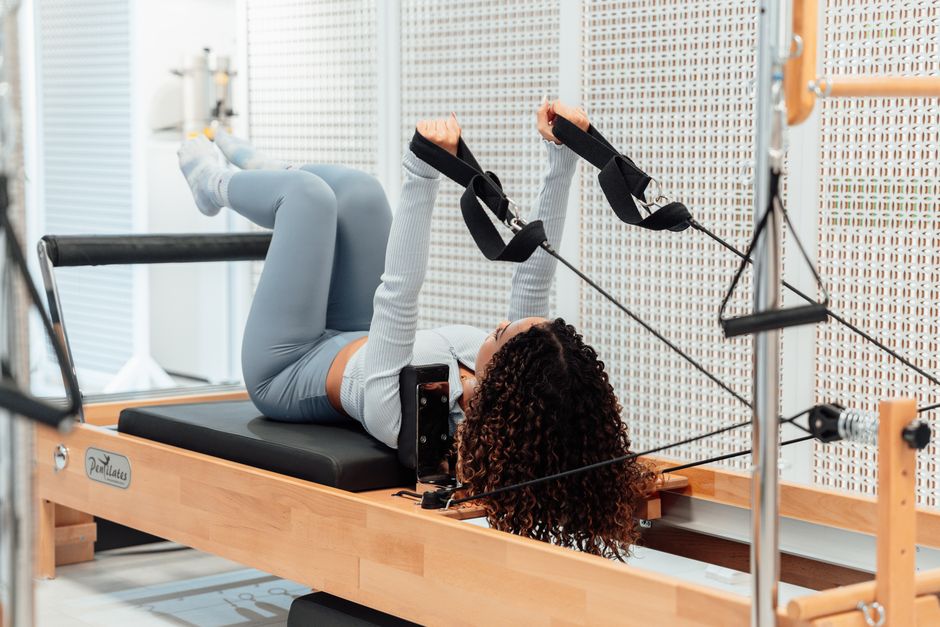
You walk into a Pilates studio and see two very different setups: a padded mat on the floor and a machine with springs and straps. Which one will actually help you lose weight? The honest answer depends more on your effort than the equipment.
When asking is mat or reformer pilates better for weight loss, the evidence points to one clear fact: neither guarantees weight loss on its own. Both forms can support fat loss when paired with a calorie deficit and consistent practice. The difference comes down to how each challenges your muscles and how many calories you burn during a session. Mat Pilates relies entirely on body weight and gravity. Reformer Pilates adds resistance through springs, which can increase muscle engagement.
This article cuts through the marketing hype to give you a direct comparison. You will learn which style burns more calories, which builds more muscle, and how to choose based on your goals. No false promises. Just the facts you need to make an informed decision.
Key Points at a Glance
| Point | What It Means | Why It Matters |
|---|---|---|
| Calorie burn is similar | Both mat and reformer burn about 150–250 calories per hour for most people | Neither is a high-calorie burner; focus on diet for weight loss |
| Reformer offers variable resistance | Springs allow progressive overload more easily than body weight | Better for building lean muscle over time |
| Mat Pilates is more accessible | No equipment needed, lower cost, can do at home | Consistency matters more than equipment for results |
| Both improve core strength | Pilates targets deep stabilizing muscles | Strong core supports better posture and reduces injury risk |
| Neither is a substitute for cardio | Pilates is primarily strength and mobility work | Combine with walking, jogging, or cycling for best weight loss results |
Does Mat or Reformer Pilates Burn More Calories?
The short answer is that calorie differences between mat and reformer Pilates are small. A 150-pound person burns roughly 170–200 calories during a 50-minute mat class. A reformer session of the same length burns about 200–250 calories. The difference is roughly the same as eating one extra apple.
I have taken both types of classes for years, and I notice my heart rate stays slightly higher on the reformer because I am constantly adjusting resistance. But neither class makes me breathe as hard as a brisk walk. If weight loss is your main goal, Pilates works best as a complement to cardio and strength training, not a replacement.
Which Builds More Muscle for Weight Loss?
Muscle tissue burns more calories at rest than fat tissue. So building muscle matters for long-term weight management. Reformer Pilates has a clear advantage here because you can increase resistance by adding or changing springs. This allows for progressive overload, which is the principle behind muscle growth.
Mat Pilates relies on body weight and gravity. You can make exercises harder by changing lever positions, but there is a limit. A reformer lets you target smaller stabilizing muscles with precision. If you want to build visible lean muscle, reformer Pilates gives you more room to progress over months and years.
How Often Should You Do Pilates for Weight Loss?
Consistency matters more than which machine you use. Research suggests that doing Pilates two to three times per week for at least eight weeks can lead to measurable changes in body composition. But the changes are modest — typically a few pounds of fat loss and a small increase in lean mass.
If you do Pilates once a week and eat poorly, you will not see weight loss. The same is true if you do reformer Pilates five times a week. Your diet and overall activity level drive the scale. Pilates is a tool, not a solution.
Should You Choose Mat or Reformer for Home Practice?
Mat Pilates is the clear winner for home practice. You need only a mat and maybe a small cushion for your head. You can follow free videos online and get a solid workout. Reformer machines are expensive — often $1,000 or more — and take up significant floor space.
If you prefer reformer Pilates, consider studio classes once or twice a week. Supplement with mat Pilates at home on other days. This gives you the best of both worlds without breaking your budget.
Related Articles
Frequently Asked Questions
Is mat or reformer Pilates better for weight loss?
Neither is inherently better for weight loss. Both support fat loss when combined with a calorie deficit and consistent practice.
How many calories does reformer Pilates burn?
A typical 50-minute reformer session burns about 200–250 calories for a 150-pound person. This varies based on intensity and body weight.
Can you lose belly fat with Pilates?
Pilates strengthens core muscles but does not target belly fat specifically. Spot reduction is not supported by evidence.
Is Pilates enough exercise for weight loss?
Pilates alone is usually not enough for significant weight loss. Combine it with cardio and strength training for best results.
How often should I do Pilates to see results?
Two to three sessions per week for at least eight weeks can lead to modest body composition changes. Consistency is key.
Is reformer Pilates worth the cost?
Reformer Pilates offers better resistance options for muscle building. But mat Pilates is more affordable and still effective.
To track your progress accurately, use a TDEE Calculator to find your maintenance calories and create a sustainable deficit.

The TDEECAL Team writes about nutrition, metabolism, and fat loss the way we built our calculator, with real numbers and no hype. We dig into the research so you don’t have to guess.