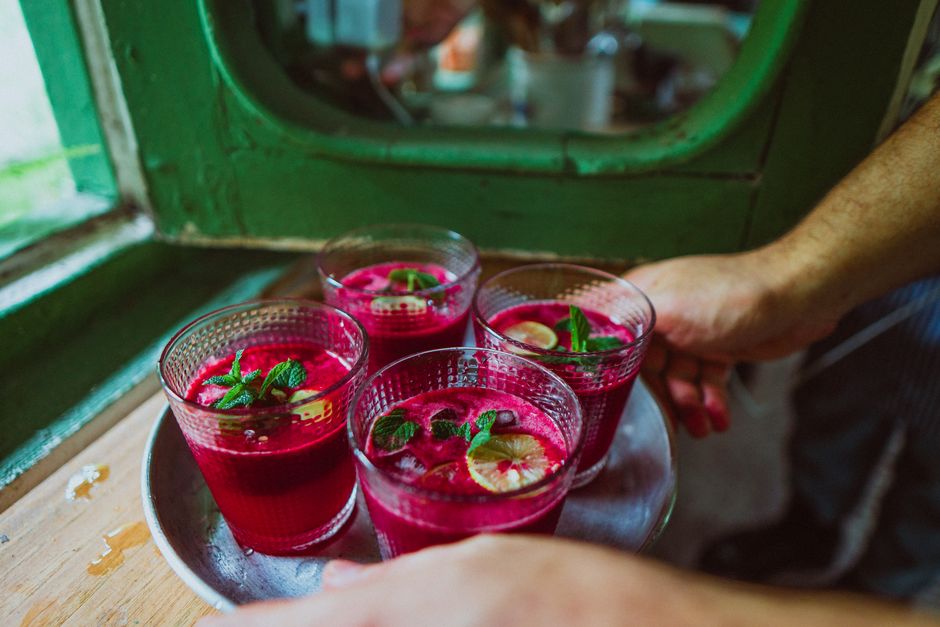
Most people give up on beetroot juice after one sip because it tastes like dirt. But with the right method, it becomes a drink you actually look forward to.
To prepare beetroot juice for weight loss, wash and peel 2 medium beets, chop them into small cubes, and blend with 1 cup of water and a thumb-sized piece of fresh ginger until smooth. Then strain through a fine-mesh sieve or nut milk bag, pressing firmly to extract all the liquid. This basic recipe keeps the calories low — around 110 per serving — while delivering natural nitrates that support blood flow and exercise endurance.
This version skips the apple and carrot that most recipes rely on for sweetness. That saves you about 40 calories per glass and keeps the sugar content in check. The ginger does double duty — it masks the earthiness and adds a mild anti-inflammatory effect that some studies link to better metabolic health.
If you are over 40 and trying to drop weight, this juice works best when you drink it 30 to 45 minutes before a workout. The nitrates improve oxygen delivery to your muscles, which means you can push harder during cardio or strength training. More effort burned during exercise means more calories out the door.
Is Beetroot Juice Good for Weight Loss?
Beetroot juice supports weight loss indirectly, not by burning fat on its own. The key benefit is its nitrate content, which your body converts to nitric oxide. This compound relaxes blood vessels and improves blood flow, which can boost exercise performance by 5 to 10 percent according to multiple small studies.
One honest limitation: beetroot juice is not a protein drink. A single serving provides only about 2 grams of protein and less than 1 gram of fiber once strained. That means it will not keep you full on its own. You need to pair it with a solid breakfast — eggs, Greek yogurt, or a protein shake — to avoid feeling hungry by 10 a.m.
I always add a pinch of sea salt to my glass. It sounds strange but it balances the sweetness and makes the ginger pop more. Without the salt, the juice can taste flat even when the ingredients are fresh.
Beetroot Juice for Weight Loss
Beetroot Juice for Weight Loss
Ingredients
- 2 medium beets (about 8 oz total), washed and peeled
- 1 cup cold water
- 1-inch piece fresh ginger, peeled
- Pinch of sea salt (optional, but recommended)
- Ice cubes for serving (optional)
How to Prepare Beetroot Juice Step by Step
- Chop the peeled beets into 1-inch cubes. Smaller pieces blend more smoothly and reduce strain on your blender motor.
- Add the beet cubes, water, and ginger to a high-speed blender. Blend on high for 60 seconds until the mixture looks like a thick puree with no large chunks remaining.
- Strain the mixture through a fine-mesh sieve or nut milk bag into a large bowl. Use a spatula or your hands to press the pulp firmly and extract as much liquid as possible. Discard the dry pulp.
- Pour the juice over ice if desired. Add a pinch of sea salt and stir. Drink immediately for the best flavor and highest nutrient content.
Nutrition Facts
Nutrition Facts
Per serving (1 cup, about 8 oz)
Nutrition estimates based on USDA FoodData Central data. Values may vary by brand or ingredient substitution.
Substitutions and Variations
| Original | Swap | Why It Works |
|---|---|---|
| Fresh ginger | 1/2 teaspoon ground ginger | Works in a pinch when you do not have fresh ginger on hand. The flavor is milder but still cuts the earthiness. |
| Water | Unsweetened coconut water | Adds natural electrolytes and a subtle sweetness without extra sugar. Adds about 10 calories per cup. |
| Strained juice | Unstrained smoothie | Keeps the fiber intact for better satiety. The texture is thicker and more filling, like a thin smoothie. |
| Plain beet juice | Add 1/2 small lemon, peeled | Lemon brightens the flavor and adds vitamin C, which may help your body absorb the iron in beets more efficiently. |
Storage and Make-Ahead Tips
- Fresh beetroot juice keeps in an airtight jar in the refrigerator for up to 48 hours. Shake well before drinking because the solids settle quickly.
- Do not freeze this juice. The texture becomes watery and grainy after thawing, and the flavor turns flat.
- For a faster morning routine, peel and chop the beets the night before. Store the cubes in a sealed container in the fridge. Blend and strain in under 5 minutes the next morning.
- If you make a double batch, store the strained juice and the chopped beets separately. The juice oxidizes faster once made, so only juice what you plan to drink within two days.
- Wash your blender and strainer immediately after use. Beet juice stains plastic quickly, and dried pulp is difficult to remove from mesh sieves.
Related Articles
Frequently Asked Questions
Can I drink beetroot juice every day for weight loss?
Yes, one serving per day is safe for most people. But drink it alongside a balanced meal plan, not as a meal replacement.
How many calories are in beetroot juice for weight loss?
A standard 8-ounce serving made with water and no added fruit contains about 110 calories. That is low enough to fit into most calorie deficits.
Should I drink beetroot juice before or after a workout?
Drink it 30 to 60 minutes before exercise for the best performance boost. The nitrates need time to convert into nitric oxide in your bloodstream.
Does beetroot juice burn belly fat?
No single food targets belly fat directly. Beetroot juice supports exercise performance, which helps you burn more calories overall over time.
Can I use a juicer instead of a blender?
Yes, a juicer works well and skips the straining step. The yield will be slightly lower because juicers leave more pulp behind.
Why does my beetroot juice taste bitter?
Bitterness usually comes from old beets or too much ginger. Use fresh, firm beets and reduce the ginger to half an inch next time.
If you are tracking your calories for weight loss, use the TDEE Calculator to find your maintenance number first. Then subtract 300 to 500 calories from that number to create a sustainable deficit. Beetroot juice fits into that deficit easily when you skip the sweet add-ins.

The TDEECAL Team writes about nutrition, metabolism, and fat loss the way we built our calculator, with real numbers and no hype. We dig into the research so you don’t have to guess.