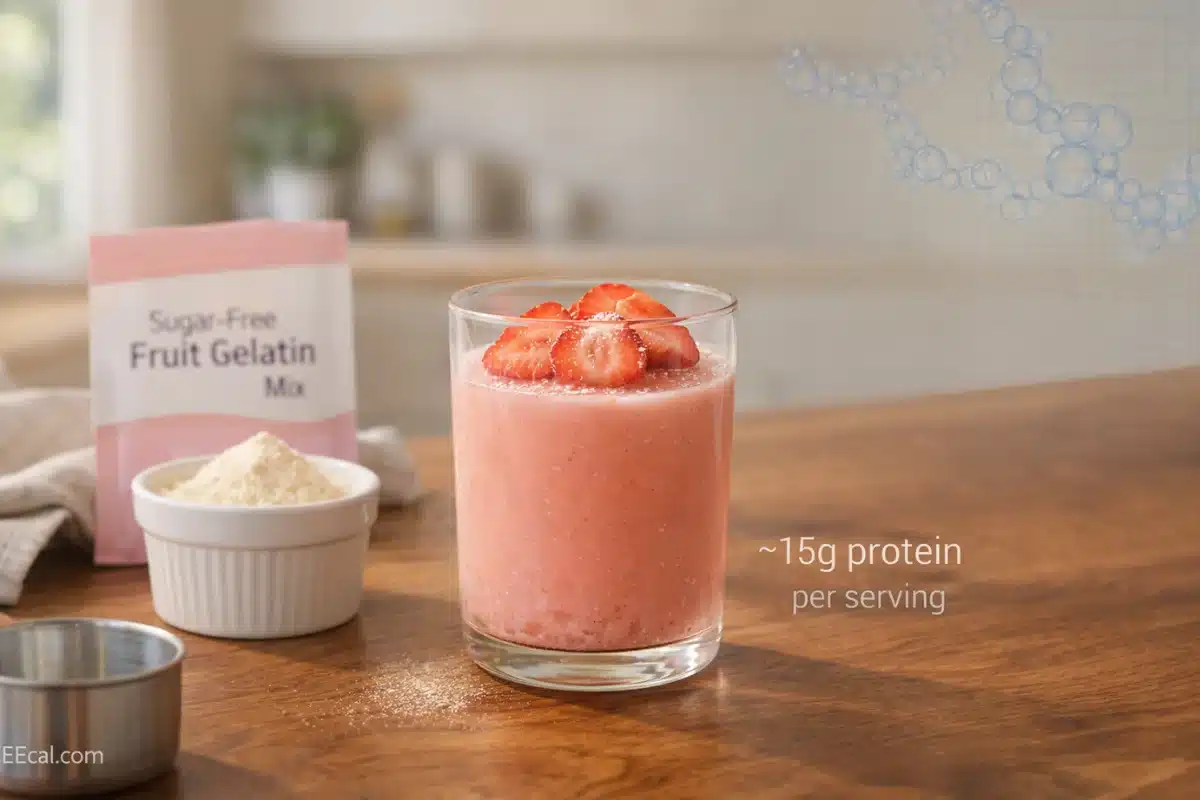
Gelatin recipe for weight loss are everywhere right now. People claim gelatin keeps you full, boosts your protein, and tricks your body into losing weight faster.
But here’s what the actual research supports and where the hype oversells the science.
Gelatin Recipe Overview
| Field | Details |
|---|---|
| What it is | A high-protein, low-calorie food made from collagen that people add to drinks, snacks, or desserts |
| What people claim | It suppresses appetite, speeds metabolism, and creates a “diet trick” for easy weight loss |
| What research says | Gelatin is protein and does help with fullness, but only works if it fits into a calorie deficit |
| Biggest benefit | Low-calorie way to add protein and texture to meals without much flavor or sweetness |
| Biggest limitation | It’s not a trick — it works the same way regular protein does, no faster or better |
| Best for | People looking for a high-protein snack under 100 calories that keeps them full between meals |
| Be careful if | You have kidney disease or follow a doctor-restricted diet — check before adding extra protein |
| Bottom line | Gelatin is a protein and does help with fullness, but only works if it fits into a calorie deficit |
Why Gelatin Actually Helps (And Why It Doesn’t)
Gelatin is roughly 90% protein and almost zero fat or carbs. That sounds great. But here’s the truth nobody mentions: it’s an incomplete protein. It’s missing some amino acids your body needs. You can’t build muscle on gelatin alone or replace real protein sources.
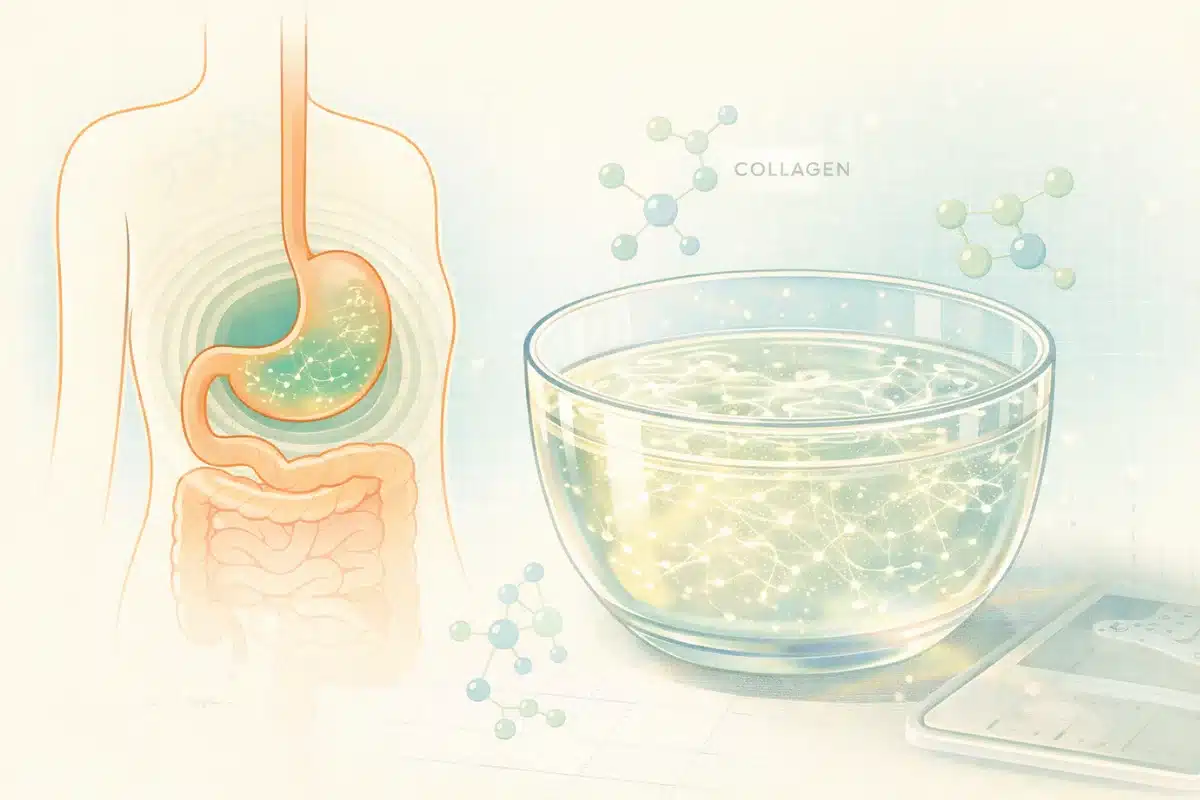
What gelatin does is add volume and texture with almost no calories. That matters for fullness.
The Science of Protein and Fullness
Research backs this up. A study from the Appetite journal in 2016 found that high-protein snacks do keep people full longer than low-protein ones. But that’s because protein works — not because gelatin is special.
When you eat 20 grams of protein, your stomach takes longer to empty. Your brain gets the signal that you’re satisfied. You eat less at the next meal. That’s the whole mechanism. Gelatin does this just like chicken breast or Greek yogurt does. No better. Not worse. Just different.
The real question isn’t “Does gelatin help?” It’s “Will you actually use this instead of snacking on something with 300 calories?”
What Is Gelatin Made From
Gelatin comes from collagen. Collagen is a protein in animal skin and bones, mostly from cows and pigs. Manufacturers boil bones, skin, and connective tissue. They filter it, concentrate it, and dry it into powder or sheets.
That’s it. No magic ingredient. No special processing. It’s the same reason bone broth tastes savory — that’s the collagen dissolving into water.
Vegetarian? Gelatin won’t work for you. Some people use agar-agar instead, but it’s mostly fiber and water, not protein.
The Pink Gelatin Diet Recipe (And Why It Became Famous)
The pink gelatin diet blew up on social media around 2023. The basic recipe is simple: sugar-free Jell-O powder mixed with water, plus sometimes protein powder or plain gelatin stirred in.
Why pink? No reason except it looked nice on Instagram. The actual color means nothing for weight loss.
People reported losing weight by eating this. Here’s what probably happened: they replaced higher-calorie snacks with a 10-20-calorie gelatin cup. They ate in a calorie deficit without realizing it. The gelatin itself wasn’t magic — the behavior change was.
If you switched from eating a 200-calorie muffin to a gelatin snack five times a week, you’d lose weight. But you’d also lose weight switching to 200 calories of anything else.
How to Make a Simple Gelatin Recipe for Weight Loss
This takes five minutes the night before.
Basic recipe:
- 1 packet sugar-free gelatin (usually 10 calories)
- 1 cup boiling water
- 1/2 cup cold water
- Mix, pour into a container, and refrigerate
To boost protein:
- Add 10 grams of unflavored gelatin powder to the mixture before it sets (adds 40 calories and 10 grams of protein)
- Or stir in one scoop of protein powder after it cools slightly
Real talk: The plain version is mostly gelatin and tastes a little flat. Adding protein powder makes it thicker and more satisfying. You’re not chewing it, but the texture matters psychologically.
A 3-Ingredient Gelatin Recipe That Actually Works
Ingredients:
- 1 packet sugar-free gelatin (lime or lemon is better than fruit punch)
- 1 cup boiling water
- 1/2 cup plain Greek yogurt (stirred in after cooling, before setting)
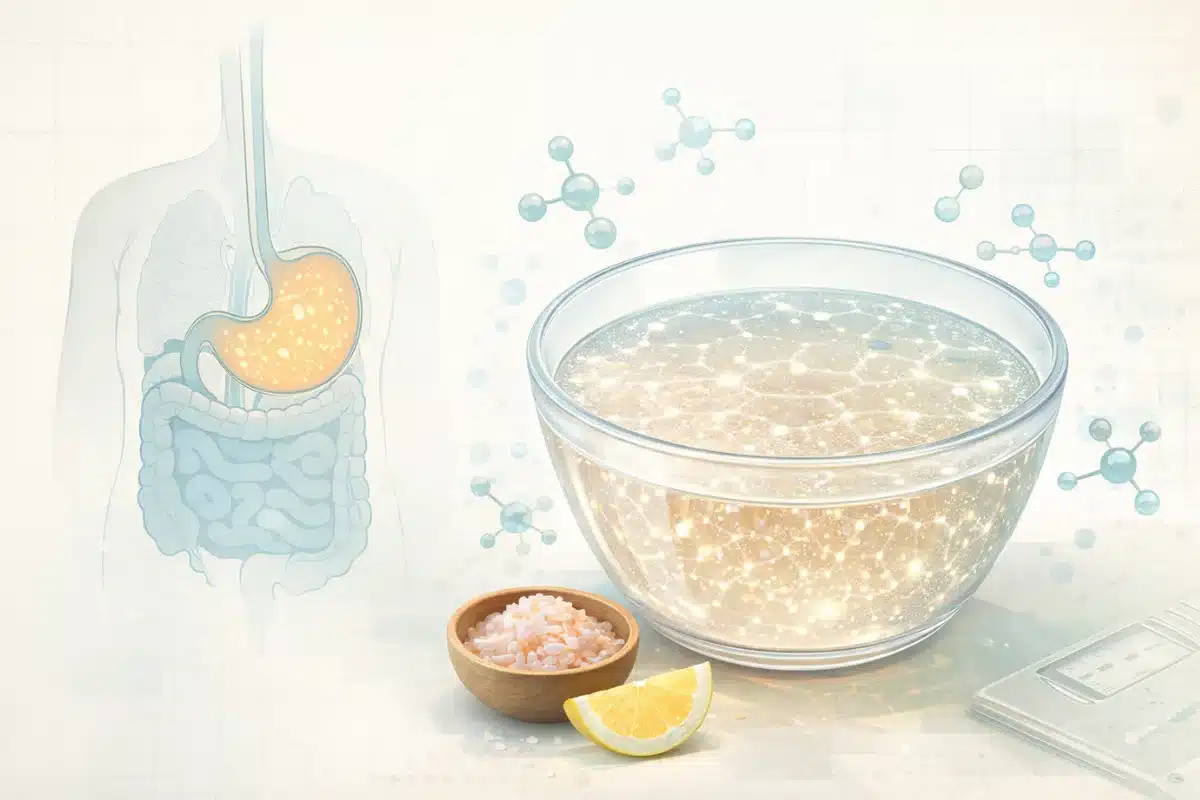
This gets you 15 grams of protein instead of 2. It takes on a mousse texture. It actually tastes like something you want to eat.
The yogurt trick is worth it. Most gelatin recipes fall flat because they taste like eating colored water. The yogurt makes it feel like a dessert without the 300 calories.
The Honest Truth About Gelatin as a Weight Loss Tool
Here’s what research hasn’t figured out yet: whether people stick with gelatin snacks long-term. All the studies are short-term. One or two weeks. Real life is three months, six months, a year.
Does a gelatin snack beat a protein bar? Probably not significantly. Does it beat eating nothing? Only if you actually eat it instead of something else. If you add it on top of what you already eat, you’ll gain weight.
The best weight loss tool is the one you’ll actually use. If you hate gelatin, don’t force it. If you like it, it works as well as any other high-protein, low-calorie snack.
Who Should Actually Use Gelatin for Weight Loss
If you’re eating lunch at your desk and bored by the same protein bar every day, gelatin is a change. It’s cheap — about 25 cents per serving. It’s shelf-stable. You can make it in batches.
If you struggle with sweet cravings and those sugar-free Jell-O cups scratch that itch for 10 calories, that’s genuinely useful. It’s not the gelatin doing the work — it’s that you picked a 10-calorie option instead of a 150-calorie one.
If you’re 50+ and following a high-protein diet for muscle maintenance, gelatin doesn’t replace chicken or eggs. But as a between-meal snack? It works.
If you have kidney disease or your doctor told you to watch protein, check first. Extra protein intake can complicate things.
Common Questions About Gelatin Recipe for Weight Loss
Does gelatin really suppress appetite?
Protein suppresses appetite. Gelatin is a protein, so yes, but it works like any protein does, not better. A cup of gelatin keeps you full about the same as a hard-boiled egg, which has similar protein but more calories.
Can gelatin recipes replace meals?
No. A gelatin snack is maybe 50-100 calories and 10 grams of protein. That won’t keep you satisfied for lunch or dinner. Use it as a snack between meals or a dessert after dinner.
Is unflavored gelatin the same as Jell-O?
Mostly. Unflavored gelatin is pure protein with no sweetener. Jell-O powder adds artificial sweetener and flavor. Both work the same way. Unflavored is more versatile if you want to add it to other foods.
How much gelatin can you eat safely?
There’s no upper limit from research. Some bodybuilders eat gelatin daily. But you’d get bored before you hurt yourself. The average intake of a snack or two per day is fine for most people.
Does warm gelatin (as a broth) work better for weight loss?
No. Liquid gelatin is just collagen dissolved in water. You’re not chewing or experiencing the texture. It doesn’t keep you as full as set gelatin does. Same calories, less satisfaction.

The TDEECAL Team writes about nutrition, metabolism, and fat loss the way we built our calculator, with real numbers and no hype. We dig into the research so you don’t have to guess.