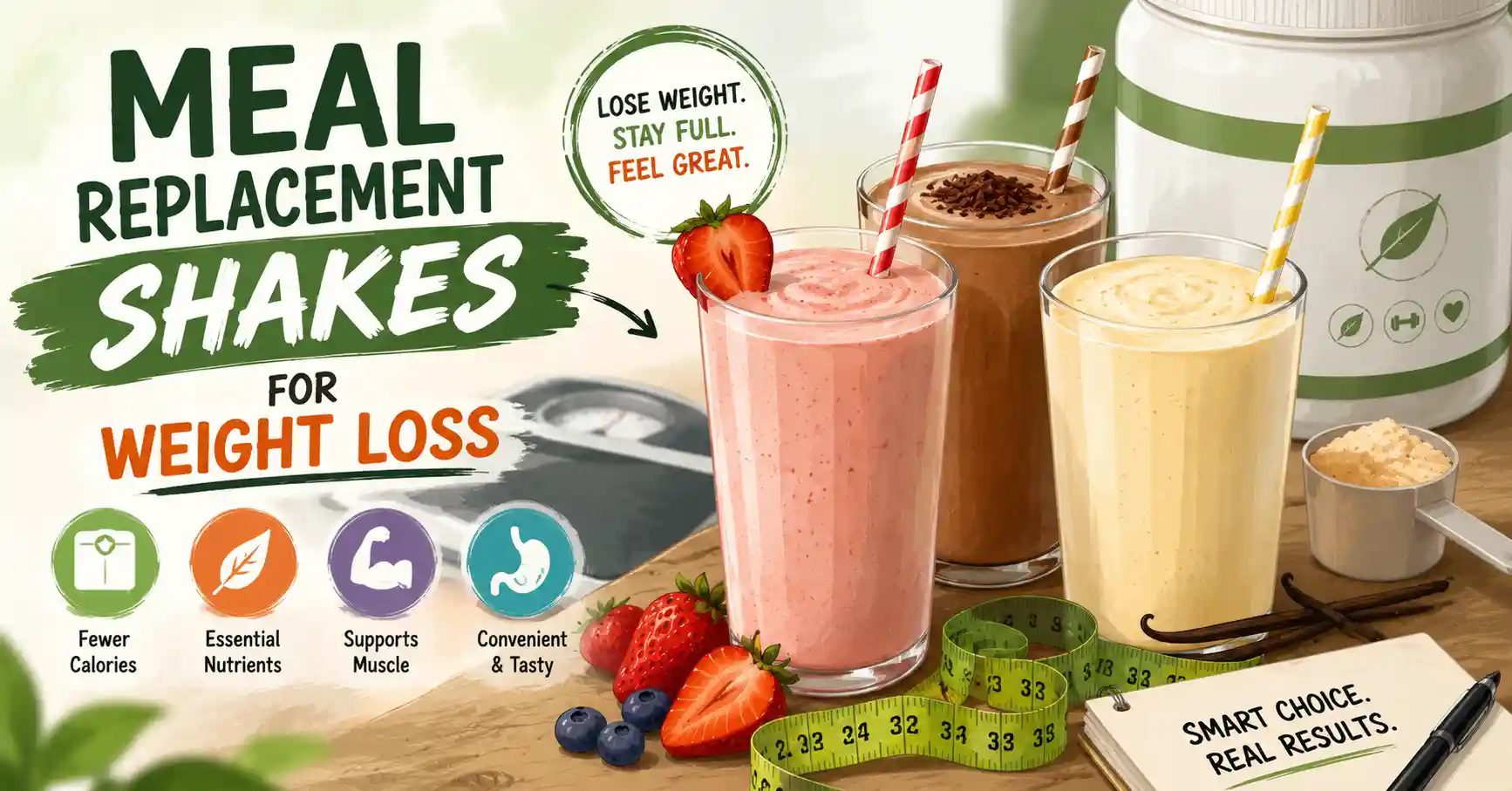
Most packaged shakes taste like chalk mixed with regret — and cost you $4 a bottle.
Meal replacement shakes for weight loss work when they are built around three things: enough protein to protect muscle, enough fiber to hold hunger off, and enough real food to actually taste like something you’d choose to drink. This guide gives you a base recipe, three variations, and the exact numbers — so you can make a balanced 300-calorie shake at home in five minutes.
This is not for people who want a 90-calorie “diet shake” that leaves them starving by 10 a.m. It is for people who want a real, filling meal in a glass — made from ingredients they already know.
Commercial meal replacement shakes are convenient, but most are built around artificial sweeteners, cheap fillers, and a protein source that is harder to pronounce than it is to digest. Making your own costs less, tastes better, and gives you full control over what goes in. The recipes below have been calorie-estimated using USDA FoodData Central — not guesswork.
High-Protein Vanilla Berry Meal Replacement Shake
Approximately 300 calories · 29g protein · 8g fiber per serving
What Makes a Meal Replacement Shake Actually Work for Weight Loss
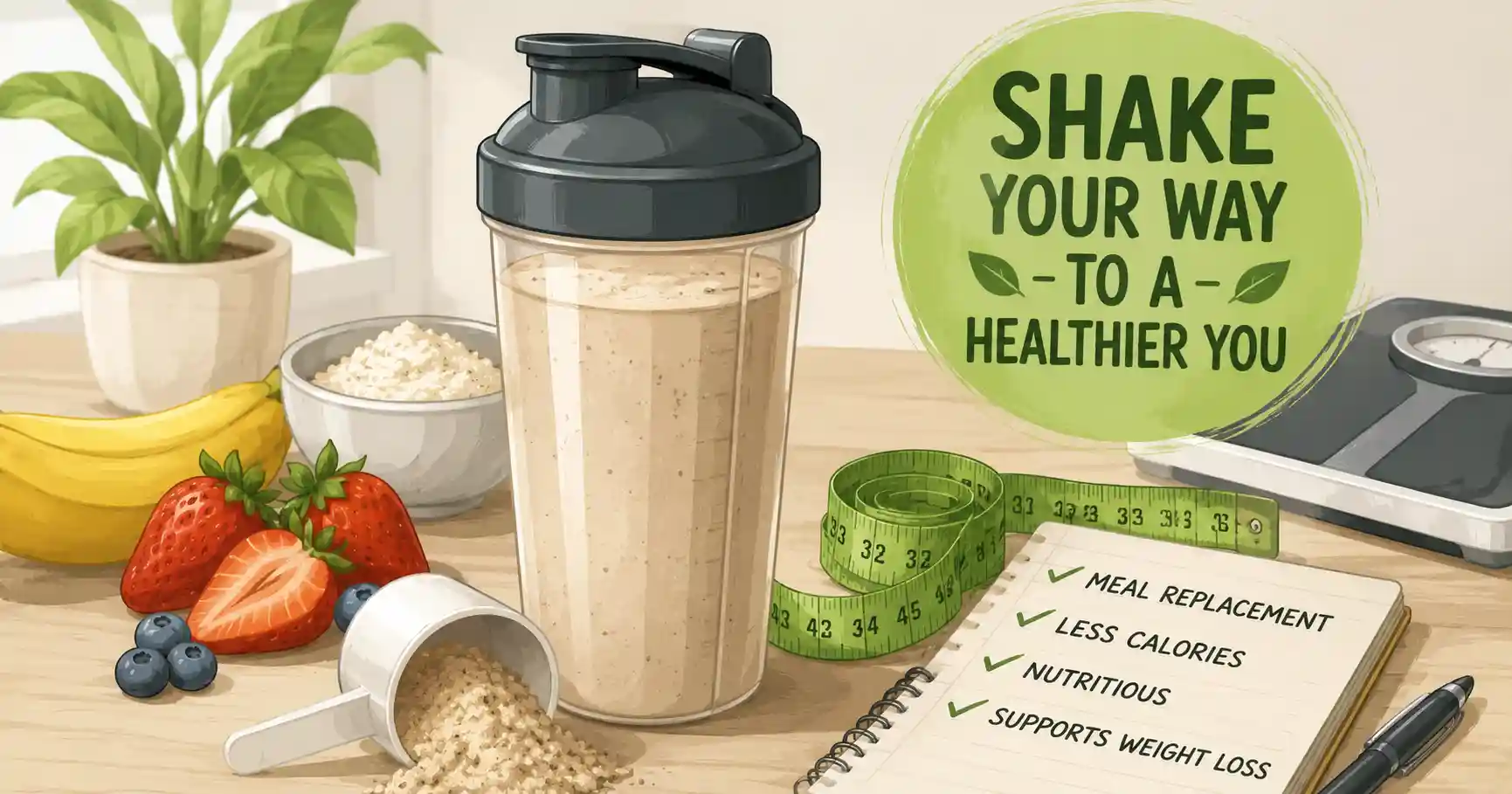
A shake is just a drink until you give it the right structure. To replace a meal and hold you for 3–4 hours, it needs three things working together: protein, fiber, and a moderate amount of healthy fat.
Protein is the most important factor. It takes more energy to digest than carbohydrates, supports muscle retention during a calorie deficit, and — according to research published by the National Institutes of Health — significantly reduces appetite-related hormones. Aim for at least 20–25g of protein per shake.
Fiber slows digestion, stabilizes blood sugar, and keeps you from reaching for a snack an hour later. The Harvard T.H. Chan School of Public Health recommends 25g of fiber daily for women — one well-made shake can contribute a meaningful portion of that. Chia seeds, spinach, and berries are easy sources.
Healthy fat slows the rate at which your stomach empties, which extends how long you feel full. A tablespoon of chia seeds or almond butter does the job without pushing your calorie count too high.
I find that skipping even one of these — say, leaving out the fiber — results in a shake that satisfies for about 90 minutes and then leaves you picking at whatever is in the fridge. The balance matters.
Check out our guide to smoothie recipes for weight loss if you prefer a thinner, fruit-forward drink over a full meal replacement.
How to Make Meal Replacement Shakes for Weight Loss (Base Recipe)
Ingredients
- 1 cup unsweetened almond milk (or any unsweetened plant or dairy milk — soy milk adds more protein)
- 1 scoop vanilla whey protein powder, approx. 30g (see substitutions below for dairy-free options)
- 1/2 cup frozen mixed berries (frozen is fine and keeps the shake cold without extra ice)
- 1 tbsp chia seeds (in the baking aisle or health food section; adds omega-3s and fiber)
- 1/2 medium banana, fresh or frozen (frozen banana makes the shake creamier)
- 1 cup fresh spinach (you will not taste it — it adds iron, magnesium, and a deep green color)
- 3–4 ice cubes
Step-by-Step Instructions
- Pour the almond milk into the blender first. Starting with liquid prevents the powder from clumping at the bottom.💡 Tip: Adding liquid before dry ingredients is the single easiest way to get a smoother shake with less cleanup.
- Add the spinach, frozen berries, banana, and chia seeds on top of the milk.
- Spoon the protein powder in last, directly onto the other ingredients. This keeps it from sticking to the sides.💡 Tip: If your protein powder clumps when it hits cold liquid, let it sit on top of the fruit for 20 seconds before blending — it incorporates much more cleanly.
- Add the ice cubes and secure the blender lid.
- Blend on high for 45–60 seconds until the shake is completely smooth. No spinach flecks should be visible.💡 Tip: If your blender struggles with ice, let the frozen berries sit at room temperature for 2 minutes before blending — it reduces the load on the motor.
- Check the consistency. Add a small splash of milk if it is too thick to drink through a straw. Blend for 5 more seconds.
- Pour into a large glass and drink immediately. The shake is thickest and freshest right after blending.
Nutrition Facts
Nutrition Facts
Per serving (1 shake, approx. 16 oz)
Nutrition estimates calculated using USDA FoodData Central. Values may vary based on the protein powder brand and milk type used.
Three Shake Variations to Keep Things Interesting
Drinking the same shake every day is how people quit. These three variations use the same base structure — protein, fiber, healthy fat — but taste completely different.
Chocolate Peanut Butter
~320 cal · 27g protein- 1 cup unsweetened soy milk
- 1 scoop chocolate whey protein powder
- 1 tbsp unsweetened peanut butter
- 1 tbsp chia seeds
- 1 cup spinach
- 1/2 frozen banana
- 4 ice cubes
Soy milk adds an extra 6–7g of protein over almond milk. This one keeps me full noticeably longer on mornings when I know lunch will be late.
Mango Coconut (Dairy-Free)
~290 cal · 24g protein- 3/4 cup unsweetened coconut milk (from a carton, not a can)
- 1/4 cup water
- 1 scoop vanilla pea-rice protein powder
- 1/2 cup frozen mango chunks
- 1 tbsp ground flaxseed
- 1/2 cup fresh spinach
- 1/2 tsp fresh ginger, grated
Ginger is optional, but it adds a brightness that balances the sweetness of the mango well. Canned coconut milk will make this too thick and push the calories up significantly — use the carton version.
Green Apple Oat (No Protein Powder)
~310 cal · 22g protein- 3/4 cup plain Greek yogurt (2% fat)
- 1/2 cup unsweetened almond milk
- 1/2 small green apple, cored and chopped
- 3 tbsp rolled oats
- 1 tbsp hemp seeds
- 1 cup spinach
- 1/2 tsp cinnamon
- 4 ice cubes
This one works well for people who want to skip the powder entirely. Greek yogurt and hemp seeds together hit around 22g of protein — not far off the powder-based versions. See more high-protein smoothie ideas without protein powder if this approach suits you.
For more shake and smoothie combinations built around weight management, the best protein shakes for weight loss page on TDEEcal covers additional options with macro breakdowns.
Substitutions & Variations
| Original Ingredient | Swap It For | Why |
|---|---|---|
| Whey protein powder | Pea-rice protein blend | Dairy-free/vegan swap — matches whey in amino acid profile fairly well |
| Banana (1/2) | 1/4 avocado + 1 tsp honey | Lower sugar — avocado adds healthy fat, keeps carbs lower |
| Fresh spinach | 1 tsp unflavored greens powder | Busy day shortcut — no washing, no measuring, minimal taste impact |
| Mixed berries | Frozen mango or frozen peach | Flavour variation — sweeter profile, similar fiber content |
| Almond milk | Unsweetened oat milk | Budget/seasonal swap — widely available and creamier texture |
Storage & Make-Ahead Tips
- Fridge: Pour leftover shake into a sealed mason jar or airtight bottle. It keeps for up to 24 hours. Give it a vigorous shake before drinking — separation is normal and does not mean it has gone bad.
- Freezer (prep packs): Divide dry and frozen ingredients — berries, banana chunks, spinach, chia seeds — into individual freezer-safe bags. Label each bag. When ready, dump the bag into the blender, add milk and protein powder, and blend. This takes the daily decision out of the equation entirely.
- Protein powder: Do not add protein powder to the freezer packs. Add it fresh at blend time. Powder that freezes and thaws can develop an off texture and may not blend smoothly.
- Make-ahead timing: Prep up to 5 days of freezer packs on Sunday. It takes about 10 minutes and makes the rest of the week significantly easier.
- Not recommended: Shakes made with Greek yogurt do not freeze or store as well. The yogurt can separate and become grainy. Make those fresh each time.
Frequently Asked Questions
Can meal replacement shakes help you lose weight?
Yes, when used correctly. Replacing one meal per day with a balanced shake that is lower in calories than your usual meal creates a calorie deficit — the core mechanism of weight loss. Research supports meal replacements as an effective short- to medium-term strategy, especially when the shake includes adequate protein and fiber to keep hunger at bay. They work best alongside a reasonable overall diet, not as a standalone fix.
How many calories should a meal replacement shake have for weight loss?
Most nutrition guidelines suggest a meal replacement shake for weight loss should fall between 200 and 400 calories per serving. It should also contain at least 15–25g of protein and 5g or more of fiber to keep you satisfied until your next meal. Shakes below 200 calories often leave people hungry within an hour, which leads to snacking and undermines the calorie deficit you are trying to create.
Is it safe to replace two meals a day with shakes?
Replacing two meals daily with shakes is a more aggressive approach and is generally not recommended without guidance from a doctor or registered dietitian. While some structured programs use this method short-term, doing it on your own makes it harder to meet your daily micronutrient needs. Replacing one meal per day is a safer, more sustainable starting point for most people.
What protein powder is best for a homemade meal replacement shake?
Whey protein is the most studied option and digests well for most people. If you are dairy-free or vegan, a pea-and-rice protein blend is a close match in amino acid profile. Avoid powders with long ingredient lists, artificial sweeteners that cause bloating, or added sugars that push your calorie count up unexpectedly. Plain or vanilla flavors are the most versatile for blending with fruit.
Can I make meal replacement shakes without protein powder?
Yes. Greek yogurt, cottage cheese, silken tofu, or hemp seeds can all bring the protein content up without powder. A base of 3/4 cup Greek yogurt adds about 15–17g of protein, which combined with chia seeds and milk gets you close to the 20g target. The texture will be thicker and creamier — some people actually prefer it. The green apple oat variation in this article uses exactly this approach.
Will meal replacement shakes cause muscle loss?
Poorly constructed shakes that are too low in protein can contribute to muscle loss during a calorie deficit. This is why the protein content of your shake matters. Aim for at least 20–25g of protein per serving to support muscle retention. According to the Mayo Clinic, preserving lean mass during weight loss also requires resistance training alongside dietary changes — shakes alone are not enough.
Disclaimer: The recipes and nutritional information on TDEEcal.com are shared for general informational purposes only. They are not intended as medical advice, diagnosis, or treatment. Individual calorie needs, dietary requirements, and health conditions vary. If you have a medical condition, are pregnant, or are managing your weight under the care of a healthcare provider, please consult a qualified professional before making changes to your diet.

The TDEECAL Team writes about nutrition, metabolism, and fat loss the way we built our calculator, with real numbers and no hype. We dig into the research so you don’t have to guess.