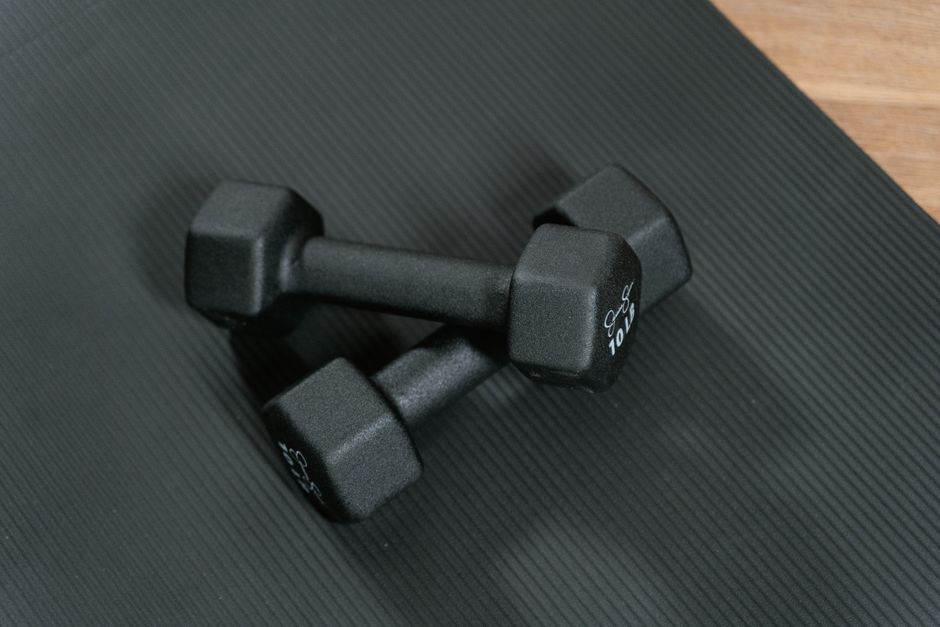
Ten-pound dumbbells sit in a lot of home gym corners, but whether they actually help you lose weight depends on how you use them, not the weight itself. For many beginners, 10-pound dumbbells are a solid starting point for strength training, though they will not drive significant weight loss on their own.
Yes, 10 lbs dumbbells are good for weight loss when used consistently in a full-body workout routine, especially for beginners. However, weight loss happens primarily through calorie balance, and dumbbells help by building muscle and burning extra calories during exercise. The honest answer is that 10-pound dumbbells can work for a while, but you will likely need to progress to heavier weights to keep seeing results.
Most women in their 40s and 50s I talk to are surprised to learn that lifting light weights still counts as strength training. The confusion usually comes from fitness influencers who make it seem like you need heavy barbells or complicated equipment to see any change. This article breaks down what 10-pound dumbbells can actually do for weight loss, who should use them, and when it is time to move up.
Key Points at a Glance
| Point | What It Means | Why It Matters |
|---|---|---|
| Calorie burn | A 30-minute dumbbell workout burns roughly 100–150 calories for a 150-pound woman | Supports weight loss but is not the main driver |
| Muscle preservation | Resistance training helps maintain lean mass during calorie deficit | Prevents metabolism slowdown while losing weight |
| Progression | 10 lbs works for beginners but becomes too light within 4–8 weeks | You need to increase weight or reps to keep challenging muscles |
| Frequency | 2–3 full-body sessions per week is enough to see benefits | Consistency matters more than workout length |
Is 10 Lbs Dumbbells Good for Weight Loss for Beginners?
If you have never lifted weights before, 10-pound dumbbells are a reasonable place to begin. They are light enough to learn proper form for exercises like squats, rows, and overhead presses without risking injury. Research consistently shows that beginners can build noticeable strength with moderate weights when they perform 10–15 repetitions per set.
The catch is that your body adapts quickly. After a few weeks, those same exercises will feel easier, and you will need to add more repetitions, slow down the movement, or increase the weight to keep challenging your muscles. I always tell clients to start with 10 lbs if they are unsure, but to plan on progressing within the first two months.
Practical tip: If you can complete 15 repetitions of an exercise with good form and still feel like you could do several more, the weight is too light for strength gains. Move up to 12 or 15 pounds before adding more sets.
How Do 10-Pound Dumbbells Actually Help With Weight Loss?
Weight loss comes down to burning more calories than you consume, and 10-pound dumbbells contribute to that in two main ways. First, the workout itself burns calories — a 30-minute session with light weights uses roughly 100 to 150 calories for a 150-pound woman, depending on how intense you make it. Second, building and maintaining muscle raises your resting metabolic rate slightly, which means you burn a few extra calories throughout the day.
The bigger benefit is often overlooked. Strength training while eating in a calorie deficit helps you lose fat rather than muscle, which keeps your metabolism healthier long term. Some studies suggest that preserving muscle during weight loss makes it easier to keep the weight off, though the effect is modest compared to the impact of your overall diet.
One thing I notice with clients is that using dumbbells at home builds confidence. Once you feel comfortable lifting, you are more likely to stay consistent with exercise, and consistency is what actually drives results over months.
What Workouts Work Best With 10-Pound Dumbbells?
Full-body circuits give you the most calorie burn and strength benefit for the time invested. A simple routine might include goblet squats, bent-over rows, shoulder presses, lunges, and deadlifts, performed as 3 sets of 12–15 repetitions each. Moving quickly between exercises with minimal rest keeps your heart rate up, which adds a cardiovascular element to the strength work.
Compound movements that use multiple muscle groups are more effective than isolation exercises when you are working with light weights. For example, a squat with an overhead press works your legs, core, and shoulders in one movement, which burns more calories than a bicep curl alone. I always recommend starting with the largest muscle groups first and finishing with smaller ones like arms and shoulders.
You can also use 10-pound dumbbells for high-rep metabolic workouts, where you perform 20–30 repetitions per set with short rest periods. This approach does not build much muscle, but it does increase calorie burn during the session, which supports weight loss when combined with a calorie-controlled diet.
When Should You Move to Heavier Dumbbells?
The honest answer is that 10 pounds will stop challenging you within a few weeks to a couple of months, depending on the exercise. You will know it is time to move up when you can comfortably complete 15 repetitions of every exercise in your routine with good form. For upper body exercises like bicep curls and shoulder raises, 10 lbs may remain challenging longer, while lower body exercises like squats and lunges will outgrow them quickly.
Moving up to 12, 15, or even 20 pounds for lower body work is a natural next step. Many people find that having two sets of dumbbells — a lighter pair for arms and a heavier pair for legs — makes home workouts more practical. If you are not ready to buy more equipment, you can also increase the difficulty by slowing down each repetition, pausing at the bottom of the movement, or adding more sets.
Cook’s note: Think of progressive overload like seasoning a dish. You add a little more each time until the flavor hits right. With weights, you add a few pounds when the current weight stops feeling like work.
Frequently Asked Questions
Related Articles
Can you lose belly fat with 10-pound dumbbells?
Spot reduction is a myth, so you cannot target belly fat specifically with any exercise. Full-body strength training with 10-pound dumbbells helps build muscle and burn calories, which supports overall fat loss that will eventually include your midsection.
How often should I use 10-pound dumbbells to lose weight?
Two to three full-body sessions per week is enough to see strength and body composition benefits. Rest days between sessions allow your muscles to recover and grow, which is when the metabolic benefits actually happen.
Are 10-pound dumbbells enough for toning arms?
Ten pounds can be enough for arm exercises like bicep curls and tricep extensions, especially for beginners. If you can do more than 15 repetitions easily, you will need heavier weights to continue building arm muscle.
Will lifting 10-pound dumbbells make me bulky?
No, lifting light weights will not make you bulky — women typically lack the testosterone levels needed for significant muscle growth. What you will likely see is firmer, more defined muscles as you lose fat and preserve lean tissue.
How many calories does a 10-pound dumbbell workout burn?
A 30-minute session with 10-pound dumbbells burns roughly 100 to 150 calories for a 150-pound woman, depending on exercise selection and rest periods. This is modest compared to your daily calorie intake, so diet remains the primary factor in weight loss.
Can I build muscle with just 10-pound dumbbells?
Yes, beginners can build muscle with 10-pound dumbbells, but only for a limited time. Your muscles adapt within weeks, and you will need to increase weight, reps, or exercise difficulty to continue building strength.
If you want to calculate how many calories you should eat alongside your dumbbell workouts, use the TDEE Calculator to find your maintenance calories and create a sensible deficit.

The TDEECAL Team writes about nutrition, metabolism, and fat loss the way we built our calculator, with real numbers and no hype. We dig into the research so you don’t have to guess.