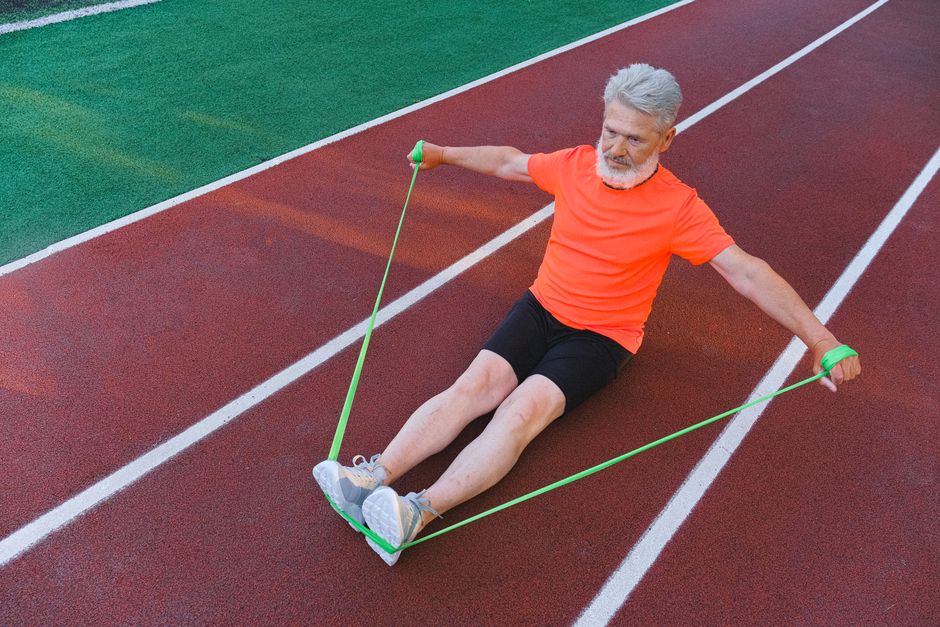
Resistance bands are no longer just a travel accessory for fitness enthusiasts. They are one of the most accessible pieces of exercise equipment you can own, and they cost less than a pair of running shoes.
To use resistance bands for weight loss, you perform strength-training exercises that challenge your muscles to fatigue, which builds lean mass and boosts your daily calorie burn. The key is choosing a band with enough tension to make the last few repetitions difficult, and pairing your routine with a consistent calorie deficit. This article covers the specific movements, rep schemes, and safety checks that make band training effective.
Most generic advice tells you to “just do some curls” and leaves it there. That misses the real point. Weight loss happens when you create a calorie deficit, and resistance bands help by preserving muscle while you cut calories. More muscle means a slightly higher metabolism, which makes the deficit easier to maintain.
We will also cover common mistakes, like using bands that are too light, and how to progress so your body keeps adapting. If you are new to strength training or returning after a break, this is a practical starting point.
Key Points at a Glance
| Point | What It Means | Why It Matters |
|---|---|---|
| Choose the right tension | The band should be hard to pull in the last 2–3 reps. | Enough resistance builds muscle, which supports weight loss. |
| Focus on compound moves | Squats, rows, and presses work multiple joints. | More muscle groups means more calories burned per session. |
| Progressive overload | Increase tension or reps over time. | Your body adapts quickly; you must push it to keep seeing results. |
| Pair with a calorie deficit | Use a TDEE calculator to find your maintenance level. | Strength training alone won’t cause weight loss without dietary changes. |
What Is the Best Way to Use Resistance Bands for Weight Loss?
The best approach is full-body strength training two to three times per week. Each session should include one squat pattern, one hinge pattern, one push, and one pull. This covers all major muscle groups without needing a gym full of equipment.
For weight loss, the goal is not to feel a constant burn. It is to make each set challenging enough that the final repetitions are tough. Use a band where the last two or three reps are a struggle to complete with good form. That tension is what signals your body to preserve muscle.
I keep a medium and a heavy band in my gym bag. The medium is for warm-ups and higher-rep sets. The heavy one is for the main work sets where I want to fatigue around rep 10.
Which Resistance Band Exercises Burn the Most Calories?
Compound movements that use large muscle groups burn more calories per minute than isolation exercises. Banded squats, banded deadlifts, and banded rows are excellent choices. Adding a jump to a squat, if your joints allow it, turns it into a short burst of cardio.
Press-ups with a band across the back add resistance to a classic push. Banded shoulder presses work the upper body while engaging your core for stability. These four movements cover a full-body session in about 30 minutes.
How Many Reps and Sets Should You Do?
For weight loss, aim for three sets of 10 to 15 repetitions per exercise. This rep range builds muscle effectively when the tension is high enough. Rest for 60 to 90 seconds between sets to keep your heart rate slightly elevated.
If you can easily complete 15 reps, the band is too light. Move to a heavier band or shorten the band’s length to increase tension. If you cannot complete 8 reps with good form, the band is too heavy.
As you get stronger, you can also slow down the lowering phase of each rep. A three-second lowering count increases time under tension without needing a heavier band.
How Often Should You Train with Bands?
Two to three sessions per week is enough for most people. This frequency allows for recovery while providing a consistent training stimulus. On the other days, focus on walking or other low-intensity activity to support your calorie deficit.
Listen to your body. If you are sore from a previous session, wait another day before training the same muscles again. Overtraining with bands is possible, especially if you are also cutting calories.
Common Mistakes That Slow Down Weight Loss
The most common mistake is using a band that is too light. Many people pick a band they can pull 20 or 30 times, which builds endurance but does little for muscle preservation. Another mistake is rushing through reps without controlling the movement.
Also, do not ignore the diet side of the equation. Resistance training is a tool, not a free pass. You still need a moderate calorie deficit to lose fat. Use a TDEE calculator to estimate your maintenance calories and adjust from there.
Anchor the band securely before every set. A band that slips mid-rep can snap back and cause injury. I always check the anchor point twice before starting a heavy set.
How to Progress When Band Training Gets Easy
Progression is simple: add tension. You can use a thicker band, shorten the band by holding it closer to the anchor point, or double up two bands. Any of these methods increases the resistance at the top of the movement.
You can also increase the number of sets from three to four, or add one rep to each set. Track your workouts in a notebook or phone app so you know exactly what you did last week. That record tells you when it is time to push harder.
Related Articles
Frequently Asked Questions
How long should a resistance band workout last?
A full-body session takes 30 to 40 minutes. This includes a brief warm-up and rest between sets.
Can resistance bands build muscle like weights?
Yes, when the tension is high enough to fatigue your muscles. Research shows bands can be as effective as free weights for building strength.
How many days a week should I use resistance bands?
Two to three days per week is ideal for most people. This allows for recovery while providing consistent training stimulus.
Do resistance bands help burn belly fat?
No exercise targets belly fat specifically. Band training builds muscle, and the calorie deficit you create is what reduces body fat.
Are resistance bands safe for beginners?
Yes, they are generally safe when you start with light tension and learn proper form. Always check the band for tears before each use.
Should I use resistance bands if I weigh over 200 pounds?
Yes, bands are weight-independent and work for any body size. Choose a heavy band that challenges your muscles in the last few reps.
Resistance bands offer a practical, low-cost way to add strength training to your weight loss plan. They are easy to store, simple to use, and effective when you apply progressive tension. Combine your band sessions with a moderate calorie deficit for the best chance of long-term success.
Remember to check your daily calorie needs with the TDEE Calculator to set your starting point for weight loss.

The TDEECAL Team writes about nutrition, metabolism, and fat loss the way we built our calculator, with real numbers and no hype. We dig into the research so you don’t have to guess.