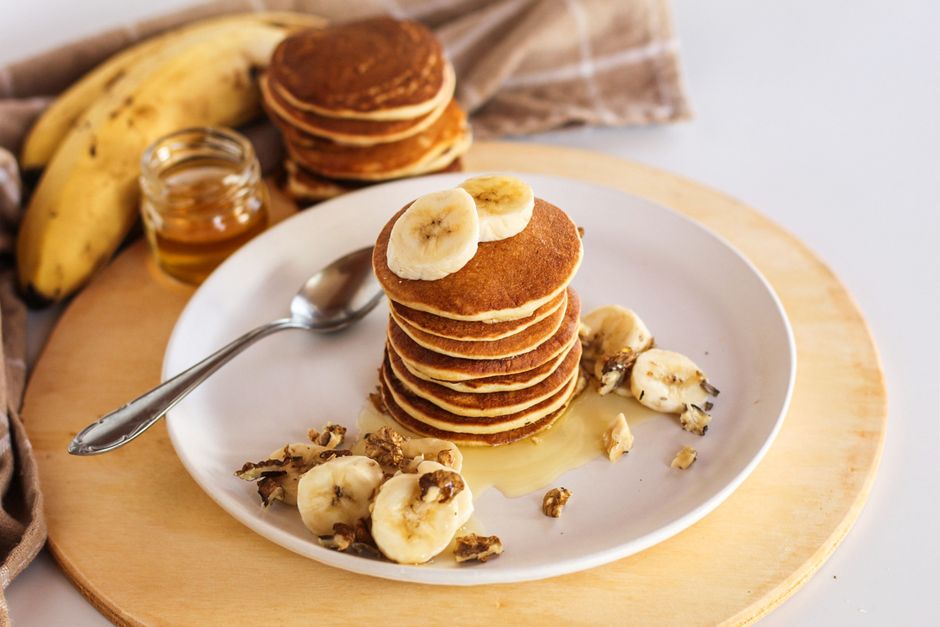
A stack of banana pancakes feels like a treat — sweet, warm, and satisfying — which is exactly why so many women trying to lose weight wonder whether they’re secretly sabotaging their goals.
Are banana pancakes healthy for weight loss? They can be, but it depends entirely on how they’re made. A basic version using banana, egg, and oats offers fiber, protein, and slow-digesting carbs that support satiety. A boxed mix or restaurant stack loaded with syrup and butter can easily exceed 700 calories. The difference isn’t the banana — it’s the recipe.
Most diet advice treats pancakes as an automatic “no.” That’s not useful, and it’s not accurate. What matters is what’s on the plate with them and how the batter is built.
This article breaks down the calories, the ingredients that help or hurt, and how to fit banana pancakes into a real calorie budget without guesswork.
Key Points at a Glance
| Point | What It Means | Why It Matters |
|---|---|---|
| Recipe drives the outcome | Homemade banana-egg-oat pancakes run roughly 250–350 calories per serving | A diner stack with syrup can hit 700+ calories — same name, very different food |
| Bananas add fiber and potassium | One medium banana has about 3 grams of fiber and 105 calories (USDA) | Fiber slows digestion and supports fullness between meals |
| Protein is the weak spot | Standard batter has little protein unless you add egg, Greek yogurt, or protein powder | Higher-protein breakfasts are linked to better appetite control |
| Toppings change everything | Syrup adds about 50 calories per tablespoon; butter adds about 100 per tablespoon | Small additions can double the calorie load without adding fullness |
Are Banana Pancakes Healthy for Weight Loss or Just a Trend?
They’re a real food, not a fad — but “healthy” is doing a lot of work in that sentence. Research consistently shows that weight loss depends on total calorie intake and overall diet quality, not on any single food. Banana pancakes can fit into a calorie deficit, or they can blow past it.
The trend versions you see online usually replace flour with banana and egg. That swap lowers refined carbohydrate content and adds potassium. It does not magically lower calories — banana is still calorie-dense for a fruit.
How Many Calories Are in Banana Pancakes?
A homemade batch made with one medium banana, one large egg, and a quarter cup of oats lands around 280 to 320 calories before toppings. That’s a reasonable breakfast for most women. Restaurant versions are a different story — larger portions, added sugar, and butter on the griddle push a stack well past 600 calories.
Boxed pancake mix labeled “banana” often contains banana flavoring rather than real fruit. Check the ingredient list. If banana appears near the end or not at all, you’re getting the taste without the fiber.
What Should You Add to Banana Pancakes for Weight Loss?
Protein is the lever most people miss. A banana-egg pancake has roughly 8 to 10 grams of protein — enough to matter, not enough to carry a morning. Whisking in a spoon of Greek yogurt or serving them with cottage cheese pushes that higher without changing the flavor much.
I always add a pinch of salt and a half teaspoon of cinnamon to the batter — it makes the pancakes taste sweeter than they are, so I use less syrup. Small thing, real difference.
Toppings matter more than most people expect. Fresh berries add volume and fiber for very few calories. A tablespoon of nut butter adds healthy fat and about 95 calories — worth it if it keeps you full until lunch. Syrup is where the math breaks down.
What Makes Banana Pancakes Less Healthy?
Three things: added sugar, added fat, and portion size. A stack of four pancakes with butter and syrup can exceed 800 calories — more than many women’s entire breakfast budget. That’s not a moral failure. It’s just arithmetic.
Some research suggests that liquid calories and rapidly digested carbohydrates are less satiating than whole foods. Syrup fits both categories. It adds calories without helping you feel full, which is the opposite of what you want at breakfast.
Frequently Asked Questions
Related Articles
Are banana pancakes healthy for weight loss?
They can be, if made with whole ingredients like banana, egg, and oats and kept within your calorie budget. Restaurant versions with syrup and butter often exceed 700 calories and work against a deficit.
How many calories are in homemade banana pancakes?
A batch made with one banana, one egg, and a quarter cup of oats is roughly 280 to 320 calories before toppings. Figures vary by banana size and brand of oats.
Is it okay to eat banana pancakes every day?
Yes, if they fit your daily calorie and nutrient needs and the rest of your diet is balanced. Variety still matters — rotating in other protein-rich breakfasts supports better overall nutrition.
Do banana pancakes have enough protein?
A basic banana-egg recipe provides about 8 to 10 grams of protein, which is modest for a meal. Adding Greek yogurt, cottage cheese, or a side of eggs raises the protein content meaningfully.
What is the healthiest topping for banana pancakes?
Fresh berries, plain Greek yogurt, and a small portion of nut butter add fiber, protein, and healthy fat without much sugar. These support fullness better than syrup does.
Can I eat banana pancakes on a low-calorie diet?
Yes, but portion size and toppings become critical on a lower calorie budget. A single serving with berries instead of syrup keeps the meal under 350 calories.

The TDEECAL Team writes about nutrition, metabolism, and fat loss the way we built our calculator, with real numbers and no hype. We dig into the research so you don’t have to guess.