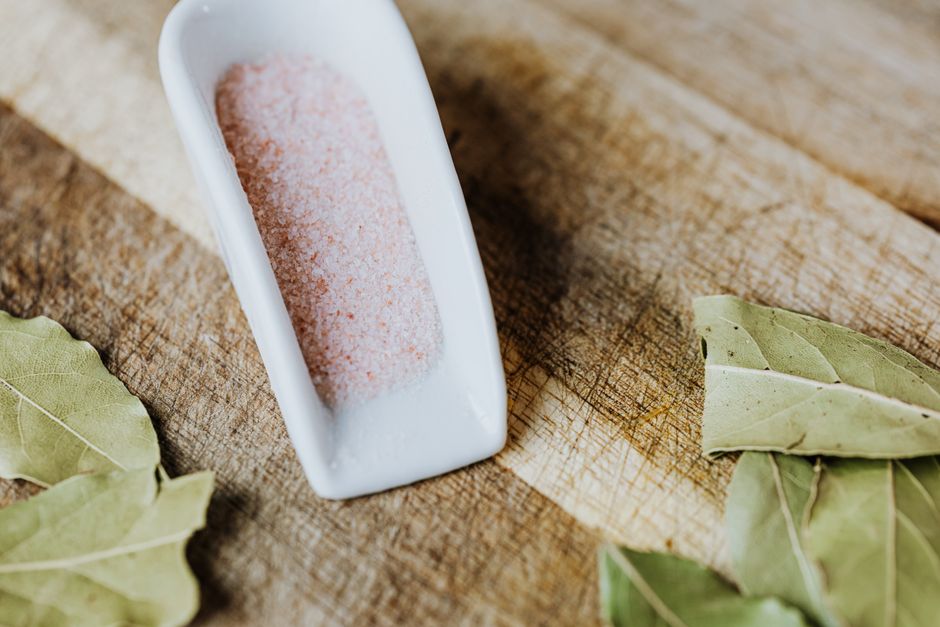
Pink salt has become a staple in wellness kitchens, but many women wonder if it actually helps with weight loss or if it’s just a pretty jar on the counter. The short answer is that pink salt does not directly burn fat or speed up metabolism in any meaningful way. What it does offer is a slightly different mineral profile than regular table salt, which matters for some people but not for weight loss itself. The real question is whether swapping your salt shaker will change the number on the scale — and the evidence says no.
So does pink salt really work for weight loss? The honest answer is no — no salt, including pink Himalayan salt, has any direct fat-burning or metabolism-boosting effect. Weight loss happens when you consistently eat fewer calories than your body burns, and salt does not change that equation. Pink salt can, however, help you reduce your sodium intake if you use less of it by volume, since its larger crystals mean less salt per teaspoon. That indirect effect on water retention and blood pressure is the only real connection to the scale.
Most articles on this topic either oversell pink salt as a miracle mineral or dismiss it entirely. The truth sits in the middle. This guide covers what the research actually says about pink salt and weight loss, how it compares to regular salt, and whether it’s worth the higher price tag.
Key Points at a Glance
| Point | What It Means | Why It Matters |
|---|---|---|
| Pink salt has no direct fat-burning effect | No clinical study shows it boosts metabolism or burns calories | Don’t expect the scale to move from salt alone |
| Pink salt contains trace minerals | Small amounts of potassium, magnesium, and iron | Minerals support general health but not weight loss |
| Larger crystals mean less sodium per teaspoon | Pink salt is less dense than fine table salt | You may naturally use less salt, reducing sodium intake |
| Lower sodium can reduce water retention | Less sodium means less fluid buildup in tissues | This can cause a small, temporary drop on the scale |
| No established weight loss dose exists | No clinical guideline for pink salt consumption | Treat it as a seasoning, not a supplement |
What Does Pink Salt Actually Do in Your Body?
Pink Himalayan salt is mostly sodium chloride — about 98% — just like regular table salt. The remaining 2% contains trace minerals like potassium, magnesium, and calcium, which give it that pink color. Those minerals are present in such small amounts that you would need to eat dangerous quantities of salt to get any meaningful nutritional benefit from them.
Your body needs sodium to regulate fluid balance, nerve function, and muscle contractions. But the average American already gets far more sodium than needed, mostly from processed foods. Adding pink salt to an already high-sodium diet does not create a deficiency — it just adds more sodium. I always tell friends who ask about this that the minerals in pink salt are a nice idea, but you’d get more potassium from half a banana than from a month of using pink salt.
Can Pink Salt Help With Water Weight?
Here is where the scale can move, but not in the way people hope. Sodium causes your body to hold onto water. When you reduce sodium intake, your kidneys excrete more fluid, and the scale can drop by a pound or two within a few days. That drop is water weight, not fat loss.
Pink salt can contribute to this effect because its larger crystals mean a teaspoon of pink salt weighs less than a teaspoon of fine table salt. If you measure with a spoon rather than by weight, you may naturally use less sodium. That said, if you use the same amount by weight, there is zero difference between pink salt and table salt in terms of water retention.
Does Pink Salt Really Work for Weight Loss or Is It Just Marketing?
The marketing around pink salt often claims it supports weight loss through its mineral content or by balancing electrolytes. No strong clinical evidence currently supports these claims. What the research does show is that sodium reduction can lower blood pressure and reduce water retention, which may cause a small temporary drop in weight.
Some studies suggest that higher potassium intake may help counteract sodium’s effects on blood pressure, but pink salt’s potassium content is negligible. You would need to consume several tablespoons of pink salt daily to get a meaningful amount, which would be dangerous. No established clinical guideline exists for using pink salt for weight loss, and no reputable health organization recommends it for that purpose.
How to Use Pink Salt Sensibly in a Weight Loss Diet
If you enjoy the taste of pink salt, there is no reason to avoid it. Use it as you would any salt — in moderation. The American Heart Association recommends limiting sodium to about 2,300 milligrams per day, with an ideal limit of 1,500 milligrams for most adults. A quarter teaspoon of pink salt contains roughly 500 to 600 milligrams of sodium, depending on the grind size.
The real weight loss strategy is not about which salt you use. It is about controlling total calorie intake, eating more whole foods, and staying consistent. Salt enhances flavor, which can make vegetables and lean proteins more enjoyable, and that can indirectly help you stick to a healthy eating pattern. I use pink salt in my own kitchen because I like the mild flavor, but I measure it the same way I would any salt — and I never treat it as a weight loss tool.
Frequently Asked Questions
Related Articles
Is pink salt lower in sodium than regular table salt?
By weight, pink salt and table salt contain nearly identical amounts of sodium. By volume, pink salt has less sodium per teaspoon because its larger crystals take up more space, so a teaspoon weighs less.
Can pink salt help you lose belly fat?
No, pink salt has no effect on belly fat or fat loss anywhere in the body. Fat loss requires a consistent calorie deficit, regardless of the type of salt you use.
How much pink salt should I use daily for weight loss?
No established clinical guideline exists for using pink salt for weight loss. Follow general sodium limits of about 2,300 milligrams per day, and treat pink salt as a seasoning rather than a supplement.
Does pink salt cause water retention like regular salt?
Yes, pink salt causes water retention exactly like regular salt because both are primarily sodium chloride. Any difference comes from using less of it by volume, not from the salt itself.
Are the trace minerals in pink salt enough to matter?
No, the trace minerals in pink salt are present in such small amounts that they provide no meaningful nutritional benefit. You would need to consume unsafe amounts of salt to get a significant dose of potassium or magnesium.
What is the best way to lose weight if pink salt does not work?
Create a moderate calorie deficit using your TDEE calculator, prioritize protein and fiber-rich whole foods, and stay consistent with physical activity. These strategies have strong research support, unlike salt-based weight loss claims.

The TDEECAL Team writes about nutrition, metabolism, and fat loss the way we built our calculator, with real numbers and no hype. We dig into the research so you don’t have to guess.