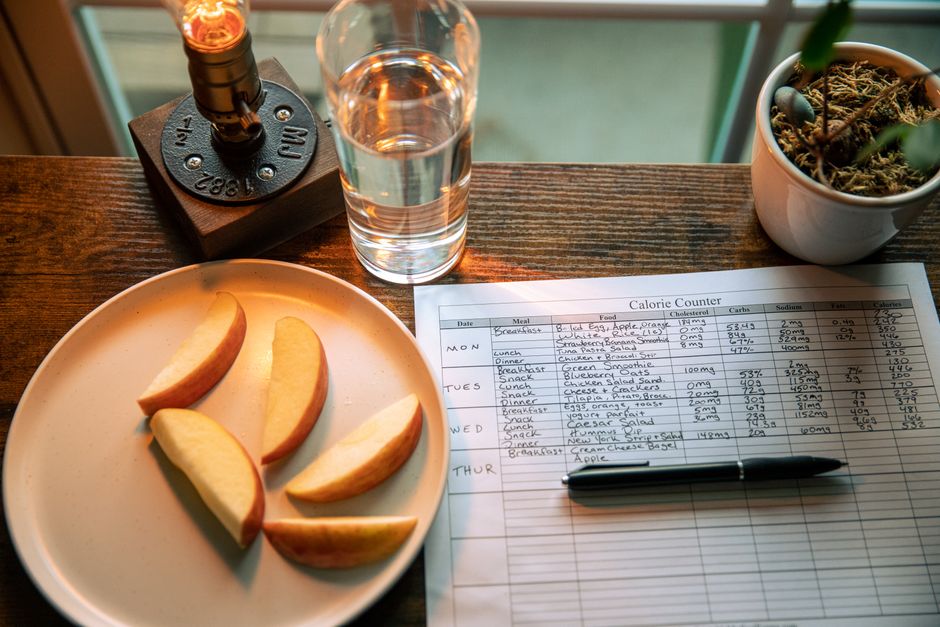
Most women overestimate what they burn and underestimate what they eat, which is why the scale stalls even when they feel like they’re doing everything right.
For most women, how many calories for weight loss per day falls between 1,400 and 1,800 calories, depending on age, height, activity level, and current weight. That range creates a steady deficit of about 500 calories daily, which typically leads to losing about one pound per week. The exact number is personal, and a total daily energy expenditure (TDEE) calculation gives you the most accurate starting point.
This article breaks down the numbers without the guesswork. You’ll learn how to find your personal calorie target, why the standard formulas sometimes miss the mark, and what to do when weight loss stalls despite following the plan.
Most generic advice tells you to eat 1,200 calories. That’s outdated and often counterproductive for women over 35. Your body needs more fuel to preserve muscle and keep your metabolism working.
Key Points at a Glance
| Point | What It Means | Why It Matters |
|---|---|---|
| Calorie deficit | Eating roughly 500 calories less than you burn daily | Creates steady, sustainable weight loss of about 1 pound per week |
| TDEE calculation | Your total daily energy expenditure based on age, height, weight, and activity | Gives you a personalized target instead of a generic number |
| Protein intake | Aim for 25-30 grams of protein at each meal | Preserves muscle mass and keeps you fuller longer |
| Adjustment period | Recheck your numbers every 10-15 pounds lost | Your calorie needs drop as you lose weight, so your target must change |
| Plateaus | Normal after 4-6 weeks on the same plan | Signals it’s time to adjust calories or activity, not give up |
How Many Calories for Weight Loss Per Day Should You Actually Eat?
Research consistently shows that a moderate deficit of 300-500 calories below your maintenance level produces sustainable weight loss without triggering hunger or muscle loss. For most women, that means eating between 1,400 and 1,800 calories daily. Going below 1,200 calories is not recommended without medical supervision, as it becomes difficult to meet your nutrient needs.
The most reliable way to find your number is to calculate your TDEE using a reputable calculator. Your TDEE accounts for your basal metabolic rate plus the calories you burn through daily activity and exercise. From that number, subtract 500 calories to establish your weight loss target. I always tell clients to treat this as a starting point, not a permanent prescription — your body changes, and your calorie needs change with it.
Use the TDEE Calculator to get your personalized maintenance number, then subtract 500 calories. That gives you a target you can actually sustain.
Why the 1,200-Calorie Rule Fails Most Women Over 35
The old advice to eat 1,200 calories was designed for small, sedentary women and has been widely abandoned by nutrition professionals. At that level, most women struggle to get enough protein, fiber, and essential fats, which leads to muscle loss, fatigue, and eventual rebound weight gain. Some studies indicate that very low-calorie diets actually slow your metabolic rate over time, making future weight loss harder.
A better approach is to eat more calories from nutrient-dense foods while staying in a moderate deficit. This preserves muscle, keeps your energy stable, and makes the plan something you can maintain for months rather than weeks. I always add an extra serving of vegetables to meals — it adds volume without many calories, so you feel full on fewer calories.
How to Adjust Your Calorie Target as You Lose Weight
Your body burns fewer calories as you lose weight because there’s less of you to move. This means the calorie target that worked at 180 pounds will be too high at 160 pounds. Recalculate your TDEE every 10-15 pounds lost to keep your deficit accurate.
If you’ve been stuck for three weeks or more, don’t cut calories drastically. Instead, reduce your target by 100-150 calories or add 2,000-3,000 steps per day. Small adjustments are more effective and easier to sustain than dramatic cuts that leave you hungry and frustrated.
How to Track Calories Without Obsessing
Tracking doesn’t have to mean weighing every bite forever. Start by tracking everything you eat for one week to see your true baseline — most people underestimate by 20-30 percent. Then focus on tracking just protein and total calories for a few weeks until portion sizes become intuitive.
Use a food scale for accuracy when you first start. Measuring cups can be off by 25 percent or more, especially for foods like rice, pasta, and nut butter. After a month, you’ll know what proper portions look like and can track more loosely while staying on target.
Frequently Asked Questions
Related Articles
Is 1,200 calories a day safe for weight loss?
For most women, 1,200 calories is too low and can cause muscle loss, fatigue, and nutrient deficiencies. This level should only be used under medical supervision and is not recommended for long-term weight loss.
How fast will I lose weight on 1,500 calories a day?
Most women lose about one pound per week at 1,500 calories, assuming it creates a 500-calorie deficit from their maintenance level. Individual results vary based on height, age, and activity level.
Do I need to count calories forever to keep weight off?
No, but tracking for short periods helps you reset portion awareness when weight creeps back. Many women track for 2-3 weeks a few times per year to stay on course.
What if I’m not losing weight at 1,500 calories?
Check your portion sizes and tracking accuracy first, as underestimation is common. If you’re accurate and still stalled after three weeks, reduce your target by 100 calories or increase your daily steps.
Should I eat back calories burned during exercise?
Most people should not eat back exercise calories, since fitness trackers tend to overestimate burn. Only consider adding 100-200 calories on days with intense workouts lasting over an hour.
How much protein do I need while cutting calories?
Aim for roughly 1.6 to 2.2 grams of protein per kilogram of body weight while in a calorie deficit. This range helps preserve muscle and keeps you satisfied between meals.
Finding your personal calorie target takes a little math, but it’s the difference between guessing and knowing. Start with your TDEE, subtract 500 calories, and adjust based on your results every few weeks.

The TDEECAL Team writes about nutrition, metabolism, and fat loss the way we built our calculator, with real numbers and no hype. We dig into the research so you don’t have to guess.