Is Brunch Good for Weight Loss
Brunch sits in a strange spot between breakfast and lunch, and that timing often confuses people who are tracking their food.
The honest answer to whether brunch is good for weight loss is that it depends entirely on what you order and how much you eat, not the meal’s name or the time of day you eat it. Brunch can absolutely fit into a weight loss plan when you build your plate around protein, vegetables, and reasonable portions. The problem is that typical brunch menus are loaded with refined carbs, sugary drinks, and oversized portions that can easily push you past your calorie target before 2 PM.
Most generic advice tells you to skip brunch or order a salad, but that ignores the social reality that brunch is often a weekend ritual with friends and family. This article breaks down exactly how to navigate a brunch menu without derailing your progress, what to order, and what the research actually says about meal timing and weight loss. You’ll get practical strategies you can use this weekend, not vague tips that fall apart in a real restaurant.
Before you head out, know your daily calorie target. Use our TDEE Calculator to get an accurate number based on your age, height, weight, and activity level. That number tells you how much room you have for brunch without guessing.
Key Points at a Glance
| Point | What It Means | Why It Matters |
|---|---|---|
| Calories drive weight loss | Brunch is fine if it fits your daily energy budget | No single meal makes or breaks your progress |
| Protein matters most | Eggs, lean meats, and Greek yogurt keep you full | Protein reduces hunger and supports muscle retention |
| Portion sizes are inflated | Restaurant brunches often serve 2–3 servings | Overeating by 500 calories weekly adds up to weight gain |
| Liquid calories are hidden | Mimosas, sweet coffee drinks, and juices add up fast | Drinks can add 300–500 calories before food arrives |
| Meal timing is not magic | Total daily intake matters more than when you eat | You don’t need to skip brunch to lose weight |
What Actually Determines Whether Brunch Helps or Hurts Weight Loss
Weight loss comes down to energy balance: calories in versus calories out. Research consistently shows that total daily calorie intake drives weight change more than meal timing or frequency. So brunch itself is not good or bad for weight loss — the specific food choices and portions determine the outcome.
A typical American brunch order tells the story. Two pancakes with syrup run roughly 500–600 calories. Add two scrambled eggs at about 140 calories, a side of bacon at 90 calories per slice, and a 12-ounce mimosa at roughly 150 calories. That’s around 900–1,000 calories before you factor in butter and condiments. For a woman targeting 1,500–1,800 calories daily, that’s more than half your budget in one sitting.
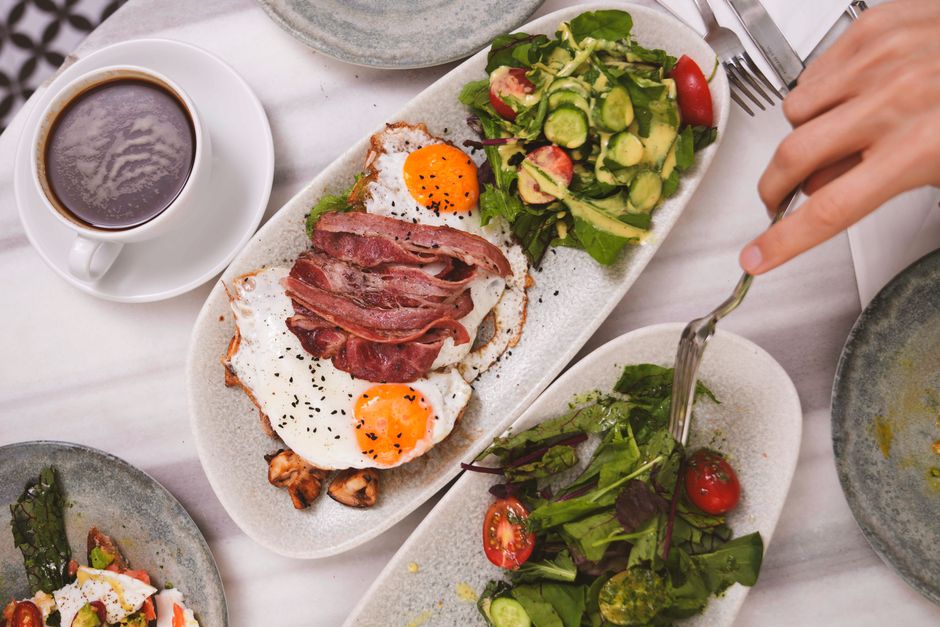
Compare that to an omelet with vegetables and cheese at roughly 350–450 calories, a side of fruit at 80 calories, and black coffee with a splash of milk at 30 calories. That version keeps you around 500–600 calories and leaves room for a satisfying dinner. The meal name is identical — the calorie difference comes from choices.
I always scan the menu before I sit down. Most restaurants post menus online, so I decide my order ahead of time. That one habit has saved me from impulsive choices more times than I can count.
Is Brunch Good for Weight Loss When You Choose Protein First
Protein is the most filling macronutrient, and studies have found that higher-protein meals reduce hunger and subsequent calorie intake. Starting your brunch with a protein-focused order — eggs, egg whites, lean ham, turkey sausage, or Greek yogurt — helps you feel satisfied with fewer total calories. Research published in the American Journal of Clinical Nutrition found that increased dietary protein improves satiety and helps with weight management.
When you build your brunch plate, aim for protein to cover at least a third of your plate. Vegetables should take up another third, and the remaining third can hold starches like toast, potatoes, or a small pancake. This visual guide works without weighing food and keeps portions reasonable. I always ask for extra vegetables instead of extra toast — restaurants rarely charge for that swap.
How Many Calories Are in Common Brunch Items
Knowing rough calorie ranges helps you make smarter choices without obsessing over every bite. These figures are based on USDA nutritional data and typical restaurant preparation, so actual numbers vary by portion size and recipe.
- Two scrambled eggs: roughly 140–180 calories
- Three-egg omelet with cheese and vegetables: 350–500 calories
- One slice of French toast: 150–250 calories
- Two medium pancakes with syrup: 450–600 calories
- Eggs Benedict with hollandaise: 500–700 calories
- Side of home fries: 250–350 calories
- Greek yogurt parfait: 250–400 calories depending on toppings
- Avocado toast: 300–450 calories
- Mimosa (6 ounces): 150–200 calories
- Bloody Mary: 150–250 calories
- Sweetened latte: 200–400 calories
The pattern is clear: dishes with cream sauces, cheese-heavy preparations, and sugary beverages are the calorie traps. Simple preparations with eggs, vegetables, and lean proteins are the safer bets. I order my omelet with just a sprinkle of cheese and ask for hollandaise on the side — that alone saves 150 calories.
How to Order Brunch Without Derailing Your Weight Loss
You don’t need to avoid brunch entirely to lose weight. You need a strategy. Start by looking for menu items that feature eggs, egg whites, or lean proteins as the main ingredient. Omelets, veggie scrambles, and egg-white sandwiches are solid foundations. If you want something sweet, order one pancake instead of three, or share a French toast plate with someone.
Make specific requests that reduce calories without sacrificing enjoyment. Ask for dressings and sauces on the side, request whole-grain toast instead of white, and swap home fries for a side salad or fresh fruit. These small changes cut 150–300 calories from most meals without changing what you actually enjoy eating.
Drink water or unsweetened coffee first. Order your food, then decide if you still want a mimosa or Bloody Mary. Most people find they’re satisfied with one drink instead of two when they eat first.
Watch your alcohol intake at brunch. Alcohol lowers inhibitions and increases appetite, which often leads to ordering extra sides or dessert. One drink is manageable for most people. Two or more drinks can add 300–500 calories and make it much harder to stick to your plan.
Does Meal Timing Matter for Weight Loss
Some research suggests that eating earlier in the day may support weight loss through better blood sugar control and hormonal responses. However, the evidence is mixed, and many studies show that total calorie intake matters more than when you consume those calories. A study in the journal Obesity found that meal timing had little effect on weight loss when total calories were matched.
What this means for brunch is simple: eating at 11 AM instead of 8 AM is not going to sabotage your progress. Your body doesn’t know what time it is — it responds to the total energy you provide across the day. If brunch pushes your first meal later, that’s fine as long as you don’t overcompensate by eating more later in the day.
The bigger concern is the “brunch effect” — eating a large late-morning meal, then snacking all afternoon, then eating a full dinner. That pattern can easily push you to 2,500–3,000 calories. If you plan your brunch to fit within your daily target and keep your other meals reasonable, you’ll stay on track.
Frequently Asked Questions
Related Articles
Is brunch good for weight loss or should I skip it?
Brunch can fit into a weight loss plan when you choose protein-forward dishes and watch portions. Skipping it is unnecessary if you plan your order and stay within your daily calorie target.
What is the healthiest thing to order at brunch?
A vegetable omelet with a side of fruit or a salad is one of the healthiest brunch options. Egg-white scrambles with lean protein and whole-grain toast are also solid choices.
How many calories should brunch be for weight loss?
Brunch should be roughly 400–600 calories for most women aiming to lose weight. That range leaves room for a balanced dinner and snacks within a typical 1,500–1,800 calorie daily target.
Are pancakes or eggs better for weight loss at brunch?
Eggs are better for weight loss because they provide protein and keep you full longer. Pancakes are mostly refined carbohydrates that digest quickly and leave you hungry soon after.
Can I drink alcohol at brunch and still lose weight?
One alcoholic drink can fit into a weight loss plan if you account for the calories. More than one drink often leads to overeating and adds significant calories, so moderation is key.
Does eating brunch late in the day slow down metabolism?
No strong evidence shows that eating later in the day slows metabolism. Total daily calorie intake is the primary factor in weight loss, not the time of your first meal.
Brunch is not your enemy. It’s a meal like any other, and it responds to the same rules of portion control and food choice. Use your TDEE Calculator to set your daily target, plan your order before you arrive, and enjoy your weekend meal without guilt.

The TDEECAL Team writes about nutrition, metabolism, and fat loss the way we built our calculator, with real numbers and no hype. We dig into the research so you don’t have to guess.