Is Chimichurri Healthy for Weight Loss?
Most people assume any sauce is an automatic diet killer. Chimichurri breaks that rule. This herb-based Argentine condiment can actually support weight loss efforts when used correctly.
Yes, is chimichurri healthy for weight loss? The answer is yes, with one important caveat. Chimichurri is a low-calorie, herb-packed sauce that adds bold flavor without derailing your calorie goals. A typical two-tablespoon serving contains roughly 60 to 80 calories, mostly from olive oil and vinegar. The real question is how you use it and how much you pour.
Most store-bought sauces hide sugar, thickeners, and excess salt. Chimichurri skips all that. Its base is parsley, garlic, oregano, olive oil, and red wine vinegar — nothing processed, nothing artificial. This article breaks down the actual nutrition numbers, how it compares to other condiments, and the smartest ways to use it for weight loss.
Key Points at a Glance
| Point | What It Means | Why It Matters |
|---|---|---|
| Calorie Density | Low calories per serving | Flavor without blowing your daily budget |
| Ingredient Quality | Whole foods only | No hidden sugars or fillers |
| Portion Control | Serving size matters | Easy to overpour oil-based sauces |
| Versatility | Works on proteins and vegetables | Replaces high-calorie dressings |
What Is Actually in Chimichurri?
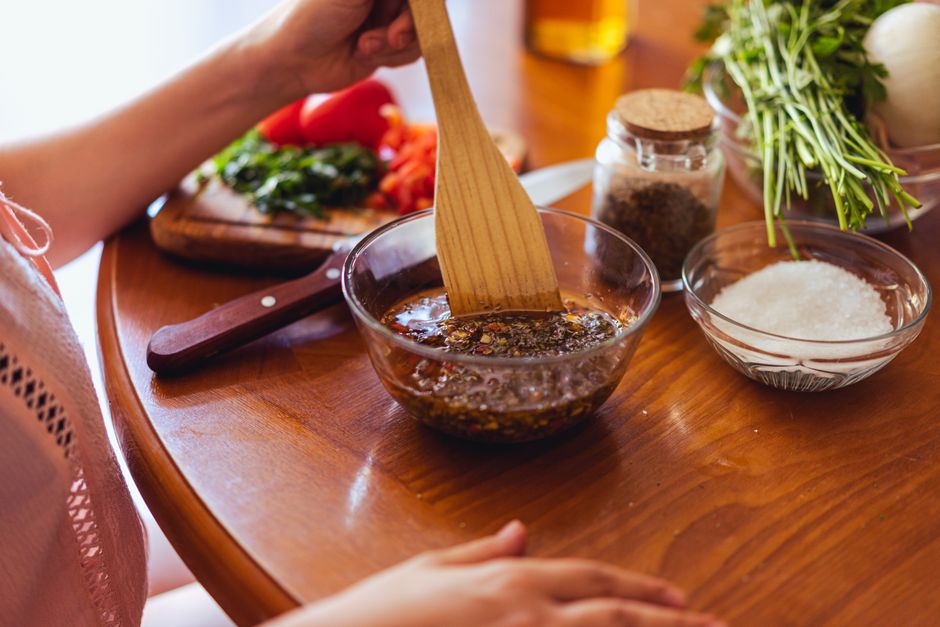
Traditional chimichurri has five core ingredients: fresh parsley, garlic, oregano, olive oil, and red wine vinegar. Some versions add cilantro, chili flakes, or shallots. That’s it. No sugar, no cream, no processed thickeners.
The nutrition profile depends heavily on the oil-to-vinegar ratio. A standard recipe uses roughly three parts oil to two parts vinegar. This keeps calories moderate while preserving the sauce’s signature texture. I always taste mine before serving — a good chimichurri should taste bright and sharp, not oily.
How Does Chimichurri Compare to Other Sauces?
Ranch dressing delivers about 130 calories per two tablespoons. Caesar dressing runs similar. Creamy garlic sauce often tops 150 calories per serving. Chimichurri beats all of them with roughly half the calories and none of the added sugar.
The comparison gets even better when you look at what you gain nutritionally. Parsley provides vitamin K and vitamin C. Garlic offers allicin, a compound some research links to improved heart health. Olive oil supplies monounsaturated fats, which support satiety — the feeling of fullness that helps you eat less overall.
How Many Calories Are in Chimichurri?
A standard two-tablespoon serving of homemade chimichurri contains roughly 70 calories. That breaks down to about 7 grams of fat, 1 gram of carbohydrates, and less than 1 gram of protein. The exact numbers shift depending on your oil-to-vinegar ratio.
The math gets trickier with restaurant servings. Many places serve chimichurri in four-ounce ramekins — that’s eight tablespoons. At that volume, you’re looking at 280 calories before you touch your main meal. That’s why portion control matters more than the sauce itself.
Is Chimichurri Healthy for Weight Loss in Practice?
Chimichurri helps weight loss in one key way: it makes healthy food taste better. Grilled chicken, steamed fish, and roasted vegetables all become more appealing with a spoonful of bright, garlicky sauce. When healthy food tastes good, you stick with it longer.
Research on herbs and spices supports this approach. Some studies suggest that bold flavors increase meal satisfaction, which can reduce the urge to snack afterward. The evidence is preliminary, but the logic holds — satisfied eaters tend to eat less overall.
The real danger is portion distortion. Chimichurri is oil-based, and oil packs nine calories per gram. A casual pour can easily add 200 calories to a meal. Measure your servings for the first few weeks until you develop an eye for proper portions.
What Is the Best Way to Use Chimichurri for Weight Loss?
Use chimichurri as a finishing sauce, not a marinade. Drizzle it over cooked protein or vegetables right before eating. This delivers maximum flavor with minimum calories. Marinating requires more sauce and adds calories without extra taste payoff.
Chimichurri also works as a salad dressing replacement. Mix one tablespoon of chimichurri with one tablespoon of extra vinegar for a bright, low-calorie dressing. You get the herb flavor with roughly half the calories of using it straight.
One caution: skip the bread. Chimichurri traditionally pairs with grilled meats, but many people use bread to soak up extra sauce. That’s where the calories multiply quickly. Use it on protein and vegetables instead.
Are There Any Downsides to Chimichurri?
Sodium can be an issue with store-bought versions. Many commercial brands add salt aggressively to preserve freshness and boost flavor. Check the label — some brands pack over 300 milligrams of sodium per serving. Homemade versions let you control salt completely.
The garlic content can also cause digestive discomfort for some people. Raw garlic is potent. If you’re sensitive, start with a smaller portion or blanch the garlic before adding it to the sauce. This softens the flavor without losing the health benefits.
Frequently Asked Questions
Related Articles
Can I eat chimichurri every day while dieting?
Yes, as long as you stick to two tablespoons per serving. Daily use is fine when the rest of your diet stays balanced.
Does chimichurri cause weight gain?
No, not on its own. Weight gain happens when you consistently eat more calories than you burn, and chimichurri adds relatively few.
Is store-bought chimichurri as healthy as homemade?
Usually not. Store-bought versions often contain added sugar, preservatives, and more oil than homemade recipes.
Can chimichurri replace salad dressing?
Yes, it works well. Thin it with extra vinegar to lower calories while keeping the herb flavor.
How long does homemade chimichurri last?
About five to seven days in an airtight container in the refrigerator. The vinegar acts as a natural preservative.
Does chimichurri need to be refrigerated?
Yes, after preparation, always refrigerate it. The fresh herbs and garlic can spoil quickly at room temperature.
Chimichurri fits into a weight loss plan better than most condiments. It delivers real flavor from whole ingredients at a reasonable calorie cost. The key is measuring your portions and using it to make vegetables and lean proteins more appealing. If you’re tracking calories, use our TDEE Calculator to find your maintenance calories and build your deficit from there.

The TDEECAL Team writes about nutrition, metabolism, and fat loss the way we built our calculator, with real numbers and no hype. We dig into the research so you don’t have to guess.