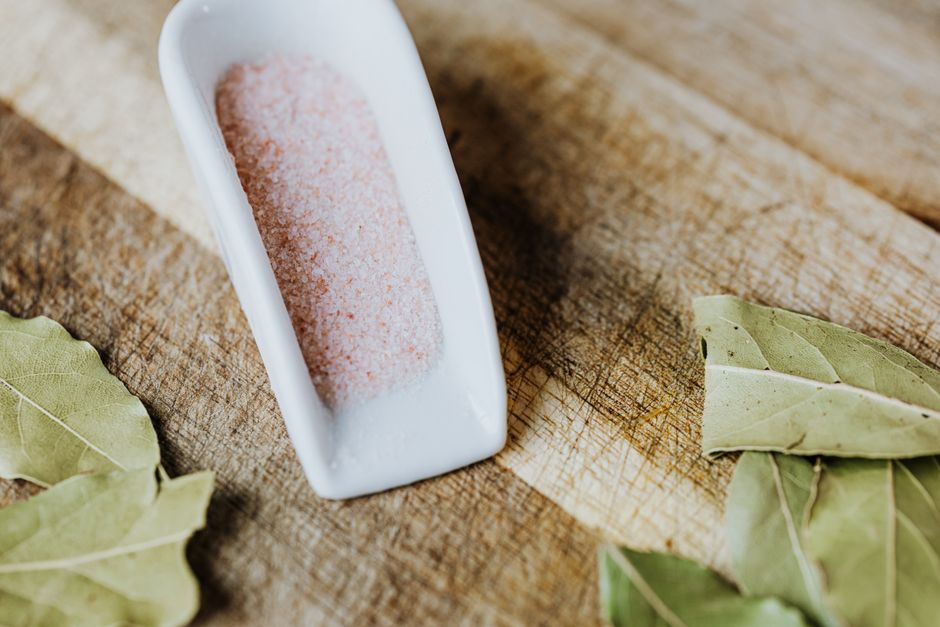
You’ve likely seen pink Himalayan salt touted as a healthier alternative to regular table salt, especially for weight loss. But the honest answer is that Himalayan salt is not a weight loss tool — it offers no direct fat-burning or metabolism-boosting properties that standard salt lacks. Is Himalayan salt good for weight loss? The short answer is no, not in any meaningful way that science supports. It contains the same basic component — sodium chloride — as regular salt, just with trace minerals that give it a pink color. While those trace minerals are real, they exist in amounts too small to affect your body weight or how your metabolism works.
Many women hit a point where they’re eating well and exercising, but the scale won’t budge. Salt — any salt — often gets blamed for water retention and bloating. This article breaks down what the evidence actually says about Himalayan salt, how it compares to regular salt, and whether switching to it could help or hurt your weight loss efforts. We’ll also cover practical tips for managing sodium intake without giving up flavor.
Key Points at a Glance
| Point | What It Means | Why It Matters |
|---|---|---|
| Himalayan salt is not a weight loss aid | It has no calories or compounds that burn fat | Don’t expect it to speed up weight loss |
| Trace minerals are minimal | You’d need to eat dangerous amounts to get benefits | Rely on food, not salt, for nutrients |
| Sodium content is nearly identical | Both have about 2,300 mg per teaspoon | Excess sodium from any salt can cause bloating |
| Switching salts won’t fix water retention | Blame total sodium intake, not the type | Focus on reducing overall salt use |
| Flavor might help you use less | Some people find it tastes saltier, so they use less | This is a potential indirect benefit |
What Makes Himalayan Salt Different from Table Salt?
Himalayan salt is mined from the Khewra Salt Mine in Pakistan. It gets its pink color from trace minerals like iron oxide, potassium, magnesium, and calcium. Table salt, on the other hand, is typically heavily processed and stripped of most minerals, then fortified with iodine and anti-caking agents.
But here’s the catch — the mineral content in Himalayan salt is tiny. One gram of Himalayan salt contains about 0.3 mg of potassium and 0.1 mg of magnesium. Compare that to a banana, which has 422 mg of potassium, and you see the difference. You would need to eat several tablespoons of salt to get any meaningful mineral intake, which would be dangerous and cause serious health issues. I’ve had clients tell me they switched to Himalayan salt thinking it would fix their low magnesium — it won’t, and it’s not a substitute for real food sources.
Does Himalayan Salt Help with Water Retention or Bloating?
This is a common question from women trying to lose weight. Water retention happens when your body holds onto extra fluid, often due to high sodium intake, hormonal changes, or dehydration. Some claim that Himalayan salt is “better” because its minerals help balance fluids. The evidence does not support this.
Your body regulates fluid balance based on total sodium and potassium intake, not the source of sodium. If you eat too much sodium from any salt, you will retain water. A 2019 study in the Journal of Clinical Hypertension found no difference in blood pressure or fluid retention between people using Himalayan salt versus table salt. The key is total sodium consumption, not the type of salt. Switching salts won’t fix bloating if you’re still eating processed foods high in sodium.
Practical tip: If you struggle with bloating, track your total sodium intake for a few days using an app like Cronometer. Most women find they’re eating far more than the recommended 2,300 mg per day, often from hidden sources like bread, sauces, and cheese.
Is Himalayan Salt Good for Weight Loss in Any Indirect Way?
There is one indirect way Himalayan salt might help some people — through portion control. Some cooks report that the larger, coarser crystals of Himalayan salt taste saltier than fine table salt. This means you might use less of it to achieve the same flavor level. Using less salt overall reduces sodium intake, which can lower water retention and make the scale go down slightly.
But this is a small effect and not unique to Himalayan salt. Any coarse salt, like sea salt, can have the same result. And it only matters if you actually measure and reduce your usage. Many people simply swap salts without changing how much they sprinkle. If you’re serious about reducing sodium, focus on cooking from scratch and using herbs, spices, and citrus for flavor instead of relying on salt alone. I keep a small bowl of mixed dried herbs on my counter — it’s easier to grab than the salt shaker, and it adds real flavor without the sodium.
Can Himalayan Salt Help with Cravings or Energy?
You might see claims that Himalayan salt balances electrolytes and reduces sugar cravings. Electrolytes — sodium, potassium, magnesium, calcium — do play a role in energy and hydration. But again, the amounts in Himalayan salt are too small to make a difference unless you’re severely deficient, which is rare for most people eating a standard diet.
There is no good evidence that salt of any kind directly reduces sugar cravings. Cravings are complex and tied to blood sugar, stress, sleep, and habit, not mineral levels. If you feel low energy, look at your overall diet quality, hydration, and sleep before blaming salt. A 2020 review in Nutrients noted that electrolyte imbalances can cause fatigue, but correcting them requires meaningful amounts from food or supplements, not trace amounts from salt.
Frequently Asked Questions
Related Articles
Does Himalayan salt have fewer calories than table salt?
No. Both Himalayan salt and table salt contain zero calories. Any weight changes from salt come from water retention, not calories.
Can Himalayan salt help with bloating during my period?
No. Bloating during menstruation is driven by hormonal shifts, not salt type. Reducing total sodium and staying hydrated can help, but switching salts won’t.
Is there iodine in Himalayan salt?
Very little. Himalayan salt contains trace amounts of iodine, but not enough to prevent deficiency. If you don’t eat iodized table salt or seafood, you may need another iodine source.
How much Himalayan salt should I use daily for weight loss?
There is no specific amount. Stick to the general recommendation of under 2,300 mg of sodium per day, which is about one teaspoon of any salt.
Does Himalayan salt detox your body?
No. Your liver and kidneys handle detoxification. Salt does not remove toxins, and the idea of “salt detox” is not supported by science.
Can I use Himalayan salt in a low-sodium diet?
Only if you use less of it. Himalayan salt has the same sodium content as table salt, so you must still limit your total intake to stay within low-sodium guidelines.
For a personalized estimate of how many calories you need each day to support your weight loss goals, use our TDEE Calculator. It factors in your age, activity level, and body composition to give you a realistic starting point.

The TDEECAL Team writes about nutrition, metabolism, and fat loss the way we built our calculator, with real numbers and no hype. We dig into the research so you don’t have to guess.