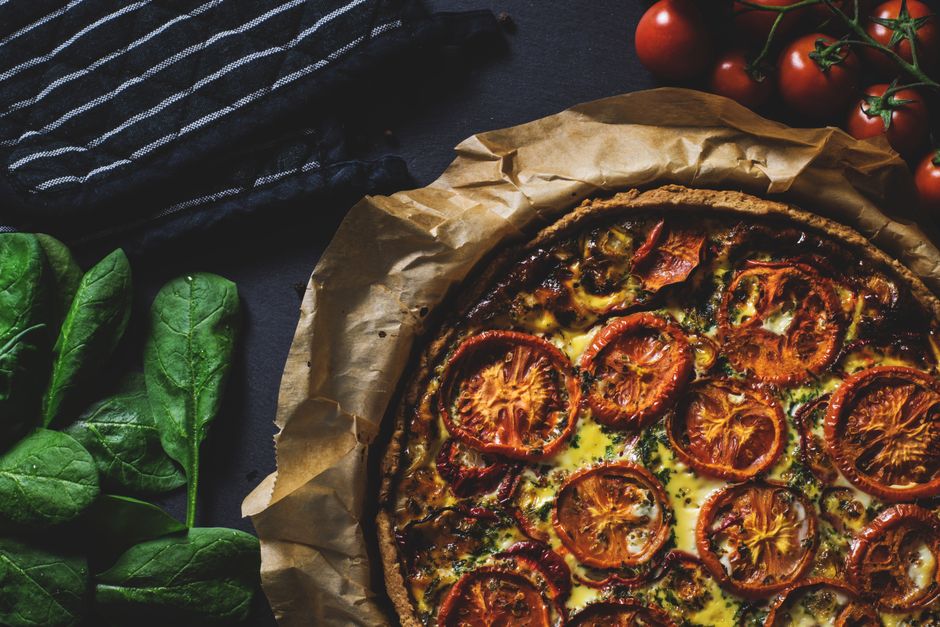
A single slice of quiche can carry anywhere from 300 to 600 calories depending on the crust and fillings — which is why it has a confusing reputation among people trying to lose weight.
Is quiche good for weight loss? It can be, but it depends entirely on how it is made. A traditional quiche with a butter pastry crust, heavy cream, and cheese is calorie-dense and easy to overeat. A crustless quiche loaded with vegetables and lean protein can fit comfortably into a weight loss plan. The difference comes down to crust, dairy fat, and portion size.
Most search results either call quiche a diet disaster or pretend it is a health food. Neither is accurate. Quiche is eggs, milk or cream, cheese, and a pastry shell — and each of those ingredients shifts the calorie math in a predictable way.
This article breaks down the actual numbers, shows you which swaps matter most, and explains how to fit quiche into a calorie deficit without turning breakfast into a 700-calorie event. You will also find out why the crust is the biggest lever, not the eggs.
Key Points at a Glance
| Point | What It Means | Why It Matters |
|---|---|---|
| Eggs are not the problem | Eggs are roughly 70 calories each and high in protein | The filling base is weight-loss friendly; the add-ins are what add up |
| The crust is the biggest calorie lever | A butter pastry crust can add 150 to 200 calories per slice | Going crustless can cut a slice’s calories by a third or more |
| Heavy cream vs. milk | Heavy cream is about 50 calories per tablespoon; low-fat milk is about 8 | Swapping dairy saves calories without changing the egg-to-liquid ratio much |
| Portion size decides everything | A quiche “slice” ranges from 1/8 to 1/6 of a pie | One large slice can equal two small ones in calories |
How Many Calories Are in a Slice of Quiche?
A standard slice of quiche Lorraine — one-eighth of a 9-inch pie — runs roughly 350 to 450 calories, based on USDA data for egg, cheese, cream, and pastry. Vegetable quiche without a crust lands closer to 180 to 250 calories per slice. The gap between those two numbers is almost entirely crust and cream.
Brand and recipe variation is real. A restaurant slice may be cut larger and contain more cheese than a homemade version. Treat any single calorie figure as a range, not a fixed number. If you are tracking intake, weigh your slice rather than guessing by eye.
Is Quiche Good for Weight Loss If You Make It Right?
Yes — a well-built quiche can be a genuinely useful weight loss food. Eggs are high in protein and moderately satiating, and a quiche built on vegetables, eggs, and a modest amount of cheese delivers protein and fiber in one dish. Research consistently shows that higher-protein meals support appetite control and help preserve lean mass during a calorie deficit.
The catch is that traditional recipes bury those advantages under pastry and cream. Fix the crust and the dairy, and the protein-to-calorie ratio improves sharply. That is the whole game with quiche.
What Swaps Actually Lower the Calories?
The crust swap matters most. A crustless quiche baked in a greased dish removes roughly 150 to 200 calories per slice with no change to the filling. If you want to keep a crust, a thin phyllo or whole-wheat crust uses less fat than a standard butter pastry.
Next is dairy. Replacing heavy cream with whole milk or low-fat milk cuts calories meaningfully while keeping the custard texture. Reducing cheese by a third and using a sharper variety preserves flavor at lower volume — a trick I use constantly, and it works better than it sounds.
- Swap heavy cream for whole or 2% milk
- Use 1/3 less cheese, choose a sharper type
- Add spinach, mushrooms, peppers, or broccoli for volume and fiber
- Include lean protein like chicken, turkey, or smoked salmon
- Skip the crust or use a thin phyllo base
How Does Quiche Fit Into a Daily Calorie Budget?
Your calorie needs depend on age, weight, height, and activity level — and they drop as you get older. A woman in her 50s typically needs fewer calories than she did at 30 for the same body weight. Knowing your maintenance number is what makes portion decisions concrete instead of guesswork.
Use the TDEE calculator to estimate your daily maintenance calories, then subtract a moderate deficit. From there, a 300-calorie slice of crustless vegetable quiche fits easily into breakfast or lunch. A 450-calorie pastry slice fits too — it just takes more planning.
Does Quiche Keep You Full?
Reasonably well, thanks to the protein and fat in eggs and cheese. Fat slows digestion, which supports satiety, though it also raises calorie density. Some studies suggest protein at breakfast reduces later snacking, though results vary by person and total daily intake.
The variable you control is fiber. A quiche with vegetables will keep you fuller than a plain cheese quiche at the same calorie count. That is a small change with a noticeable effect.
Related Articles
Frequently Asked Questions
Is quiche good for weight loss?
Quiche can support weight loss when it is made with a crustless base, vegetables, lean protein, and reduced dairy fat. Traditional pastry-and-cream quiche is calorie-dense and harder to fit into a deficit.
How many calories are in one slice of quiche?
A slice of traditional quiche Lorraine is roughly 350 to 450 calories, while a crustless vegetable quiche runs about 180 to 250 calories per slice. Exact figures vary by recipe, portion size, and brand.
Is crustless quiche lower in calories?
Yes, removing the pastry crust typically cuts 150 to 200 calories per slice. The filling stays the same, so you lose calories without losing protein.
Can I eat quiche every day and still lose weight?
You can eat quiche daily if it fits within your overall calorie budget and the rest of your diet is balanced. Variety in vegetables and protein sources still matters for nutrition.
Is quiche high in protein?
Eggs and cheese give quiche a moderate protein content, roughly 12 to 18 grams per slice depending on the recipe. Adding lean meat or extra egg whites raises it further.
What is the healthiest quiche to order at a restaurant?
Look for a vegetable quiche without a heavy pastry base and ask for the slice size. Restaurant portions are often larger than a standard eighth-of-a-pie serving.

The TDEECAL Team writes about nutrition, metabolism, and fat loss the way we built our calculator, with real numbers and no hype. We dig into the research so you don’t have to guess.