If you are trying to lose weight, the instant noodle aisle can feel like a minefield. A single packet of Top Ramen costs less than a dollar, cooks in three minutes, and fills a bowl. But the nutritional trade-off is steep, and most people don’t realize how much it can set back their progress.
No, Top Ramen is not good for weight loss. A single serving (one block of noodles with seasoning) contains roughly 380 calories, 14 grams of fat, and over 1,300 milligrams of sodium. It provides almost no protein or fiber, which means it will not keep you full or support muscle maintenance while you cut calories.
Most weight loss advice focuses on total calories, and technically you can lose weight eating anything in a deficit. But the real challenge is sticking with it. Foods like Top Ramen that spike your blood sugar, leave you hungry an hour later, and offer zero nutritional density make that deficit harder to maintain over weeks and months.
This article covers exactly what makes Top Ramen a poor choice for weight loss, what the numbers actually look like, and how to make smarter decisions when a noodle craving hits.
Key Points at a Glance
| Point | What It Means | Why It Matters |
|---|---|---|
| Calorie density | 380 calories per packet with almost no volume | You eat a third of your daily calories and still feel hungry |
| Protein content | About 8 grams per packet | Far below the 25–30 grams recommended per meal for appetite control |
| Fiber content | 1 gram or less per serving | No help with fullness or digestive health during a calorie deficit |
| Sodium load | Over 1,300 mg per packet | Can cause water retention and temporary scale fluctuations |
| Blood sugar impact | High glycemic index from refined wheat flour | Energy crash and cravings within 60–90 minutes of eating |
Is Top Ramen Good for Weight Loss? The Nutritional Breakdown
The short answer is no, but the numbers tell the full story. A standard packet of Top Ramen chicken flavor contains 380 calories, 14 grams of fat, 52 grams of carbohydrates, and 8 grams of protein. That protein number is the biggest problem for weight loss. Research consistently shows that eating 25–30 grams of protein per meal helps control appetite and preserve lean muscle during a calorie deficit. Top Ramen gives you less than a third of that.
I have tested this myself during meal prep weeks. A bowl of Top Ramen with a soft-boiled egg and some spinach brings the protein up to about 18 grams and adds fiber. That version still isn’t ideal, but it is noticeably more satisfying than the plain packet. Without those additions, you are essentially eating refined flour and fat with no staying power.
How Many Calories Are in Top Ramen?
A single serving block of Top Ramen contains 190 calories before seasoning. The full prepared bowl with the seasoning packet brings it to about 380 calories. That calorie count is not the main issue — 380 calories is reasonable for a meal if you are eating 1,500 to 1,800 calories per day. The problem is what those 380 calories deliver.
Compare that to 380 calories of oatmeal with whey protein and berries. The oatmeal meal provides roughly 30 grams of protein, 8 grams of fiber, and sustained energy for three to four hours. The Top Ramen meal provides 8 grams of protein, 1 gram of fiber, and leaves you hungry in 90 minutes. The calorie count is the same, but the satiety and nutritional value are completely different.
What Happens to Your Blood Sugar After Eating Top Ramen?
Top Ramen is made from refined wheat flour, which has a high glycemic index. This means your body digests it quickly and converts it to glucose rapidly. Your blood sugar spikes, your pancreas releases insulin to bring it back down, and that drop often triggers hunger and cravings within an hour or two.
For women in their 40s and 50s who may already be dealing with insulin sensitivity changes during perimenopause, this blood sugar roller coaster can make weight loss significantly harder. Stable blood sugar is one of the most underrated tools for appetite control, and Top Ramen works directly against it.
Practical tip: If you are craving noodles, look for shirataki noodles or konjac noodles. They have almost zero calories and provide a similar texture without the blood sugar spike. Pair them with a protein source and vegetables for a complete meal.
How to Make Top Ramen Slightly Better for Weight Loss
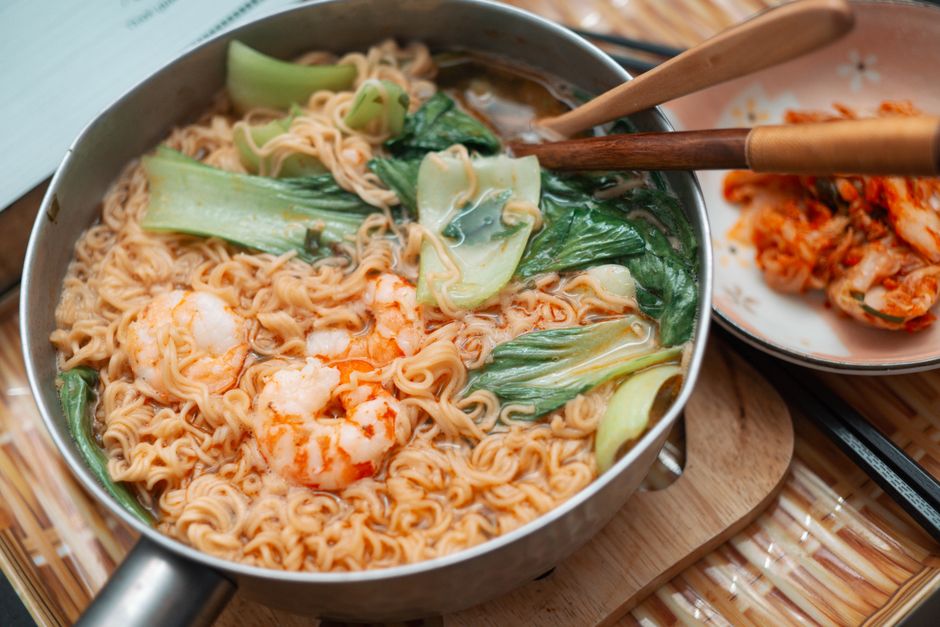
If you are going to eat it anyway, you can improve it. Use only half the seasoning packet to cut the sodium in half. Add a protein source — a poached egg, shredded chicken, or tofu. Add vegetables like bok choy, mushrooms, or frozen spinach for fiber and volume. These changes do not make Top Ramen a health food, but they do make it a more balanced meal that will keep you fuller longer.
I have made this version many times on busy weeknights. The egg adds creaminess to the broth, and the vegetables bulk up the bowl without adding many calories. It takes about ten minutes total and feels like a real meal rather than a concession. You can also calculate your personal calorie needs using the TDEE Calculator to see exactly how a meal like this fits into your daily target.
Common Mistakes People Make with Instant Noodles
The biggest mistake is eating the entire packet and calling it a meal. Many people eat two packets because one does not fill them up, doubling the calories, fat, and sodium to 760 calories and over 2,600 milligrams of sodium. That is more sodium than most people should have in an entire day.
Another mistake is drinking all the broth. The broth contains most of the sodium and some dissolved fat. Leaving half the broth in the bowl reduces sodium intake significantly without changing the noodle experience much. Small adjustments like this add up over a week of eating.
Related Articles
Frequently Asked Questions
Is Top Ramen good for weight loss if I eat it once a week?
Once a week is unlikely to derail your progress if you stay in a calorie deficit overall. But it still provides minimal protein and fiber, so plan your other meals that day to compensate.
Can I lose weight eating Top Ramen every day?
Technically yes if you are in a calorie deficit, but it will be much harder due to low satiety and blood sugar spikes. Most people find they cannot sustain this approach for more than a few days.
How much sodium is in Top Ramen?
One full packet contains about 1,330 milligrams of sodium. The American Heart Association recommends limiting sodium to 2,300 milligrams per day, so one packet uses over half that limit.
Is there a healthier version of Top Ramen?
Some brands offer lower-sodium or higher-protein instant noodles, but they still rely on refined flour. Look for noodles made from chickpea or edamame flour for more protein and fiber.
Does Top Ramen cause bloating?
Yes, the high sodium content can cause water retention and temporary bloating. This is not actual fat gain, but it can make the scale go up for a day or two.
What should I eat instead of Top Ramen for weight loss?
Try zucchini noodles with marinara and turkey meatballs, or shirataki noodles in broth with tofu and vegetables. Both provide more volume and protein for fewer calories.

The TDEECAL Team writes about nutrition, metabolism, and fat loss the way we built our calculator, with real numbers and no hype. We dig into the research so you don’t have to guess.