Most women who ask whether walking or lifting is the better weight-loss move are really asking a harder question: which one will finally work for me, at my age, with my schedule and my knees?
Is walking or weights better for weight loss? Neither wins outright. Walking burns more calories per minute during the session, while resistance training builds and preserves muscle, which supports your resting metabolism. For most women over 35, the strongest approach combines both: walking for daily calorie burn and weights two to three times weekly to protect lean mass.
That answer frustrates people because it sounds like a dodge. It isn’t. The two activities do different jobs, and the job you need most depends on what’s happening in your body right now.
After 35, women lose roughly 3 to 8 percent of muscle mass per decade without training, according to research on age-related muscle loss. That shift changes how your body uses calories at rest. It also changes how weight comes off and whether it stays off. Generic advice rarely addresses this. This article does.
Key Points at a Glance
| Point | What It Means | Why It Matters |
|---|---|---|
| Walking burns more during the session | A 30-minute brisk walk burns roughly 130 to 180 calories depending on your weight and pace | It creates a reliable daily calorie deficit with low injury risk |
| Weights protect muscle | Resistance training helps preserve lean mass during a calorie deficit | Muscle loss slows your resting metabolism and makes regain more likely |
| Combining both outperforms either alone | Walking handles calorie burn; lifting handles body composition | You lose fat rather than a mix of fat and muscle |
| Diet still drives the deficit | Exercise alone rarely produces large weight loss without calorie control | Knowing your daily burn helps you set a realistic intake target |
Is Walking or Weights Better for Fat Loss?
Walking wins on raw calorie burn per session. A brisk 30-minute walk costs most women roughly 130 to 180 calories. Thirty minutes of moderate weight training burns less during the session — often closer to 90 to 150 calories, depending on rest periods and load.
But the session number isn’t the whole story. Resistance training builds muscle, and muscle uses more energy at rest than fat does. Some studies suggest this resting-metabolism effect is modest — a few calories per pound of muscle per day — so don’t expect lifting to torch calories while you sit. The bigger benefit is composition. Research consistently shows that people who lift while dieting keep more lean mass than those who only do cardio.
Why Muscle Loss After 35 Changes the Answer
Women lose muscle faster after menopause, partly because estrogen supports muscle maintenance. When you cut calories without resistance training, some of the weight you lose is muscle. That’s the trap. You end up lighter but softer, with a slower metabolism than before.
This is where weights earn their place. Lifting signals your body to keep muscle even in a calorie deficit. Walking alone doesn’t send that signal. And a woman who diets without lifting can lose a meaningful share of her weight as lean tissue — which makes the next round of dieting harder.
How Many Calories Does Walking Actually Burn?
Roughly 80 to 100 calories per mile for a 150-pound woman, according to standard exercise energy estimates. Pace matters less than distance for calorie burn — a faster walk covers more ground in the same time. Incline adds meaningfully, so a hilly route beats a flat one at the same speed.
Weights are harder to pin down. A circuit-style session with short rests burns more than a slow session with long rests. Don’t chase precise numbers here. Use a TDEE calculator to estimate your total daily energy expenditure, then treat exercise calories as a modest buffer rather than a license to eat more.
What Should Your Weekly Plan Look Like?
Aim for 150 minutes of moderate activity weekly — the general public health target for adults. Walking most days covers this easily. Add two full-body strength sessions, hitting legs, hips, back, chest, and core with a weight that feels challenging by the last few reps.
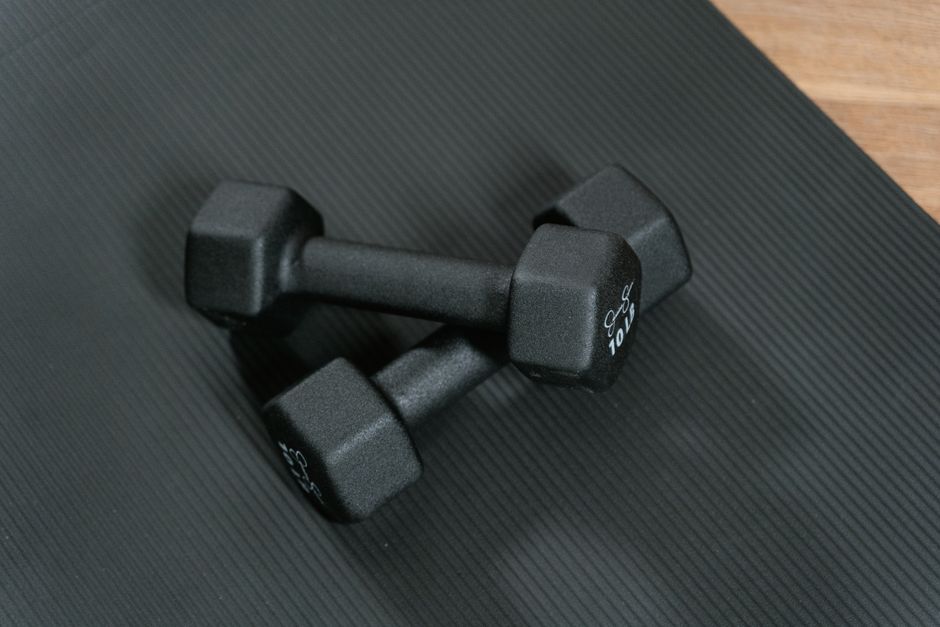
Start lighter than you think you should. Most women new to lifting can begin with bodyweight or 5-to-10-pound dumbbells and progress from there. Soreness in the first two weeks is normal. Sharp pain is not — stop and get it checked. No established clinical guideline exists for a universal starting weight, so let your own form and control guide you.
Related Articles
Frequently Asked Questions
Is walking or weights better for losing belly fat?
Neither spot-reduces belly fat, because fat loss happens across the whole body. The combination of a calorie deficit, walking, and resistance training reduces total fat including abdominal fat more effectively than either activity alone.
Can I lose weight with walking only?
Yes, if walking creates a consistent calorie deficit through diet and daily movement. The risk is losing muscle along with fat, which is why adding two weekly strength sessions is worth the effort.
How often should I lift weights to lose weight?
Two to three full-body sessions per week is a reasonable target for most women and matches general physical activity guidance. More frequent sessions help only if you recover well between them.
Does walking build muscle?
Walking maintains some leg muscle but does not build meaningful muscle mass on its own. Building muscle requires progressive resistance training where you gradually increase load over time.
Should I walk before or after lifting?
Lift first if you’re doing both in one session, since fatigue from walking can compromise your form under load. A short walk afterward works well as a cooldown.
How long until I see results?
Most women notice strength gains within three to four weeks and visible changes in eight to twelve weeks. Scale weight moves slower than body composition, so judge progress by how clothes fit and how strong you feel.

The TDEECAL Team writes about nutrition, metabolism, and fat loss the way we built our calculator, with real numbers and no hype. We dig into the research so you don’t have to guess.