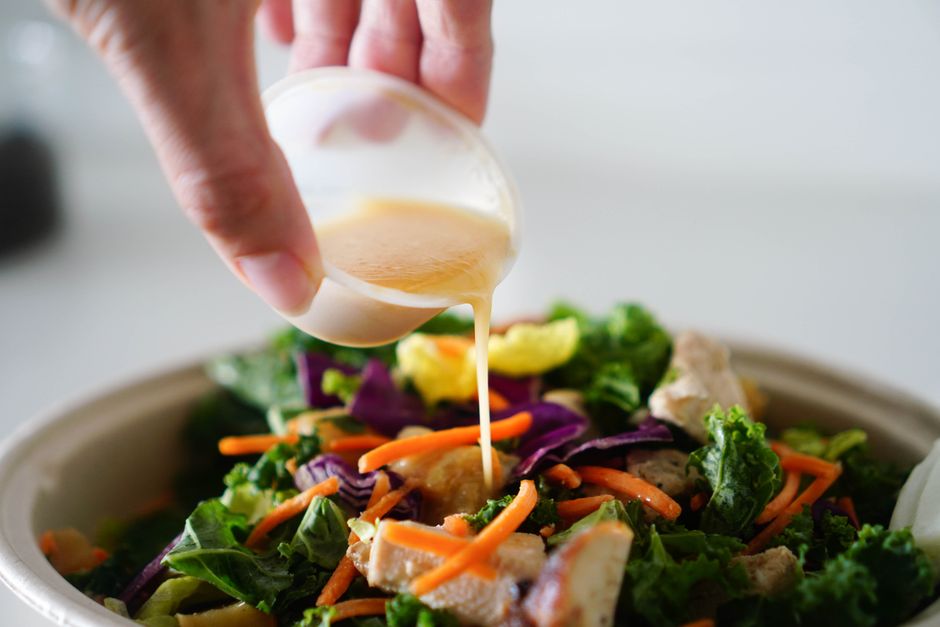
What is the Best Dressing for Weight Loss
Most salad dressings undo the health benefits of the vegetables they cover. A single restaurant portion can pack more calories than the salad itself, often hiding 15 to 20 grams of fat in just two tablespoons. The right choice makes your meal satisfying without turning it into a calorie bomb.
When asking what is the best dressing for weight loss, the answer comes down to three factors: calories per serving, the type of fat used, and how much you actually pour. Vinaigrettes made with olive oil and vinegar consistently win because they use heart-healthy fats and naturally limit portion size. Creamy dressings like ranch or blue cheese are the ones to watch, as their base ingredients make every tablespoon calorie-dense.
This guide breaks down which dressings help your goals, which ones quietly sabotage them, and how to build a flavorful dressing at home in under two minutes. You will also learn why the bottle you buy matters less than how you use it.
Key Points at a Glance
| Point | What It Means | Why It Matters |
|---|---|---|
| Calories per serving | Aim for 50–80 calories per 2 tablespoons | Keeps your total meal within your daily target |
| Fat quality | Olive oil and avocado oil beat soybean oil | Monounsaturated fats support heart health |
| Portion control | Measure dressing before pouring | Most people use 3–4 times the serving size |
| Homemade advantage | Control every ingredient | No hidden sugar or stabilizers |
What Makes a Dressing Good for Weight Loss?
Research consistently shows that dietary fat is more calorie-dense than protein or carbohydrates, containing 9 calories per gram compared to 4. That math matters when you are tracking intake. A dressing made primarily from oil will always carry more calories than a vinegar-based one, but that does not mean oil is the enemy.
Some studies suggest that a small amount of fat helps your body absorb fat-soluble vitamins like A, D, E, and K from the vegetables in your salad. A 2017 study published in the American Journal of Clinical Nutrition found that salads eaten with soybean oil allowed better absorption of these vitamins than fat-free dressings. The key is using a modest amount of a quality oil.
I always keep a small measuring spoon in my salad drawer. It sounds fussy, but eyeballing dressing usually doubles the portion. One level tablespoon of olive oil is about 120 calories — that is a quarter of many women’s snack budget.
Added sugar is the second hidden problem. Many commercial dressings, especially “light” versions, replace fat with sugar or corn syrup to keep flavor. Check the label and choose options where sugar appears near the bottom of the ingredient list, or better yet, not at all.
What is the Best Dressing for Weight Loss in Practice?
The best dressing for weight loss is a simple vinaigrette made with olive oil, vinegar, and a touch of mustard or lemon juice. A standard recipe uses a 3:1 ratio of oil to vinegar, but you can adjust to 2:1 for fewer calories while keeping enough fat for flavor and nutrient absorption. This combination delivers roughly 70–90 calories per two-tablespoon serving, depending on your pour.
Balsamic vinegar, red wine vinegar, and apple cider vinegar all work well and add distinct flavors without calories. Fresh herbs, garlic, and a pinch of salt transform the basic formula into something you will actually crave. If you prefer creamy textures, a single spoonful of plain Greek yogurt blended with herbs gives you that richness for about 20 calories per serving.
When buying bottled dressings, look for vinaigrette-style options where oil and vinegar are the first two ingredients. Avoid anything listing “cream,” “buttermilk,” or “mayonnaise” in the first three ingredients, as these add significant calories without much nutritional return.
How Many Calories Are in Popular Dressings?
Commercial ranch dressing typically contains 130–150 calories per two tablespoons, with about 14 grams of fat. Caesar dressing runs similar at 140–160 calories per serving, though it often adds cheese and anchovy paste for flavor. Blue cheese is the heaviest, frequently hitting 150–170 calories per two-tablespoon serving.
Italian vinaigrette is lighter at roughly 70–90 calories per serving, while a light balsamic vinaigrette can drop to 40–60 calories. Fat-free dressings may contain fewer calories, but many compensate with added sugar and thickeners that do nothing for satiety. A 2021 review in Nutrients found that moderate-fat dressings improved fullness and satisfaction compared to fat-free versions.
Restaurant dressings are the wild card. A typical restaurant side of dressing is 3–4 tablespoons, which means 200–300 calories before you factor in the rest of the meal. Always ask for dressing on the side and use about half of what they give you.
How to Build a Weight-Loss-Friendly Dressing at Home
The simplest homemade dressing takes less than two minutes and requires no special equipment. Combine two tablespoons of olive oil, one tablespoon of balsamic vinegar, a teaspoon of Dijon mustard, and a pinch of salt and pepper in a small jar. Shake vigorously for 30 seconds, and you have a dependable vinaigrette that beats most store-bought options.
For variety, swap the vinegar for lemon juice and add a clove of crushed garlic, or use red wine vinegar with dried oregano for a Mediterranean twist. A spoonful of Greek yogurt turns any vinaigrette creamy without adding much fat. These variations keep your meals interesting while staying within a reasonable calorie range.
Store homemade dressing in the refrigerator for up to one week. The oil will solidify when cold, so let it sit at room temperature for a few minutes and shake again before using. This small habit means you always have a healthy option ready, which makes the takeout salad less tempting.
Frequently Asked Questions
Related Articles
Is olive oil dressing better than store-bought ranch for weight loss?
Yes, olive oil vinaigrette typically contains half the calories of ranch dressing per serving. The monounsaturated fats in olive oil also support heart health, while ranch relies on soybean oil and added thickeners.
How much dressing should I use on a salad?
Stick to two tablespoons, which is about the size of a golf ball. Most people pour three to four times that amount without realizing it.
Are fat-free dressings good for weight loss?
Fat-free dressings are lower in calories but often contain added sugar to compensate for lost flavor. The lack of fat may also reduce how well your body absorbs vitamins from the salad.
Can I eat creamy dressing and still lose weight?
You can, but you need to measure it carefully and account for the calories in your daily total. A single serving of creamy dressing can use up a significant portion of your daily fat allowance.
What is the lowest calorie dressing option?
Plain vinegar with lemon juice and herbs contains nearly zero calories. If you need oil for flavor and nutrient absorption, use one teaspoon of olive oil instead of two tablespoons.
Does the type of vinegar matter for weight loss?
All vinegars contain essentially zero calories, so the type makes little difference for weight loss. Choose based on flavor preference — balsamic is sweeter, red wine is tangier, and apple cider has a fruity note.
Your dressing choice matters, but your portion size matters more. A two-tablespoon serving of any dressing, even the creamy ones, fits into a reasonable weight loss plan. The trouble starts when portions creep up or when dressing becomes a daily source of hidden calories. Start with the vinaigrette formula above, measure your servings for a week, and you will build a habit that supports your goals without feeling deprived. For a more precise calorie target based on your height, weight, and activity level, use our TDEE Calculator to see exactly how many calories your body needs each day.

The TDEECAL Team writes about nutrition, metabolism, and fat loss the way we built our calculator, with real numbers and no hype. We dig into the research so you don’t have to guess.