Fiber-rich foods for weight loss aren’t just hype; they’re one of the most consistently supported tools in nutrition research. Here’s what actually works, and why.
Most people trying to lose weight cut carbs, count calories, or try some new plan every few months. Very few think about fiber. That’s a mistake. Fiber-rich foods for weight loss are backed by some of the most consistent evidence in nutrition research, and most Americans are getting less than half the amount they actually need.
Overview of Fiber-Rich Foods For Weight Loss
| Field | Details |
|---|---|
| What it is | Dietary fiber is a type of carbohydrate your body can’t digest. It slows digestion, keeps you full, and feeds good gut bacteria |
| What people claim | Eating more fiber helps you eat less, lose belly fat, and improve digestion without strict dieting |
| What research says | Higher fiber intake is consistently linked to lower body weight and less belly fat across multiple large studies |
| Biggest benefit | Keeps you full longer, which naturally reduces how much you eat without counting every calorie |
| Biggest limitation | Fiber alone won’t overcome a poor diet, total calories still matter |
| Best for | People over 35 who struggle with hunger, snacking, or slow digestion while trying to lose weight |
| Be careful if | Fiber alone won’t overcome a poor diet; total calories still matter |
| Bottom line | Fiber is probably the most underused weight loss tool most Americans have access to right now. Getting 25–38 grams a day from real food, not supplements, is where the evidence points, and most people are getting less than half that. |
Can Fiber Actually Help You Lose Weight?
Yes, and the evidence behind it is strong. A 2015 study published in the Annals of Internal Medicine found that simply increasing fiber intake to 30 grams a day helped people lose weight nearly as effectively as following a complex diet plan.
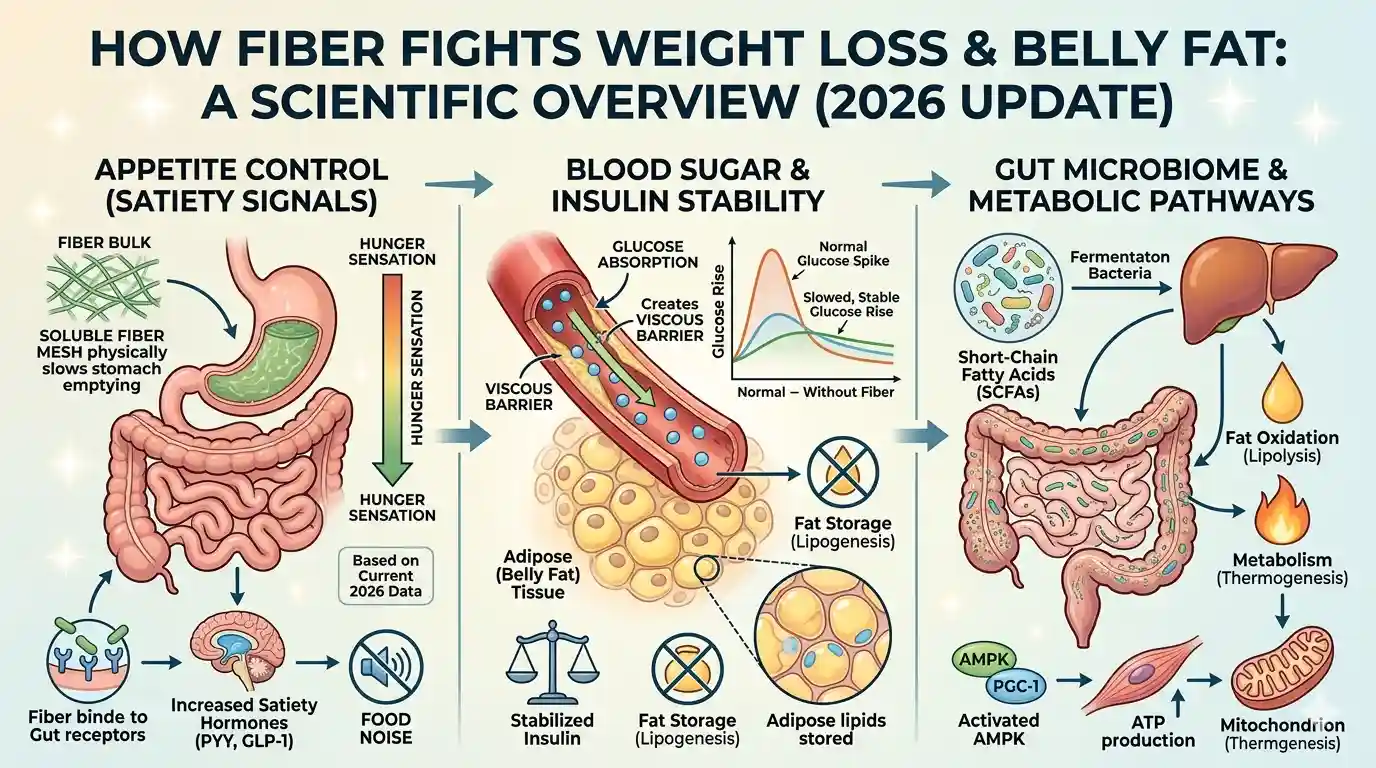
It works mainly because fiber slows down how fast food leaves your stomach. You feel full longer. You eat less without trying that hard.
Can Fiber Lose Belly Fat Specifically?
Research suggests it can, particularly soluble fiber. A study from Wake Forest Baptist Medical Center found that every 10-gram increase in soluble fiber intake per day was linked to a 3.7% reduction in belly fat over 5 years.
That’s not dramatic. But it’s consistent. And belly fat is the kind that raises your risk for heart disease and diabetes — so even modest reductions matter.
How Much Fiber Per Day to Lose Weight?
The general target is 25 grams per day for women and 38 grams for men, according to the Institute of Medicine. Most Americans get about 15 grams. That gap is real.
For weight loss specifically, research points to 30 grams a day as a practical, achievable target. You don’t need to hit it perfectly every single day, just consistently over time.
Top 10 Fiber-Rich Foods for Weight Loss
Here they are, with actual fiber numbers, not vague claims.
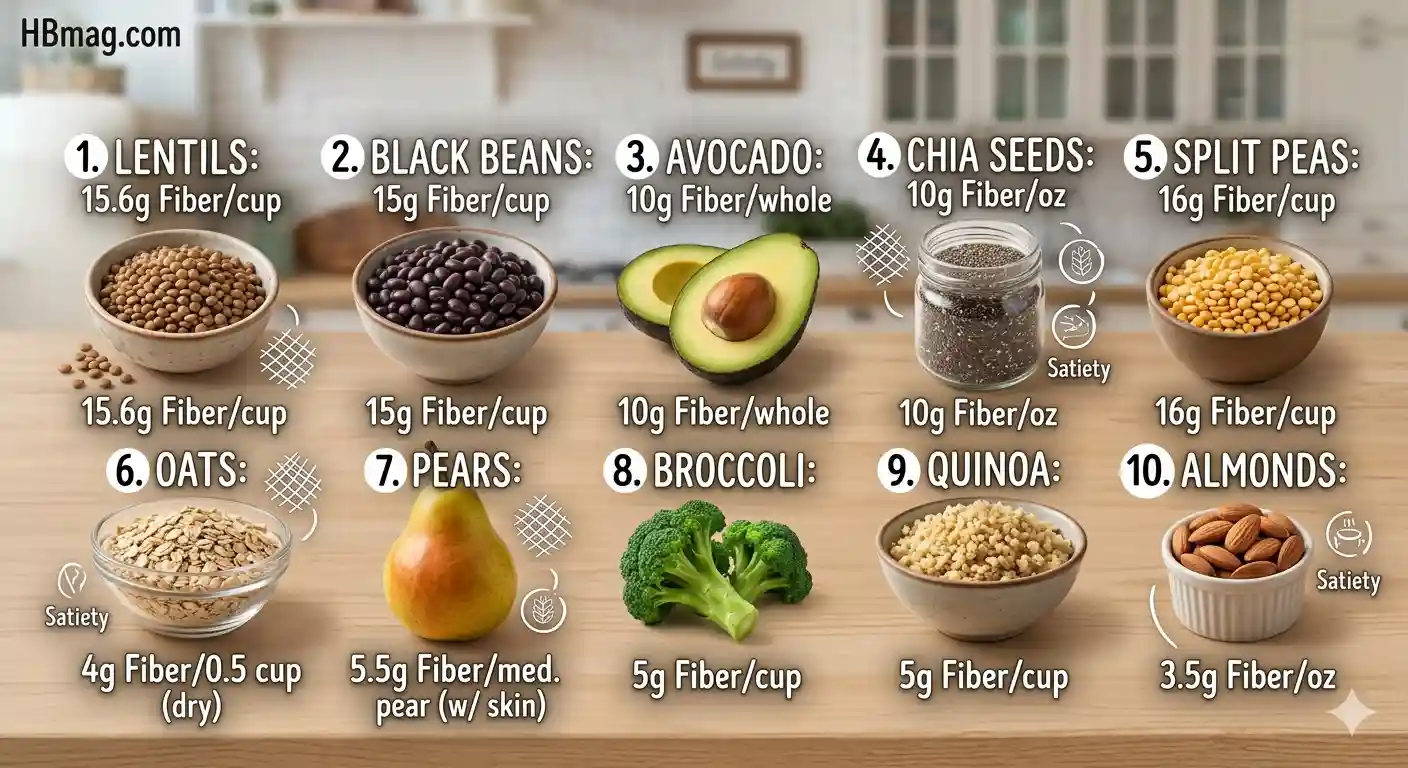
1. Lentils: About 15.6 grams of fiber per cooked cup. Cheap, filling, and they keep you full for hours. A bowl of lentil soup at lunch is the kind of thing that gets you to dinner without snacking.
2. Black Beans: Around 15 grams per cooked cup. High in both soluble and insoluble fiber. Good for gut health too.
3. Avocado: About 10 grams per whole avocado. Most people don’t think of it as a fiber food, but it is. The fat plus fiber combo keeps hunger down for a long time.
4. Chia Seeds: 10 grams of fiber per ounce. They expand in liquid and slow digestion significantly. Two tablespoons of yogurt or oatmeal take five minutes and keep you from reaching for a snack at 10 am.
5. Split Peas: About 16 grams per cooked cup — the highest on this list. Underrated. Make a simple soup, and you’ve covered more than half your daily fiber target in one meal.
6. Oats: About 4 grams per half cup dry. Contains beta-glucan, a soluble fiber with some of the best evidence for appetite control and cholesterol reduction.
7. Pears About 5.5 grams per medium pear, with the skin on. One of the best fiber-rich fruits you can grab without cooking anything.
8. Broccoli About 5 grams per cooked cup. Easy to add to almost any meal. People consistently underestimate how much fiber vegetables actually contribute.
9. Quinoa: About 5 grams per cooked cup. Also, a complete protein. If you’re eating at your desk and need something that holds you until late afternoon, this is worth keeping around.
10. Almonds: About 3.5 grams per ounce. Portable, no prep needed. A small handful as a mid-morning snack genuinely helps with hunger between meals.
High Fiber Foods Chart: A Quick Reference
| Food | Serving Size | Fiber (grams) |
|---|---|---|
| Split Peas | 1 cup cooked | 16.3g |
| Lentils | 1 cup cooked | 15.6g |
| Black Beans | 1 cup cooked | 15g |
| Chia Seeds | 1 oz | 10g |
| Avocado | 1 whole | 10g |
| Oats | ½ cup dry | 4g |
| Quinoa | 1 cup cooked | 5g |
| Broccoli | 1 cup cooked | 5g |
| Pear | 1 medium | 5.5g |
| Almonds | 1 oz | 3.5g |
Fiber-Rich Foods for Weight Loss. Vegetarian Options
Every food on this list is already vegetarian. That’s not a coincidence. Plant foods are where fiber lives.
If you’re eating mostly plants, hitting 30–38 grams of fiber a day is genuinely easy. A cup of lentils at lunch, some broccoli at dinner, an apple for a snack, and a handful of almonds — you’re close to 25 grams right there. No supplements needed.
Here’s the thing: Research still hasn’t fully settled. We don’t know exactly how much of fiber’s weight loss effect comes from its direct impact on appetite versus its effect on gut bacteria. Both seem to matter. But the right ratio, and which types of fiber feed which bacteria most effectively, is still being studied as of 2026.
Fiber-Rich Fruits: The Best Ones for Weight Loss
Fruit gets a bad reputation in some diet circles because of sugar. But fiber-rich fruits are different — the fiber slows sugar absorption and keeps you full.
The best options: pears (5.5g), raspberries (8g per cup), apples with skin (4.4g), bananas (3.1g), and oranges (3.1g).
Raspberries are genuinely one of the highest-fiber foods by volume, but most people don’t realize that. A cup of raspberries on oatmeal gets you close to 12 grams of fiber before 9 am.
What’s the Easiest Way to Add More Fiber Without Overhauling Your Diet?
Start with three swaps. From white bread to whole grain, it adds about 2 grams per slice. From white rice to lentils, it adds about 12 grams per cup. An afternoon snack of chips to an apple with almonds adds about 6 grams.
That’s 20 extra grams right there. No meal plan required. If cooking isn’t happening right now, canned beans on a salad from a bag takes four minutes and give you 15 grams of fiber.
My Take
Fiber-rich foods for weight loss are the most underused tool that most people already have access to. The evidence is consistent. The food is cheap. The side effects are basically just better digestion.
Most Americans are getting 15 grams a day. The target is 25–38. Closing that gap, with real food, not fiber pills, is one of the most practical changes anyone over 35 can make for long-term weight management.
FAQ
Can fiber help you lose belly fat?
Research suggests yes — soluble fiber in particular is linked to reduced belly fat over time. A Wake study found a 3.7% reduction in belly fat for every 10 extra grams of daily soluble fiber consumed.
How much fiber per day to lose weight?
Most evidence points to 25–38 grams per day, depending on your size and sex. A 2015 study in the Annals of Internal Medicine found that 30 grams a day was enough to produce meaningful weight loss on its own.
What are the highest fiber foods for weight loss?
Split peas, lentils, and black beans top the list, all around 15–16 grams per cup. Chia seeds and avocado are close behind and easier to add without cooking.
Are fiber supplements as good as fiber from food?
Not quite. Whole foods deliver a mix of fiber types plus other nutrients. Supplements mostly provide one isolated type. Food is better — but a supplement beats nothing if you’re consistently falling short.
What fiber-rich foods are good for vegetarians trying to lose weight?
Lentils, black beans, split peas, oats, chia seeds, and most fruits and vegetables are all vegetarian and high in fiber. A plant-based diet makes it easy to hit your daily fiber target without much effort.

The TDEECAL Team writes about nutrition, metabolism, and fat loss the way we built our calculator, with real numbers and no hype. We dig into the research so you don’t have to guess.