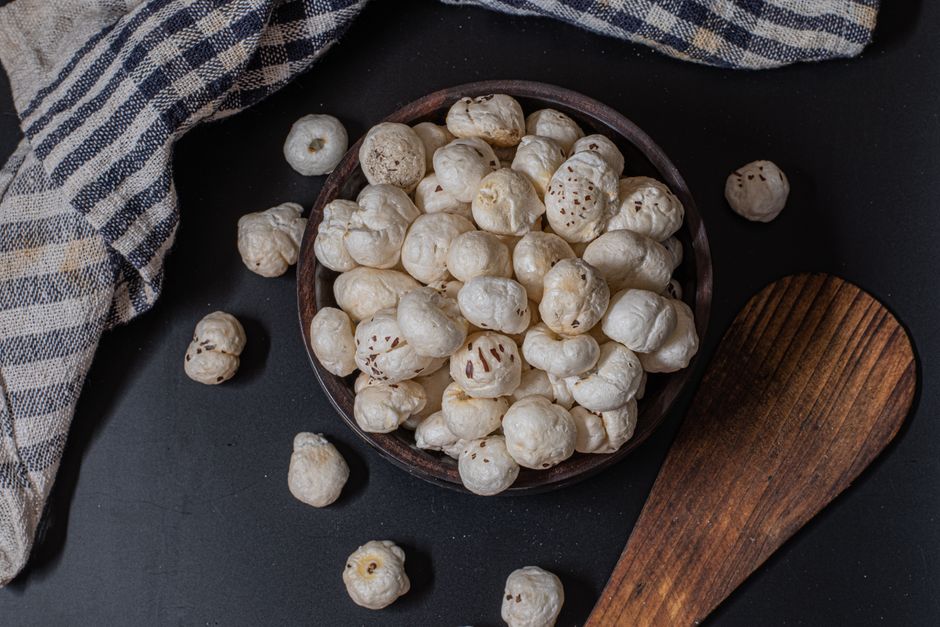
Are Makhana Good for Weight Loss?
Most people assume all crunchy snacks are off-limits when trying to lose weight. Makhana, also known as fox nuts or lotus seeds, is one of the few snacks that actually fits into a weight loss plan without much fuss.
Yes, makhana are good for weight loss. These puffed seeds are low in calories, high in fiber, and naturally gluten-free. A one-ounce serving (about 28 grams) contains roughly 100 to 110 calories, depending on how they are prepared. The fiber and protein in makhana help you feel full longer, which makes it easier to eat less throughout the day.
The problem is that most people eat makhana the wrong way. They buy pre-packaged roasted versions loaded with oil and salt, then wonder why the scale doesn’t move. This article covers what the evidence actually says about makhana for weight loss, how to prepare them so they stay low-calorie, and where they fit in a realistic eating plan.
Key Points at a Glance
| Point | What It Means | Why It Matters |
|---|---|---|
| Calorie density | About 100-110 calories per ounce | You can eat a decent portion for few calories |
| Fiber content | Roughly 1-2 grams per serving | Helps slow digestion and increases fullness |
| Protein | About 3-4 grams per ounce | Supports satiety and muscle maintenance |
| Preparation matters | Dry-roasted is best; avoid oil-heavy versions | Added oil can double or triple the calories |
| Glycemic impact | Low to moderate glycemic index | Less likely to spike blood sugar than refined snacks |
What Makes Makhana Different From Other Snacks?
Most crunchy snacks come from refined flours, fried potatoes, or heavy grains. Makhana are different because they are a whole food with a simple ingredient list — just the seed itself.
The nutritional profile is what stands out. A one-ounce serving delivers roughly 3 to 4 grams of protein and 1 to 2 grams of fiber. That combination is rare in the snack aisle. Most chips and crackers offer almost zero protein and fiber, which means you eat more before your brain registers fullness.
Research published in the Journal of Food Science and Technology found that fox nuts contain bioactive compounds and antioxidants. Some studies suggest these compounds may help with blood sugar regulation, though more human research is needed. The key point for weight loss is simple: makhana are a low-calorie, whole-food option that replaces higher-calorie snacks without leaving you hungry.
Are Makhana Good for Weight Loss When Roasted?
The short answer is yes, but only if you control how they are roasted. Dry-roasting in a pan with no oil keeps the calorie count around 100 to 110 per ounce. Adding oil changes everything.
A tablespoon of oil adds roughly 120 calories. If you roast makhana in oil, you can easily double the calorie content without realizing it. The same logic applies to store-bought versions — always check the ingredient list. Some brands coat makhana in butter, sugar, or spicy oil blends that turn a healthy snack into something closer to a treat.
I always dry-roast mine in a heavy-bottomed pan over medium heat for about five minutes until they puff up slightly. A pinch of salt and a squeeze of lime goes a long way. That version stays low-calorie and actually tastes good.
How Much Makhana Should You Eat for Weight Loss?
There is no specific recommended serving size for makhana in clinical guidelines. The evidence points to a general principle: replace higher-calorie snacks with makhana, and keep portions reasonable.
A sensible serving is one to two ounces, which comes to about 100 to 220 calories. That fits into most weight loss plans without much planning. The fiber and protein help with satiety, but makhana are not a meal replacement. They work best as a snack between meals or as a crunchy topping on salads or yogurt.
The bigger question is whether makhana help with weight loss on their own. No single food causes weight loss. Weight loss happens when you consistently eat fewer calories than you burn. Makhana make that easier because they satisfy the snack craving without wrecking your daily calorie budget.
What Does the Research Say About Makhana and Weight?
Direct clinical trials on makhana and weight loss are limited. Most of the research focuses on the nutritional composition and potential health benefits of fox nuts rather than specific weight outcomes.
Some studies indicate that the fiber and resistant starch in makhana may support gut health and blood sugar control. Better blood sugar regulation can reduce cravings and energy crashes, which indirectly supports weight management. The evidence is promising but not definitive.
What the research does support is the broader pattern: whole, minimally processed plant foods with fiber and protein are consistently linked to healthier body weight. Makhana fit that pattern. They are not a miracle food, but they are a genuinely better choice than most packaged snacks.
Frequently Asked Questions
Related Articles
Are makhana good for weight loss compared to popcorn?
Both are low-calorie, whole-grain snacks, but makhana have slightly more protein and less volume per serving. Popcorn is lower in calories per cup, while makhana offer more satiety per ounce.
Can I eat makhana every day while trying to lose weight?
Yes, daily consumption is fine as long as you keep portions to one or two ounces and avoid oil-heavy preparations. Consistency matters more than any single food choice.
How many calories are in roasted makhana?
Dry-roasted makhana contain roughly 100 to 110 calories per ounce. Oil-roasted versions can be significantly higher, so always check the label or prepare them yourself.
Are makhana good for weight loss if I have diabetes?
Some research suggests fox nuts may have a low to moderate glycemic impact, which could help with blood sugar control. However, you should still monitor portions and consult your healthcare provider for personalized advice.
Do makhana make you feel full?
The fiber and protein in makhana contribute to fullness, though the effect is moderate rather than dramatic. Pairing them with a source of protein like yogurt or nuts increases satiety further.
What is the best way to eat makhana for weight loss?
Dry-roast them with minimal salt and no oil, and keep your serving to one or two ounces. Avoid sweetened or heavily flavored versions that add sugar and fat.
To see how makhana fit into your personal calorie needs, use our TDEE calculator to find your maintenance calories and plan your deficit accordingly.

The TDEECAL Team writes about nutrition, metabolism, and fat loss the way we built our calculator, with real numbers and no hype. We dig into the research so you don’t have to guess.