Most diets fall apart by Wednesday. Not because of willpower — because there is nothing useful in the fridge when hunger hits at 6 PM.
Healthy meal prep ideas for weight loss come down to one principle: cook once, eat all week. Spend 60–90 minutes on Sunday batching a protein, a grain, and a vegetable. That single session covers five days of breakfasts, lunches, and dinners with calories you can actually predict. No guesswork, no takeout, no off-track Thursday.
This guide is built for home cooks who want a working system — not a list of 40 recipe links. You will get a full 5-day plan, real batch-cook instructions, calorie estimates, and swaps that work for high-protein or vegetarian goals alike.
If you have tried meal prep before and given up by Tuesday, the structure here is designed to fix exactly that problem.
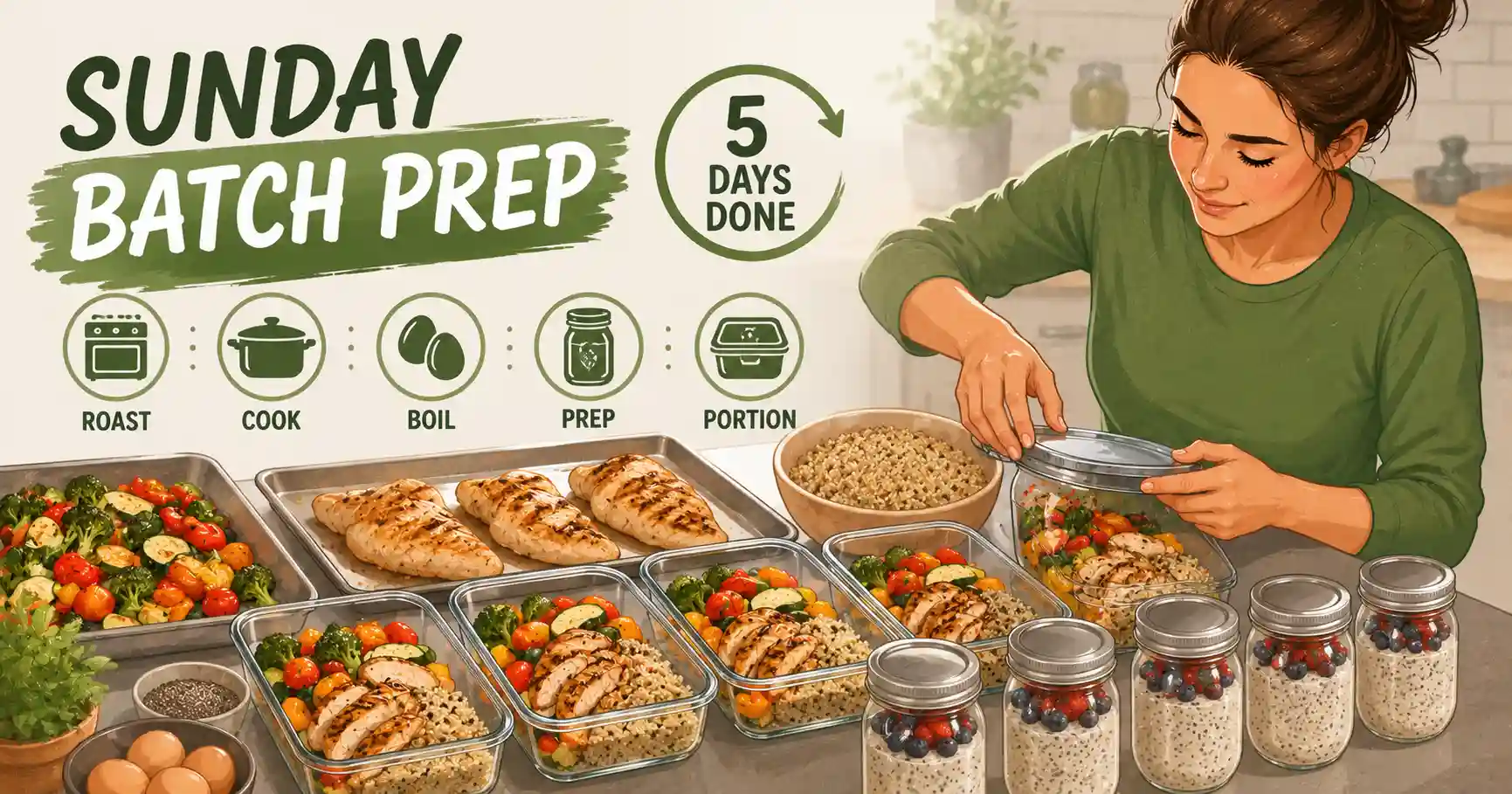
5-Day Meal Prep Session — The Sunday Batch Method
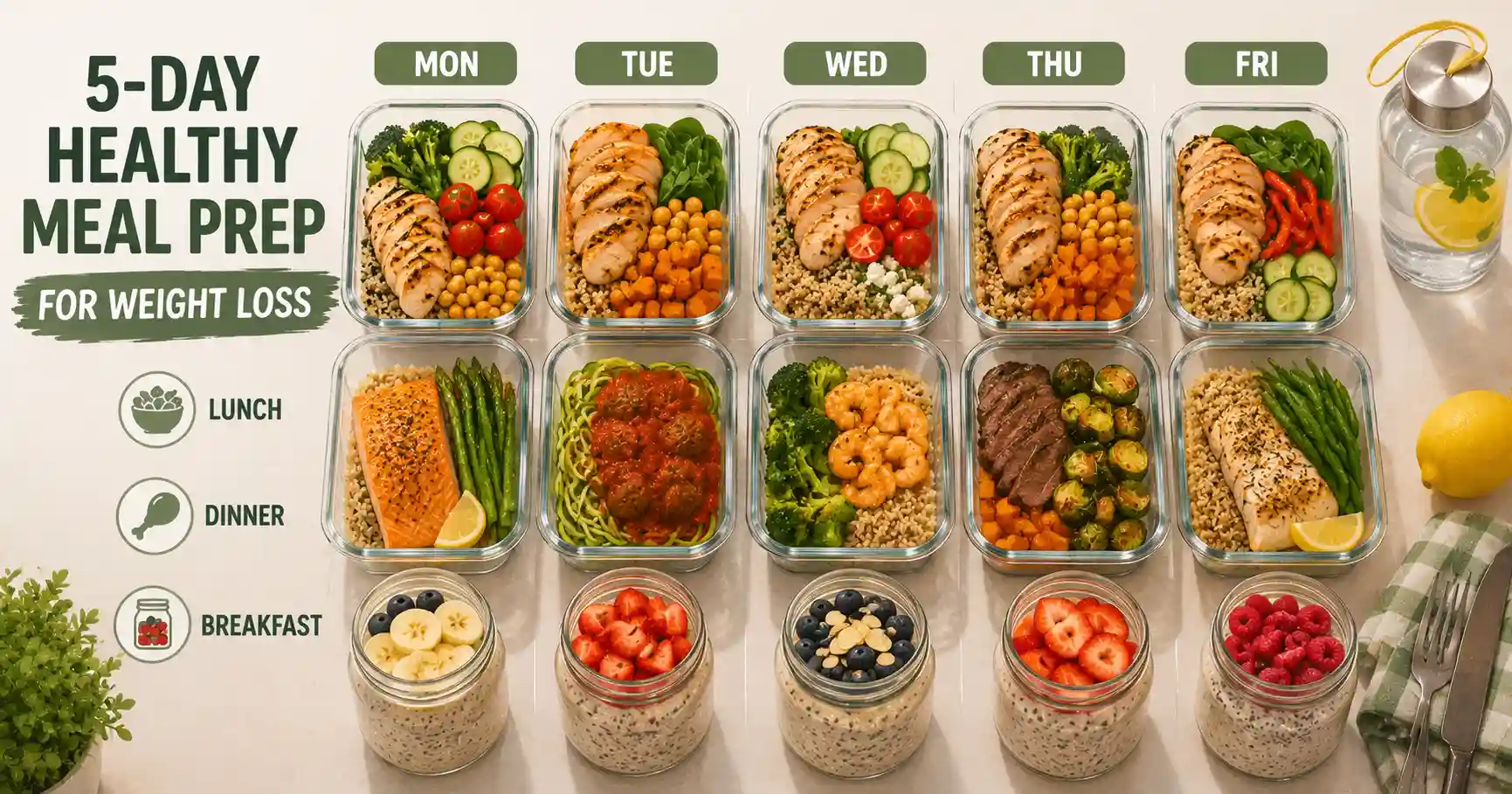
One prep session. Five days of meals. ~1,300–1,400 calories per day.
What Makes Healthy Meal Prep Work for Weight Loss
Meal prep is not about eating the same sad salad five days in a row. It is about removing the moment of choice — the one that happens at 7 PM when you are tired and the delivery app is one tap away. That moment is where most diets actually fail.
The three levers that make it work are calories, protein, and convenience. Research from the Harvard T.H. Chan School of Public Health consistently links eating whole-food, home-prepared meals to better diet quality and more stable weight control over time. Prepped meals make that the default choice, not the effortful one.
Protein is the other piece. Meals with 25–35g of protein keep you fuller for longer and help preserve muscle mass while you are in a calorie deficit. That matters more as women move through their 40s and 50s — muscle loss accelerates with age, and a high-protein diet helps slow it. More on that in the high-protein section below.
And the batch method is faster than it sounds. Once the oven is doing the work, you are mostly just waiting.
How to Build Your Meal Prep Around Your Calorie Goal
No meal prep plan works if the calories are wrong for your body. A 45-year-old woman who walks 30 minutes a day needs different calories than one who trains five days a week. Portion sizes that maintain weight for one person can barely move the needle for another.
Before you portion anything, find your TDEE — your Total Daily Energy Expenditure. That number tells you how many calories your body uses on an average day. Then subtract 300–500 calories from it to set your daily weight-loss target. You can get that number instantly using the free TDEE calculator at TDEEcal.com.
The plan below is built around 1,300–1,400 calories per day — a reasonable deficit target for many sedentary-to-lightly-active women aged 35–65. If your TDEE runs higher, add a larger grain portion or a piece of fruit. If lower, reduce the quinoa by ¼ cup per meal.
For the science behind protein and fat loss, the NIH review on dietary protein and body weight regulation breaks it down clearly.
How to Make Healthy Meal Prep for Weight Loss: The Sunday Batch Method
Master Grocery List — 5-Day Plan (1 Person)
Protein
- 2 lbs boneless, skinless chicken breast
- 5 large eggs
- 1 can (15 oz) chickpeas, drained and rinsed — a budget-friendly legume, usually in the canned goods aisle
Grains & Base
- 1 cup dry quinoa — a complete-protein grain; rinse before cooking to remove any bitter coating
- 1 cup dry old-fashioned rolled oats (not instant)
- 5 tbsp chia seeds — small seeds that thicken overnight oats on their own; usually in the health food or cereal aisle
Vegetables
- 2 cups broccoli florets
- 2 medium zucchini, sliced into half-moons
- 1 red bell pepper, sliced
- 1 cup cherry tomatoes
- 1 medium cucumber, sliced
- 5 cups baby spinach or mixed greens
Pantry & Flavour
- 2 tbsp olive oil
- 1 tsp garlic powder
- 1 tsp paprika
- 2 tbsp low-sodium soy sauce or tamari (tamari is gluten-free)
- 1 tbsp sesame oil
- 2 tbsp honey or maple syrup
- 1 medium lemon, juiced
- Salt and black pepper to taste
Fridge Items
- 2½ cups unsweetened almond milk (or any milk you prefer)
- 1 cup mixed berries — fresh or frozen; add to oats right before eating, not the night before
Step-by-Step: Sunday Batch Prep Instructions
-
Preheat the oven to 400°F. Line two large baking sheets with parchment paper — one for the chicken, one for the vegetables.Tip: Getting both sheets in at the same time is the core time-saver of this method. If your oven runs hot, check the vegetables at the 22-minute mark.
- Season the chicken breasts by patting them dry, then rubbing with 1 tbsp olive oil, garlic powder, paprika, salt, and pepper. Place in a single layer on the first baking sheet.
-
Toss the broccoli, zucchini, bell pepper, and cherry tomatoes with 1 tbsp olive oil, salt, and pepper. Spread flat on the second baking sheet. Crowded vegetables steam instead of roast — single layer is worth it.Tip: I always toss the veg right on the pan — one less bowl to wash.
- Roast both sheets in the oven. Vegetables are done in 25–28 minutes. Chicken takes 25–30 minutes — it is safe when the thickest part reads 165°F on an instant-read thermometer.
-
Cook the quinoa while the oven runs: rinse 1 cup under cold water, combine with 2 cups of water in a saucepan, bring to a boil, reduce to a low simmer, cover, and cook for 15 minutes. Fluff with a fork and cool uncovered.Tip: Cooked quinoa smells faintly nutty when done. If it still smells raw, give it 3 more minutes covered.
- Hard-boil 5 eggs: place in a saucepan, cover with cold water by 1 inch, bring to a rolling boil, remove from heat, cover, and let sit for 11 minutes. Move eggs to a bowl of ice water for 5 minutes to stop cooking.
-
Assemble the overnight oats: add ½ cup rolled oats, ½ cup almond milk, 1 tbsp chia seeds, and ½ tsp honey to each of 5 jars. Stir well, seal, and refrigerate. They need at least 4 hours — overnight is easiest.Tip: Add the berries in the morning, not the night before. It keeps the top layer from turning to mush.
- Slice or shred the cooled chicken. Divide into 5 equal portions. Portion the quinoa and roasted vegetables the same way.
- Store proteins, grains, and vegetables in separate airtight containers so you can mix and match through the week. Label each with the day. Lunch and dinner use the same prep components — just dressed differently each day to keep it from feeling repetitive.
Your 5-Day Weight Loss Meal Plan at a Glance
These meals all pull from the Sunday batch. The variety comes from how you season and combine the components — not from cooking anything new mid-week.
Breakfast — Each Day (Monday–Friday)
~310 cal | 14g proteinOvernight oats from your prep jars topped with ½ cup mixed berries, plus 1 hard-boiled egg on the side. The egg adds the protein that oats alone cannot deliver. Eat it cold straight from the fridge — no prep needed in the morning.
Lunch — Each Day
~440 cal | 35g proteinGrain bowl: ½ cup cooked quinoa, 4 oz sliced chicken, 1 cup roasted vegetables over 1 cup spinach. Drizzle with 1 tsp sesame oil and a squeeze of lemon. Works cold straight from the container — no microwave access required.
For more variety on days 4 and 5, see the healthy lunch ideas for weight loss page on TDEEcal.
Dinner — Each Day
~510 cal | 40g proteinSame base as lunch — but warmed up and dressed differently each night. Monday: soy-sesame drizzle. Tuesday: lemon and dried herbs. Wednesday: hot sauce and ½ an avocado. Thursday: miso and ginger. Friday: chickpeas swapped in for the chicken for a lighter close to the week.
The same base, five different plates. That is the whole trick.
High-Protein Meal Prep Ideas That Actually Keep You Full
High-protein meal prep for weight loss is not about eating chicken at every meal. It is about hitting 25–35g per meal so hunger stays manageable inside a calorie deficit. That range is achievable with a range of proteins — not just poultry.
Four swaps that fit the same Sunday batch method:
- Greek yogurt parfait (breakfast swap): Replace overnight oats with ½ cup plain 2% Greek yogurt layered with ¼ cup oats and mixed berries. Roughly 240 calories and 18g protein per serving. Higher protein than oats alone.
- Canned tuna grain bowl (lunch swap): Replace the chicken with one 5-oz can of tuna in water. Zero cooking required. Same protein content, lower cost, and done in 90 seconds.
- Ground turkey stuffed peppers (dinner swap): Brown 1 lb lean ground turkey on prep day and divide into 5 portions. Spoon into halved bell peppers and reheat for 3 minutes. I find this holds up better than chicken after a few days in the fridge.
- Cottage cheese bowl (breakfast swap): 1 cup low-fat cottage cheese with sliced cucumber and cherry tomatoes. About 180 calories and 25g protein. It sounds odd, but it is genuinely one of the most filling breakfasts in this protein range.
For protein-rich options that work well in a breakfast rotation, the smoothie recipes for weight loss on TDEEcal include several high-protein blends you can prep in under 5 minutes.
All protein figures are sourced from the USDA FoodData Central database.
Vegetarian Meal Prep Ideas for Weight Loss
Vegetarian meal prep works well for weight loss — but only if protein gets the same attention it does in a meat-based plan. The most common mistake is loading containers with grains and vegetables and landing at 12g of protein per meal instead of 30g.
These four swaps keep the same 5-day batch structure, fully meat-free:
| Swap | Replaces | Approx. Protein | Notes |
|---|---|---|---|
| Baked extra-firm tofu | Chicken breast | ~18g per 4 oz | Press for 20 min before seasoning to remove water. Roasts in the same pan, same time. |
| Cooked lentils | Chicken breast | ~18g per cup cooked | Cook in broth instead of water for deeper flavour. No pressing needed. Very low cost. |
| Tempeh | Chicken breast | ~20g per 4 oz | Fermented soy product with a firm, nutty texture. Found refrigerated near the tofu. Slice and roast the same way as chicken. |
| Chickpeas + hulled hemp seeds | Chicken breast | ~16g combined | Add 3 tbsp hemp seeds to the grain bowl — no cooking. Adds protein and omega-3s with no extra prep time. |
For the vegetarian plan to hit a full amino acid profile across the day, pair a legume with a whole grain at each meal. Lentils and brown rice, chickpeas and quinoa — the combination covers what each ingredient misses alone.
Also check the fiber-rich foods guide on TDEEcal. High-fiber vegetarian staples like lentils and chickpeas pull double duty — they deliver protein and the fiber that helps slow digestion and keep hunger down between meals.
Nutrition Facts
Nutrition Facts — Average Daily Totals (Breakfast + Lunch + Dinner)
Per person per day based on the 5-day batch plan.
Nutrition estimates calculated using USDA FoodData Central. Values will vary by brand, exact portions, and ingredient substitutions.
Substitutions & Variations
| Original Ingredient | Swap | Why It Works |
|---|---|---|
| Chicken breast | Baked tofu or cooked lentils | Vegan swap: keeps protein high without animal products; roasts in the same pan, same temperature |
| Quinoa (½ cup cooked) | Cauliflower rice | Lower-calorie option: cuts roughly 100 calories per day; lowers carbs if that is a goal |
| Fresh sliced vegetables | Pre-cut frozen stir-fry mix, roasted from frozen | Busy-day shortcut: no chopping; add 5–8 extra minutes to roast time |
| Sesame-soy dressing | Harissa + lemon, miso + ginger, or Greek yogurt ranch | Flavor variation: same base ingredients, entirely different eating experience each day |
| Almond milk in oats | Oat milk or low-fat cow’s milk | Budget and preference swap: oat milk is often cheaper; cow’s milk adds an extra 4–8g protein per serving |
Storage & Make-Ahead
- Fridge shelf life: Cooked chicken, quinoa, and roasted vegetables keep safely for up to 4 days in sealed airtight containers. Overnight oats keep for up to 5 days. Hard-boiled eggs last up to 7 days unpeeled or 5 days peeled in a closed container.
- Freezer: Portion cooked chicken and quinoa for days 4–5 into freezer bags on Sunday. Transfer to the fridge the night before eating. Roasted vegetables lose texture when frozen — make fresh for those days or use frozen vegetables instead. Overnight oats do not freeze well.
- Reheating: Chicken and vegetables reheat in the microwave in 2–3 minutes. Cover with a damp paper towel to hold moisture. Quinoa reheats in 90 seconds. The grain bowl also works cold — useful if you have no microwave access at work.
- Make-ahead tip: Measure out the dry overnight oat ingredients (oats, chia seeds) and layer them into jars up to a week in advance. Add the milk the night before eating — that one step takes 30 seconds and is all the morning prep required.
- Container tip: Glass containers with locking lids keep food fresher longer and do not stain from roasted vegetables. A set of 5 matching 3-cup glass meal prep containers handles the whole plan and pays for itself in a month.
Frequently Asked Questions
How many calories should I eat when meal prepping for weight loss?
Most women aged 35–65 lose weight on 1,200–1,500 calories per day, but the right number depends on your height, weight, activity level, and goals. A TDEE calculator gives you a personalized starting point based on your body specifically. From there, aim for a 300–500 calorie daily deficit. Cutting more than 500 calories below your TDEE regularly tends to accelerate muscle loss and cause fatigue rather than productive, sustainable fat loss.
How long does meal-prepped food last in the fridge?
Cooked chicken, quinoa, and roasted vegetables stay safe in airtight containers for up to 4 days in the refrigerator. Overnight oats keep well for up to 5 days. Hard-boiled eggs last 1 week unpeeled or up to 5 days once peeled in a sealed container. If you are prepping a full 5-day week, freeze the portions meant for days 4 and 5 on Sunday and move them to the fridge the night before eating to keep everything safe and fresh.
Is high-protein meal prep better for weight loss?
Research supports a higher protein intake when trying to lose weight. Protein stimulates satiety hormones and reduces hunger signals, which makes it easier to stay within your calorie goal without feeling constantly deprived. Aim for 25–35 grams of protein per meal as a practical target. Chicken breast, eggs, Greek yogurt, cottage cheese, lentils, and tofu are all solid high-protein options that hold up well in weekly meal prep containers without changing texture significantly.
Can I do healthy meal prep for weight loss as a vegetarian?
Yes, and it works well — but protein planning becomes the priority. Replace the chicken with chickpeas, cooked lentils, baked tofu, or tempeh to keep protein intake in a useful range without meat. A cup of cooked lentils provides about 18 grams of protein and costs very little per serving. Pair a legume with a whole grain at each meal — lentils and brown rice, or chickpeas and quinoa — to cover all essential amino acids across the day without needing supplements.
What is the easiest way to start weekly meal prep as a beginner?
Start with just one component — not a full five-day plan. Cook a batch of one grain, one protein, and one vegetable on Sunday. That gives you mix-and-match building blocks for four or five lunches and dinners without the pressure of pre-portioned containers. Once that single session becomes habit — usually within two or three weeks — add overnight oats as a breakfast prep step, and then move to a full daily plan when you feel ready.
Does meal prep actually help with weight loss, or is it overstated?
Meal prep removes the decision fatigue that causes most people to overeat or choose takeout. When a ready-to-eat meal is waiting in the fridge, the path of least resistance becomes the nutritious choice instead of the convenient one. Studies on meal planning and diet quality consistently show that people who plan meals in advance eat more vegetables, consume fewer total calories, and maintain dietary habits more consistently than those who decide what to eat on the spot each day.

The TDEECAL Team writes about nutrition, metabolism, and fat loss the way we built our calculator, with real numbers and no hype. We dig into the research so you don’t have to guess.