Oatmeal has a reputation as a weight-loss food, but the portion on the label is rarely the portion that keeps you full until lunch. Here is the short answer before we get into the details.
A reasonable target is about 1/2 cup (40 g) of dry rolled oats per serving, roughly 150 calories, once or twice daily as part of your total calorie budget. How much oats to eat for weight loss depends less on the oats themselves and more on what you add and what the rest of your day looks like. Most women do well with one 40 to 60 g serving at breakfast.
Oats are genuinely useful for weight loss, but not for the reason most articles claim. The fiber slows digestion and supports steadier blood sugar, which can help with appetite between meals. The trouble starts with toppings. A “healthy” bowl can quietly climb past 500 calories once you add honey, granola, nut butter, and dried fruit.
This article gives you a realistic serving range, explains how to build a bowl that actually holds you, and covers the questions that generic search results skip. That includes whether oat milk counts, why instant oats behave differently, and how oats fit into a calorie deficit without becoming the whole plan.
Key Points at a Glance
| Point | What It Means | Why It Matters |
|---|---|---|
| Standard serving | About 1/2 cup dry rolled oats, roughly 150 calories | A useful starting point before you adjust for hunger and goals |
| Fiber content | Roughly 4 g fiber per 40 g dry oats, much of it beta-glucan | Fiber is the main reason oats help with satiety |
| Toppings matter most | Additions can double or triple the calorie count | Most oatmeal weight-gain surprises come from what goes on top |
| Protein pairing | Oats alone are low in protein, about 5 g per serving | Adding protein keeps you full longer than oats alone |
| Calorie context | Oats still count toward your daily total | Weight loss depends on your overall deficit, not on oats specifically |
How Much Oats to Eat Per Day for Weight Loss?
One 40 to 60 g dry serving per day fits most weight-loss plans. That is about 1/2 to 2/3 cup of rolled oats and lands between 150 and 225 calories before toppings. Two servings daily is fine if it fits your calorie budget and you tolerate the fiber well.
Going much higher rarely helps. Large oat portions can crowd out protein and produce at other meals, and some people notice bloating when they jump from none to several servings quickly. Start with one serving and see how your hunger runs for a week.
Why Do Oats Help With Weight Loss?
Oats contain beta-glucan, a soluble fiber that forms a gel in your gut and slows how fast food leaves your stomach. That slower emptying is linked to feeling full longer. Research published in the American Journal of Clinical Nutrition has found that higher fiber intake is associated with greater satiety and lower body weight over time.
Oats are also a whole grain with a low glycemic impact compared to refined cereals. That matters for the mid-morning crash that sends people hunting for snacks. But no single food drives weight loss on its own, and oats are not exempt from the calorie math.
How Do You Build an Oatmeal Bowl That Keeps You Full?
Pair your oats with protein and a little fat, and keep sweet additions small. A serving of oats plus a scoop of Greek yogurt or a scoop of protein powder lands around 25 to 30 g protein, which is a very different breakfast than oats with brown sugar.
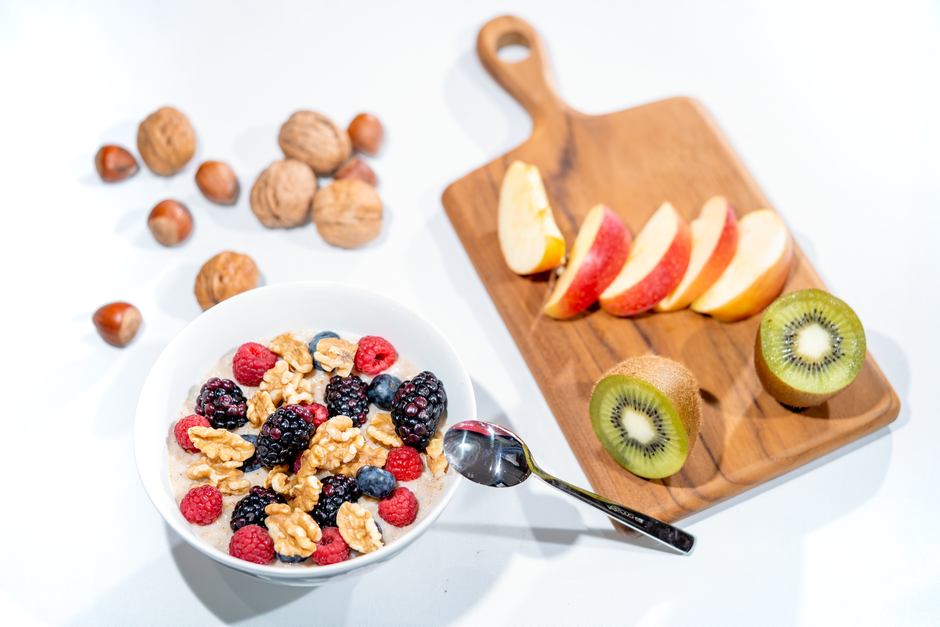
Fresh berries, cinnamon, and a small spoon of nut butter are easy wins. Dried fruit, honey, and flavored instant packets carry more sugar than most people expect. I always measure nut butter with a teaspoon rather than eyeballing it — a “spoonful” can easily be 200 calories.
Do Instant Oats, Oat Milk, and Oatmeal Packets Count?
Instant oats are still oats and still contain beta-glucan, so they count. They are processed thinner, so they digest a bit faster and may feel less filling than rolled or steel-cut oats. If instant is what you will actually eat on a busy morning, use it and add protein.
Oat milk is a different story. It is mostly water with a small amount of oats, and most commercial versions contain added oil and sugar. It does not deliver the fiber of whole oats, so do not count a latte as your oat serving. Flavored instant packets often carry 12 g or more of added sugar per packet.
How Do Oats Fit Into Your Daily Calorie Budget?
Oats are a food, not a strategy. Your rate of weight loss is set by your total calorie deficit, and a bowl of oatmeal only helps if it fits inside that number. Knowing your maintenance calories makes the portion decision much simpler.
Use the TDEE Calculator to estimate your daily energy needs, then subtract a moderate deficit. From there, a 150 to 200 calorie oat serving is easy to place. Research consistently shows weight loss depends on sustained energy balance, not on any single food.
Are There Downsides to Eating Oats Every Day?
For most people, daily oats are well tolerated. Some people with sensitive digestion notice gas or bloating when they increase fiber quickly, which usually settles within a week or two. Drinking enough water helps.
People with celiac disease need certified gluten-free oats, since standard oats are often cross-contaminated during processing. And if you are managing blood sugar, watch the added sugar in flavored packets more than the oats themselves.
Related Articles
Frequently Asked Questions
How much oats should I eat per day to lose weight?
Most women do well with one serving of 40 to 60 g dry oats per day, roughly 150 to 225 calories. Two servings can fit if your total calorie budget allows it.
Is 1 cup of oats a day too much for weight loss?
One cup of dry oats is about 300 calories and roughly 8 g fiber, which is more than many people need at one meal. It is not harmful, but it can crowd out protein and make your calorie deficit harder to hold.
Do oats help you lose belly fat?
No strong clinical evidence shows oats target belly fat specifically. Oats support fullness and fiber intake, which can help you maintain a deficit, and fat loss happens across your whole body.
Are instant oats as good as rolled oats for weight loss?
Instant oats contain the same beta-glucan fiber but are processed thinner and digest faster. They may feel less filling, so pair them with protein and avoid sweetened packets.
Should I eat oats before or after a workout?
Either works. Oats about an hour before exercise give easy carbohydrate fuel, and eating them afterward is fine if that fits your schedule better.
Can oatmeal cause weight gain?
Oatmeal itself does not cause weight gain, but large portions and high-calorie toppings can push your daily intake above your needs. Measure the oats dry and keep sweet additions modest.

The TDEECAL Team writes about nutrition, metabolism, and fat loss the way we built our calculator, with real numbers and no hype. We dig into the research so you don’t have to guess.