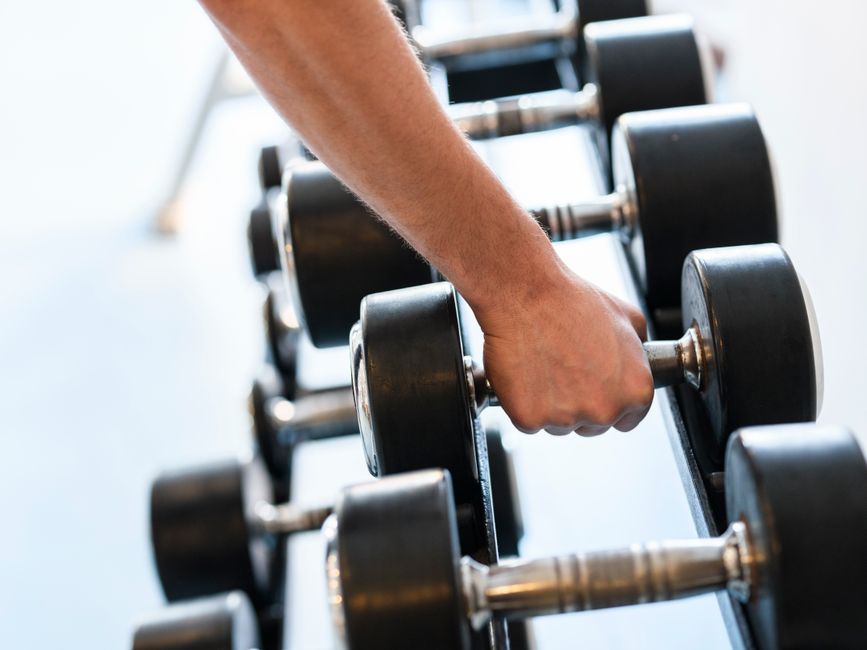
Walking into the free weights section for the first time can feel like walking into a foreign country where everyone knows the language but you.
To begin lifting weights for weight loss, start with two or three full-body sessions per week using basic movements like squats, hip hinges, pushes, and pulls. Learn the movement pattern with light weight first, then add load gradually as your form stays solid. Strength training preserves muscle while you cut calories, which keeps your metabolism working in your favor.
Most women I talk to don’t avoid weights because they’re lazy. They avoid them because they don’t know where to start, and nobody gave them a clear first step. This article gives you that step, plus the exact schedule, rep ranges, and progression plan that makes the first month manageable.
You won’t find complicated programs or gym jargon here. Just honest guidance on what works, what doesn’t, and how to build a routine you can actually stick with.
Key Points at a Glance
| Point | What It Means | Why It Matters |
|---|---|---|
| Start with full-body workouts | Train all major muscle groups 2-3 times weekly | More muscle activation per session means more calories burned overall |
| Master form before adding weight | Use light loads for the first 1-2 weeks | Proper mechanics prevent injury and build confidence |
| Progressive overload drives results | Add small amounts of weight or reps each week | Your body adapts only when challenged slightly beyond comfort |
| Protein supports muscle retention | Aim for roughly 1.6 to 2.2 grams per kilogram of body weight daily | Muscle preservation keeps your resting metabolic rate higher |
| Consistency beats intensity | A simple plan done weekly outperforms a perfect plan done once | Habit formation determines long-term weight loss success |
Why Lifting Weights Helps You Lose Weight
Cardio burns more calories during the workout itself. But lifting weights changes your body composition in ways cardio can’t. Muscle tissue is metabolically active, meaning it burns calories even when you’re sitting still.
Research consistently shows that resistance training preserves lean mass during calorie deficit. When you lose weight without lifting, roughly 25% of what you lose can come from muscle. That muscle loss slows your metabolism and makes future weight loss harder.
How to Begin Lifting Weights for Weight Loss: Your First Month Plan
Your first month has one goal: build the habit and learn the movements. Don’t worry about how much weight you’re lifting yet. Worry about showing up consistently and feeling confident with each exercise.
Start with five foundational movements that cover your whole body: goblet squat, hip hinge or deadlift, push-up (on knees if needed), seated row or lat pulldown, and a plank or bird-dog hold. Do two sets of 10-12 repetitions for each, resting 60-90 seconds between sets. Aim for two sessions in week one, then three sessions from week two onward.
Choose a weight that makes the last two reps of each set feel challenging but doable. If you can easily complete all 12 reps, the weight is too light. If your form falls apart by rep eight, it’s too heavy.
How Much Weight Should You Lift?
For weight loss, moderate loads in the 8-15 rep range work well. This range builds muscle while keeping your heart rate up enough to add a cardiovascular benefit to each session.
Add weight only when you can complete all reps with clean form. A good rule: if you finish your last set and feel like you could do three more reps easily, increase the weight by the smallest increment available next session.
Most gyms have dumbbells that increase in 5-pound jumps. If 5 pounds feels like too big a step, use a slower tempo or add one extra rep instead. Small consistent progress beats sporadic big jumps.
How Many Days Per Week Should You Lift?
Two to three days per week is the sweet spot for beginners. This frequency gives your muscles enough stimulus to grow while leaving adequate recovery time between sessions.
You can lift on consecutive days, but you’ll get better results with a rest day between sessions. A Monday-Thursday or Monday-Wednesday-Friday schedule works well for most people. On rest days, focus on walking, stretching, or other light activity that doesn’t interfere with recovery.
How to Combine Lifting with Cardio for Weight Loss
You don’t have to choose between lifting and cardio. Most successful weight loss plans include both. The key is ordering them correctly.
If your goal is building strength, lift first while your muscles are fresh. Do cardio after lifting, or on separate days entirely. This ensures you have full energy for the resistance work, which is what preserves your muscle mass.
Cardio can be as simple as 20-30 minutes of brisk walking, cycling, or incline treadmill work after your lifting session. High-intensity interval training is time-efficient but not required. Consistent moderate cardio builds the calorie deficit that drives fat loss.
How to Track Progress Without Obsessing Over the Scale
The scale can mislead you when you start lifting. Muscle is denser than fat, so you might lose inches while the scale stays flat or even goes up slightly. Don’t panic — this is normal and actually a sign your body composition is improving.
Track progress with measurements instead. Take your waist, hip, and thigh measurements every two weeks. Notice how your clothes fit. Pay attention to how many reps you can complete compared to last week. These markers tell the real story.
Take a photo every four weeks in the same lighting and clothing. Visual changes are often visible before the scale budges, and they keep you motivated when numbers stall.
What to Eat to Support Your Lifting Routine
You can’t out-lift a poor diet. Weight loss still comes down to eating fewer calories than you burn, but what you eat matters for preserving muscle and fueling workouts.
Protein is the priority. Research suggests roughly 1.6 to 2.2 grams of protein per kilogram of body weight daily supports muscle retention during weight loss. For a 160-pound woman, that’s about 115 to 160 grams per day. Spread it across three or four meals.
Eat a small meal or snack with protein and carbs about an hour before lifting. Greek yogurt with fruit, a protein shake, or a turkey sandwich all work well. After your session, eat another protein-containing meal within a couple of hours to support recovery.
Use a TDEE calculator to find your maintenance calories, then subtract 300-500 calories for weight loss. Don’t go below 1,200 calories per day — that’s the clinical minimum for women and requires medical supervision.
Frequently Asked Questions
Related Articles
Will lifting weights make me bulky?
No, women typically don’t have the testosterone levels needed to build large amounts of muscle. You’ll build lean, toned muscle that makes you look firmer, not bigger.
How long before I see results from lifting weights?
Most women notice strength improvements within 2-3 weeks and visible body composition changes within 6-8 weeks. Consistency matters more than intensity during this period.
Should I lift weights before or after cardio?
Lift first while your muscles are fresh, then do cardio afterward. This maximizes strength gains and ensures proper form on your lifts.
Can I lose weight by lifting weights alone?
You can lose weight with lifting alone, but combining it with a modest calorie deficit and some cardio produces faster results. Diet drives the deficit; lifting preserves muscle.
How many reps should I do to lose weight?
The 8-15 rep range works best for weight loss because it builds muscle while keeping your heart rate elevated. Focus on controlled form rather than rushing through reps.
Is it safe to lift weights every day?
Lifting the same muscles daily isn’t recommended because muscles need recovery time. Two to three full-body sessions per week is safer and more effective for beginners.
Starting a strength training routine is one of the most effective decisions you can make for long-term weight management. The first month is about building the habit, learning the movements, and showing up consistently. Give yourself grace as you learn, and trust the process — the scale may not move immediately, but your body is changing.
Calculate your daily calorie needs with our TDEE calculator to pair your lifting routine with the right nutrition plan.

The TDEECAL Team writes about nutrition, metabolism, and fat loss the way we built our calculator, with real numbers and no hype. We dig into the research so you don’t have to guess.