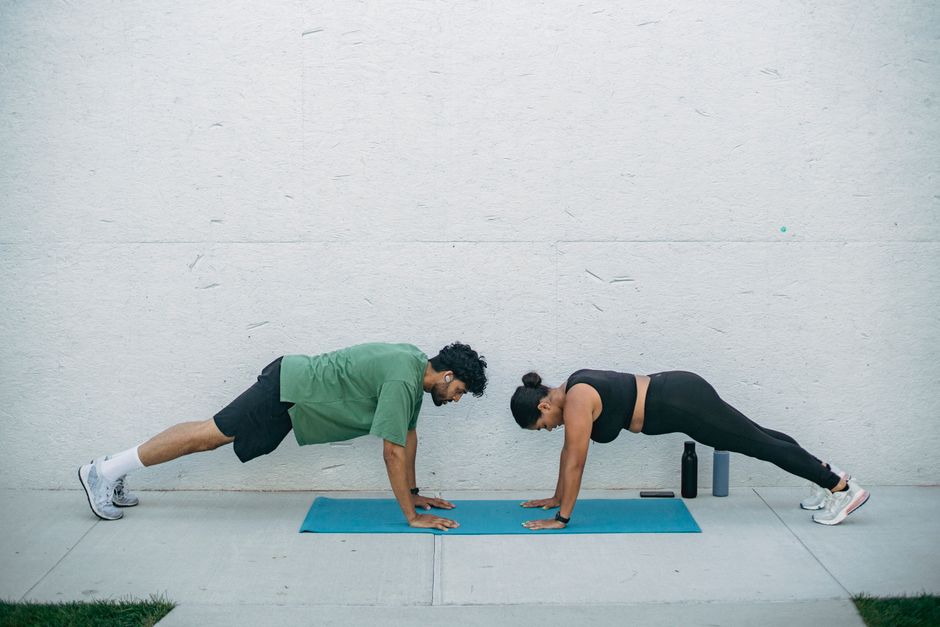
Is Plank Exercise Good for Weight Loss?
Most people assume any exercise that makes you sweat is good for weight loss. Planks are different — they build strength, not necessarily burn fat. The honest answer is that planks are good for your core, but they are not a primary weight loss tool on their own.
Yes, plank exercise is good for building core strength, improving posture, and supporting overall fitness, but it is not a high-calorie-burning exercise. A 150-pound person burns roughly 3 to 4 calories per minute holding a plank, which is far less than cardio activities. For weight loss, you need a calorie deficit, and planks alone will not create that deficit. However, planks are a valuable part of a complete workout routine that includes cardio and a balanced diet.
The confusion happens because many fitness influencers present planks as a fat-burning miracle. That is simply not what the science shows. This article explains what planks actually do, how they compare to other exercises, and how to use them in a weight loss plan that works.
Key Points at a Glance
| Point | What It Means | Why It Matters |
|---|---|---|
| Calorie burn | Planks burn about 3–4 calories per minute | Too low to create weight loss alone |
| Muscle building | Strengthens core, shoulders, and back | Supports better form in other exercises |
| Metabolic effect | More muscle can slightly raise resting metabolism | Small but real contribution to weight loss |
| Best use | Part of a full routine with cardio and diet | No single exercise creates sustainable loss |
How Many Calories Does a Plank Actually Burn?
Calorie burn during a plank depends heavily on your body weight and how hard you work. A 125-pound person burns about 3 calories per minute. A 185-pound person burns closer to 4 or 5 calories per minute.
Compare that to brisk walking, which burns 4 to 6 calories per minute for the same body weights. Running burns even more, often 10 to 12 calories per minute. The gap is significant.
Holding a plank for one minute burns roughly the same calories as walking for one minute. But you can walk for 30 minutes easily, while holding a plank for 30 minutes is nearly impossible for most people.
This is why planks are not a weight loss tool on their own. They are a strength exercise, not a cardio exercise.
Is Plank Exercise Good for Weight Loss Through Muscle Building?
Planks do build muscle, and muscle does affect your metabolism. Every pound of muscle burns about 6 calories per day at rest, while a pound of fat burns about 2 calories per day.
That means adding 5 pounds of muscle could increase your resting metabolism by roughly 30 calories per day. That is a small amount — about one apple’s worth of calories.
But planks alone will not build 5 pounds of muscle. They primarily work the core, which is a relatively small muscle group. To build meaningful muscle, you need progressive resistance training that challenges larger muscle groups.
The bigger benefit is indirect. A strong core improves your form during squats, lunges, and cardio. Better form means you can work harder and burn more calories during those exercises.
I always tell people to think of planks as the foundation of their workout, not the workout itself. A strong core makes every other exercise more effective.
What Does Science Say About Planks and Weight Loss?
Research consistently shows that spot reduction — losing fat from one specific area — is a myth. Doing planks will not specifically reduce belly fat, even though planks strengthen the abdominal muscles underneath.
Some studies suggest that core exercises like planks can improve muscle endurance and posture. Better posture alone can make you look leaner, even without fat loss.
The evidence is clear that overall fat loss comes from a calorie deficit. Exercise helps create that deficit, but diet plays the larger role for most people.
A 2021 review in the Journal of Sports Science and Medicine found that resistance training combined with cardio was more effective for fat loss than either alone. Planks can be part of that resistance training, but they should not be the only exercise.
How to Use Planks in a Weight Loss Routine
Use planks as a supplement to cardio and full-body strength training, not as a replacement. A balanced weekly routine might include 150 minutes of moderate cardio, two days of full-body strength work, and planks as part of your warm-up or finisher.
Aim for 3 sets of 30 to 60 seconds, 3 to 4 times per week. If you can hold a plank for over 60 seconds easily, add variation — side planks, plank with shoulder taps, or plank with leg lifts.
The most important factor is consistency. A routine you can stick with beats a perfect routine you abandon after two weeks.
Common Plank Mistakes That Reduce Results
The most common mistake is letting your hips sag or pike up. This reduces the work on your core and can strain your lower back.
Keep your body in a straight line from head to heels. Engage your glutes and abs as if bracing for a light punch to the stomach.
Breathing is another issue. Many people hold their breath during planks, which increases blood pressure and makes the exercise harder than it needs to be. Breathe steadily throughout.
If you feel pain in your lower back, stop and check your form. A plank should challenge your muscles, not hurt your joints.
Frequently Asked Questions
Related Articles
How long should I hold a plank for weight loss?
Hold a plank for 30 to 60 seconds per set, doing 3 sets. Longer planks do not meaningfully increase calorie burn.
Can planks reduce belly fat?
No, spot reduction is a myth. Planks strengthen abdominal muscles but do not specifically burn belly fat.
Is plank exercise good for weight loss compared to running?
Running burns far more calories than planks, about 10 to 12 calories per minute versus 3 to 4.
How often should I do planks?
Do planks 3 to 4 times per week as part of a full routine. Daily planks are fine but unnecessary.
Will planks alone help me lose weight?
No, planks alone will not create enough calorie burn for weight loss. Combine them with cardio and a healthy diet.
What is better for weight loss, planks or push-ups?
Push-ups burn slightly more calories and build more muscle because they work more muscle groups. Both are useful additions to a routine.
Use our TDEE calculator to find your maintenance calories, then subtract 300 to 500 for weight loss. That number, combined with a consistent routine that includes planks, is what actually moves the scale.

The TDEECAL Team writes about nutrition, metabolism, and fat loss the way we built our calculator, with real numbers and no hype. We dig into the research so you don’t have to guess.