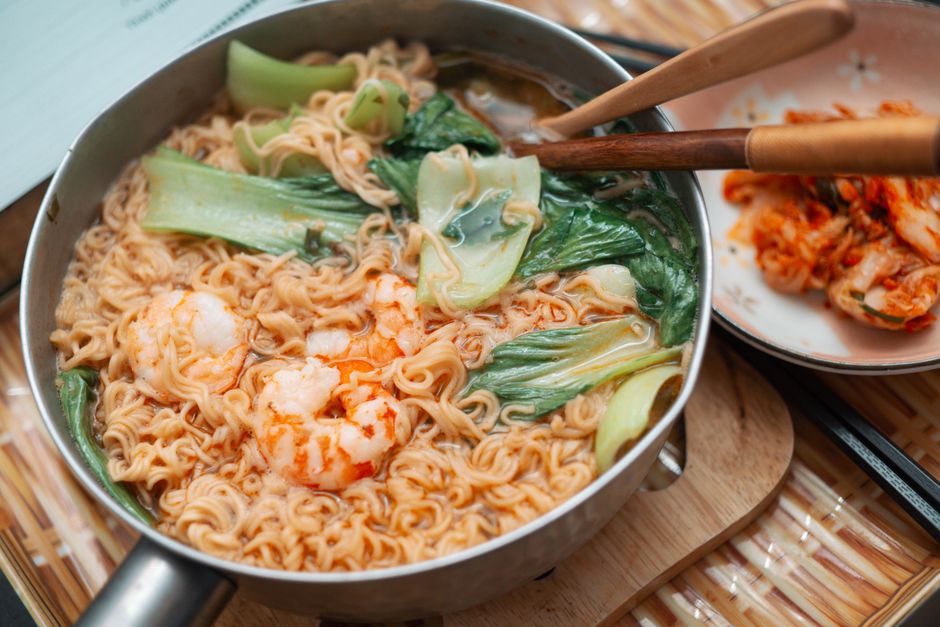
Ramen is a food that most people assume is off-limits during weight loss. But the answer is more complex than a simple yes or no, and it depends heavily on how the dish is prepared.
So, is ramen good for weight loss? The honest answer is that traditional ramen is usually not good for weight loss because it is high in refined carbohydrates, sodium, and saturated fat, while being low in filling protein and fiber. However, a carefully portioned bowl with extra vegetables and lean protein can fit into a calorie deficit without derailing your progress.
Most articles tell you to just avoid it entirely, but that rarely works for real life. Cravings don’t disappear just because a food is “bad,” and feeling deprived often leads to overeating later. This guide breaks down the actual calorie math, the specific ingredients that matter, and how to build a bowl that supports your goals rather than sabotaging them.
We will look at what the research says about calorie density and satiety, and we will give you a practical framework for eating ramen without guilt. You will learn which components to change and which ones are fine to keep.
Key Points at a Glance
| Point | What It Means | Why It Matters |
|---|---|---|
| Calorie Density | Ramen is energy-dense but not filling | You can eat a lot of calories before feeling full |
| Broth Choice | Tonkotsu and miso are high in fat | Switching to clear broth cuts significant calories |
| Noodle Portion | A standard serving is roughly 400-500 calories | Halving the noodles saves more than 200 calories |
| Protein and Veggies | Adding these improves satiety | They make the meal more satisfying for fewer calories |
| Sodium Content | One bowl can exceed daily sodium limits | This causes water retention and temporary scale weight gain |
Why Traditional Ramen Works Against Weight Loss
A standard bowl of tonkotsu ramen from a restaurant contains roughly 800 to 1,000 calories. The noodles alone contribute about 400 calories, and the rich pork-based broth adds another 300 to 400 calories of pure fat. When you add chashu pork, a soft-boiled egg, and oil, the total climbs quickly.
Research consistently shows that liquid calories are less satiating than solid food calories. Broth-based meals pass through the stomach faster, which means you feel hungry again sooner than you would after eating the same calories in solid form. This is why a ramen bowl can leave you craving a snack an hour later.
I always tell clients to look at the broth first. If it looks milky or creamy, it is emulsified fat, and that is where most of the hidden calories live.
Practical Tip: Order your ramen with “kaedama” (extra noodles) on the side, not in the bowl. This lets you control exactly how many noodles you eat instead of finishing everything in front of you.
Is Ramen Good for Weight Loss If You Make Changes?
Yes, ramen can be good for weight loss if you modify the key components. The most effective change is swapping a rich tonkotsu or miso broth for a shoyu or shio broth, which saves 200 to 300 calories per bowl. These lighter broths are still flavorful, but they do not contain the same amount of rendered pork fat.
You should also double the vegetables and add a lean protein like chicken breast or shrimp instead of fatty pork belly. This shifts the macronutrient profile toward protein and fiber, which increases fullness. A study published in the journal Nutrition & Metabolism found that increasing protein and fiber at a meal significantly reduces subsequent calorie intake.
One trick I use at home is to make my own broth with miso paste and chicken stock. It takes ten minutes and tastes close to the real thing, but it has a fraction of the fat and sodium.
How Many Calories Are in a Bowl of Ramen?
The calorie count varies widely depending on the style and restaurant. A basic shoyu ramen with chicken and vegetables is roughly 450 to 550 calories, while a tonkotsu bowl with pork belly and egg can reach 900 to 1,100 calories. Instant ramen is a different story, with a typical package containing about 380 to 400 calories, but almost no protein or fiber.
If you are tracking calories, the most reliable approach is to estimate based on the broth type and toppings. Clear broths are safe to estimate at 100 to 150 calories per cup, while creamy broths are closer to 200 to 250 calories per cup. Noodles are the most variable component, so weighing them is the only fully accurate method.
I recommend using a food scale at home for the noodles at least once. After you see what 200 grams of cooked noodles actually looks like, you will be able to eyeball portions at restaurants with much better accuracy.
Can You Eat Instant Ramen While Losing Weight?
Instant ramen is not good for weight loss because it is ultra-processed and lacks the nutrients needed to keep you full. A single serving has about 380 calories, but it contains less than 8 grams of protein and only 2 grams of fiber. This combination means you will likely be hungry within two hours of eating it.
If you do choose to eat instant ramen, you can improve it by adding a protein source and vegetables. A poached egg and a handful of spinach add roughly 80 calories but increase the protein to 14 grams and add significant volume. You can also use half the seasoning packet to reduce sodium by about 50 percent.
No study has ever confirmed that eating instant noodles daily supports weight management. The evidence points in the opposite direction, with research linking frequent instant noodle consumption to higher body mass index and metabolic syndrome risk.
What Is the Healthiest Way to Eat Ramen for Weight Loss?
The healthiest approach is to build your own bowl at home where you control every ingredient. Start with a low-sodium chicken or vegetable broth, add shirataki noodles or a half portion of regular noodles, then load up on bok choy, mushrooms, and bean sprouts. Top it with grilled chicken or tofu for protein.
This homemade version comes in at roughly 350 to 450 calories per bowl, with 25 to 30 grams of protein and 5 to 8 grams of fiber. It is filling enough to work as a complete meal, and it satisfies the ramen craving without the calorie bomb.
When you eat out, order the “light” or “healthy” option if the restaurant offers one. Many ramen shops now have a reduced-fat broth or a vegetable-forward bowl on the menu, and these are usually the best choices for weight management.
I always ask for my egg soft-boiled instead of marinated in soy and sugar. That small change cuts out about 30 calories and a surprising amount of added sugar.
Remember: Weight loss comes down to total daily calories, not individual foods. A 600-calorie ramen bowl can fit into a 1,500-calorie day, but a 1,000-calorie bowl makes it much harder. Use a TDEE calculator to find your maintenance number, then build your meals around that target.
Frequently Asked Questions
Related Articles
Is ramen good for weight loss if I eat it once a week?
Yes, eating ramen once a week will not ruin your weight loss if you stay within your daily calorie target. The key is to choose a lighter broth and control your portion size.
How many calories should I eat to lose weight?
Most women need between 1,200 and 1,500 calories per day for weight loss, while men typically need 1,500 to 1,800. These are general clinical minimums, and your exact number depends on your age, height, and activity level.
Are shirataki noodles a good substitute for ramen noodles?
Yes, shirataki noodles are an excellent substitute because they contain almost no calories or carbohydrates. They are made from konjac root and provide a similar texture when cooked properly.
Does ramen cause belly fat specifically?
No food causes fat to accumulate in a specific body area, including ramen. Excess calories from any source contribute to overall weight gain, and genetics determine where fat is stored first.
Is it better to eat ramen for lunch or dinner?
Lunch is generally better because you have more time to burn off the calories and sodium throughout the day. Eating it at night can lead to water retention that shows up on the scale the next morning.
Can I eat ramen the day after a workout?
Yes, ramen can be a reasonable post-workout meal if you add extra protein and vegetables. The carbohydrates help replenish glycogen stores, but you should still keep the portion moderate.
Ramen does not have to be your enemy during weight loss. The difference between a diet-friendly bowl and a calorie disaster comes down to broth, portion size, and toppings. Choose a clear broth, halve the noodles, and load up on protein and vegetables, and you can enjoy ramen without stalling your progress.
Use our TDEE calculator to find your daily calorie target, then plan your ramen meal to fit within it.

The TDEECAL Team writes about nutrition, metabolism, and fat loss the way we built our calculator, with real numbers and no hype. We dig into the research so you don’t have to guess.