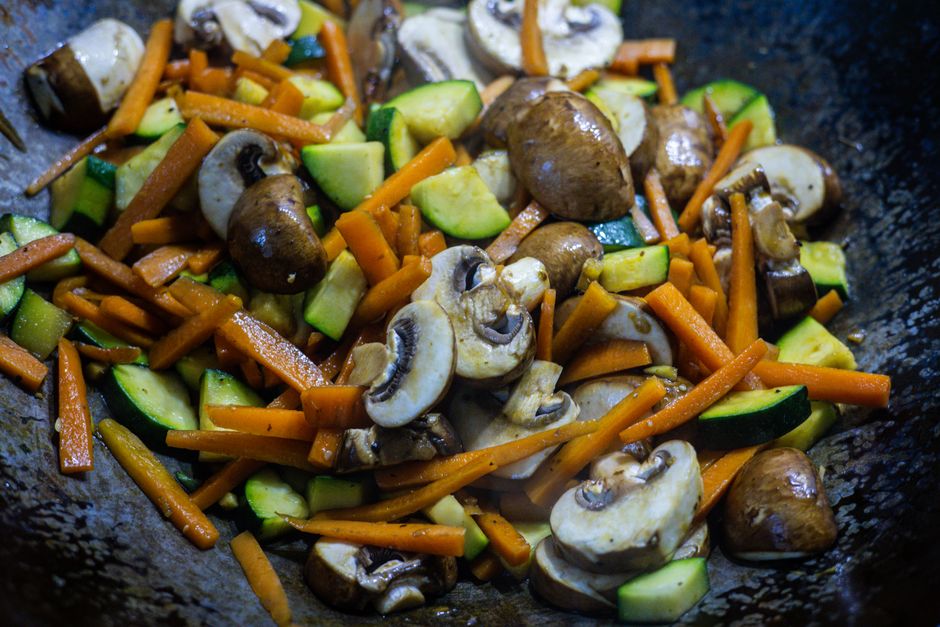
Are Stir Fry Vegetables Good for Weight Loss?
Most people assume a stir fry is automatically healthy. The truth depends entirely on what goes into the wok. A vegetable stir fry can be one of the best weight loss meals you can make, or it can quietly pack more calories than a cheeseburger.
Yes, stir fry vegetables are good for weight loss when prepared with minimal oil and controlled sauces. Vegetables are naturally low in calories and high in fiber and water, which helps you feel full on fewer calories. The cooking method itself is fast and preserves nutrients well. The catch is that the oil, sauce, and added proteins determine whether your stir fry helps or hurts your calorie goals.
Most generic advice tells you to “just eat more vegetables” without explaining how to actually make them satisfying. This article covers what the evidence says about vegetables and weight loss, how to build a stir fry that keeps calories in check, and which common ingredients silently sabotage your efforts.
Key Points at a Glance
| Point | What It Means | Why It Matters |
|---|---|---|
| Vegetables are low-calorie | Most vegetables contain 25–50 calories per cup | You can eat large volumes without breaking your calorie budget |
| Fiber promotes fullness | Vegetables provide fiber that slows digestion | You feel satisfied longer after meals |
| Oil is the hidden calorie source | One tablespoon of oil adds roughly 120 calories | Restaurant stir fries often use 2–4 tablespoons per serving |
| Sauces add sugar and sodium | Many bottled stir fry sauces contain 10–15g sugar per serving | Sweet sauces can turn a healthy meal into a calorie bomb |
| Protein matters for weight loss | Adding lean protein helps preserve muscle and increase fullness | A vegetable-only stir fry may leave you hungry an hour later |
What Does the Research Say About Vegetables and Weight Loss?
Studies consistently show that people who eat more vegetables tend to weigh less over time. Research published in the American Journal of Clinical Nutrition found that increasing vegetable intake while keeping total calories the same did not automatically cause weight loss. The key factor is that vegetables replace higher-calorie foods on your plate.
Vegetables work for weight loss because of their energy density. Energy density refers to the number of calories in a given weight of food. Vegetables are mostly water and fiber, so they have very low energy density. This means you can eat the same volume of food for far fewer calories.
One study found that people who ate a low-energy-density diet consumed fewer calories overall without feeling more hungry. This is why stir fry vegetables are good for weight loss in a practical sense. You can fill half your plate with vegetables and still keep the meal around 400–500 calories.
The research is clear on one point: no single food causes weight loss. Weight loss happens when you consistently eat fewer calories than you burn. Stir fry vegetables help because they make that calorie deficit easier to maintain without constant hunger.
How Many Calories Are in a Vegetable Stir Fry?
A basic vegetable stir fry with no oil and no sauce contains roughly 150 to 200 calories per generous serving. That is a large bowl of broccoli, bell peppers, carrots, snap peas, and mushrooms cooked with water or broth instead of oil.
Add one tablespoon of oil and you add about 120 calories. Add a typical serving of bottled stir fry sauce and you add another 60–100 calories, mostly from sugar. Add white rice and you add 150–200 calories per cup.
Here is what a realistic restaurant stir fry looks like:
- 2 tablespoons oil: 240 calories
- 1 cup white rice: 200 calories
- 1/2 cup sauce: 80–120 calories
- Vegetables: 100–150 calories
- Total: 620–710 calories
The same meal made at home with one teaspoon of oil, half the sauce, and cauliflower rice instead of white rice comes in around 250–300 calories. That is a difference of over 300 calories from the same basic ingredients.
The takeaway is simple. Stir fry vegetables are good for weight loss when you control the oil and sauce. The vegetables themselves are never the problem. The additions are where calories sneak in.
What Makes a Stir Fry Good for Weight Loss?
The best weight loss stir fry follows a simple formula. Half the plate is non-starchy vegetables. One quarter is lean protein. One quarter is a small portion of whole grains or a starchy vegetable.
For the vegetables, choose a mix of colors. Broccoli, bell peppers, snap peas, mushrooms, carrots, cabbage, and bok choy all work well. Each provides different vitamins and minerals, but they are all low in calories and high in fiber.
For protein, options like chicken breast, shrimp, tofu, or lean beef add satisfaction without excessive calories. A serving of about 4–6 ounces of cooked protein adds 150–250 calories and keeps you full for hours.
The cooking method matters as much as the ingredients. Use a non-stick pan and a small amount of oil. One teaspoon of oil is usually enough if your pan is hot. You can also use broth, water, or cooking spray to reduce oil further.
For the sauce, make your own with low-sodium soy sauce, garlic, ginger, and a small amount of honey or no sweetener at all. Bottled sauces are convenient but often hide significant sugar. A simple sauce of two tablespoons soy sauce, one teaspoon sesame oil, garlic, and ginger adds about 50 calories.
Are Stir Fry Vegetables Good for Weight Loss Compared to Other Cooking Methods?
Stir frying is one of the better cooking methods for weight loss, but it depends on execution. Steaming and roasting with minimal oil are equally good. Deep frying is the worst option because vegetables absorb significant oil.
The advantage of stir frying is speed and versatility. You can have a complete meal on the table in 15 minutes. This makes it more likely you will actually cook at home instead of ordering takeout, which is often the real win for weight loss.
The main risk with stir frying is portion distortion. It is easy to add extra oil “for flavor” or a generous scoop of rice “to balance the vegetables.” These small additions add up quickly.
A practical approach is to think of your stir fry as a vegetable dish with protein, not a rice dish with vegetables. Start with the vegetables, add protein, and treat grains as a small side rather than the base of the meal.
Frequently Asked Questions
Related Articles
Frequently Asked Questions
Can I eat stir fry every day for weight loss?
Yes, you can eat stir fry daily if you vary the vegetables and protein sources. Just keep the oil and sauce portions consistent and measured.
Is frozen vegetable stir fry mix as healthy as fresh?
Frozen vegetables are nutritionally comparable to fresh and sometimes more nutritious because they are frozen at peak ripeness. They also save prep time, which makes home cooking more practical.
What is the best oil for stir fry when losing weight?
Any oil works for weight loss because all oils contain about 120 calories per tablespoon. Use the smallest amount needed, or use cooking spray and broth to reduce calories further.
How much rice should I eat with stir fry for weight loss?
Keep rice to half a cup or less, or replace it with cauliflower rice to save roughly 150 calories. The vegetables and protein should make up most of your plate.
Are stir fry sauces high in calories?
Most bottled stir fry sauces contain 60–120 calories per serving, mostly from sugar. Homemade sauces with soy sauce, garlic, and ginger are much lower in calories.
Does eating stir fry vegetables help you lose belly fat?
No food targets belly fat specifically. Weight loss from a calorie deficit reduces fat throughout the body, and vegetables help you maintain that deficit.
Stir fry vegetables can absolutely be part of an effective weight loss plan. The key is controlling oil, sauce, and grain portions while letting vegetables fill most of your plate. Use our TDEE Calculator to find your maintenance calories, then build stir fry meals that keep you comfortably below that number.

The TDEECAL Team writes about nutrition, metabolism, and fat loss the way we built our calculator, with real numbers and no hype. We dig into the research so you don’t have to guess.